By Francisca Tan, Austin Community College
In my two decades of culinary leadership, I have placed thousands of ingredient orders, managed complex inventories, and tracked every gram for corporate profitability. I used to view ingredients through the pragmatic lens of economics. However, standing in the rolling, sun-drenched hills of the Langhe region in Piedmont, Italy, completely upended my perspective. Until my recent research travels, I had never stood under the shade of a Tonda Gentile hazelnut tree or felt the physical vibration of an ancient, family-run stone mill. Looking back at my global research experience, I realize it has permanently altered how I view my craft both academically and professionally. In the United States, our food systems heavily prioritize standardization, chemical stabilization, and high-volume speed. Engaging with research in a global context, specifically within the heart of the Italian Slow Food movement, showed me the immense value of prioritizing regional heritage and terroir (how a region’s climate, soil, and aspect affect food flavor).
Field Research: The Tonda Gentile Heritage

During my travels, my academic focus pulled me straight out of the kitchen lab and into the agricultural landscape. In Alba, the hazelnut is not treated as a mere ingredient; it is revered as the Gold of Piedmont.
While visiting a local grove, I learned that the Tonda Gentile variety is the global gold standard for elite pastry because of the science behind its lipid structure. Its specific oil content dictates exactly how the nut behaves when roasted, yielding an unparalleled aroma and texture. Witnessing the immense care local farmers take reminded me of a fundamental leadership truth: elite kitchen performance starts long before the ingredients ever reach a chef’s hands.
The Mill: Developing Adaptive Problem Solving
From the groves, I traveled to Mulino Marino, a legendary flour mill where I observed a business philosophy that defies modern industrial norms. They do not chase mass production; they choose to preserve the living integrity of the grain.
Watching the massive stone wheels turn, I recognized a critical skill I am walking away with that I could never have fully developed in a standard commercial kitchen, true Adaptive Problem Solving. The stone-ground flour we utilized is alive, aromatic, and highly variable. It does not behave like standardized, bleached white powder. Working with it forced me to abandon rigid recipe timers and instead rely on tactile feedback—touching the dough, reading its moisture retention, and dynamically adapting to the environment.
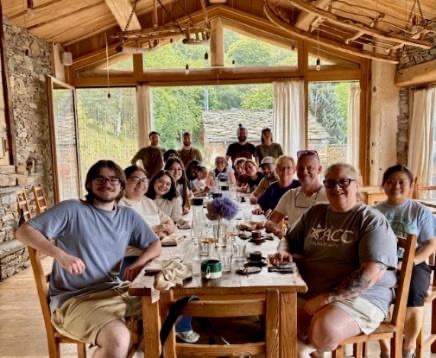
The Salient Theme: Honoring the Source
If there is one salient message from my journey that I feel is vital to share, it is that food is a narrative, not a commodity. When we rush the process, we erase the story. By slower, more intentional sourcing, we elevate pastry from simple consumption to an expression of cultural preservation.

I want this project to say that my interests lie at the intersection of rigorous culinary execution, economic sustainability, and a deep respect for agricultural roots. This research experience serves as the ultimate steppingstone for my final semester in the Advanced Pastry Arts program at ACC, as I prepare for graduation in May 2027.
Moving forward, I am eager to embed this global Slow Food philosophy into the kitchens I lead and the culinary teams I mentor, ensuring that we always honor the farmer, the miller, and the heritage behind every dish.
 HSF House Blogs