Hello! My name is Lauren, and I am currently a third-year student here at FSU, where I am majoring in Biology and minoring in Geology. I’m from Tampa, Florida, where I was born and raised with my parents, older sister, and Havanese-breed dog, Chip. Besides classes and research, I love making time to journal, bake, and spend time with my family and friends. Particularly, though, I’m extremely interested in all things music, whether it be playing the clarinet, listening to new genres, or even diving into the backstories and contexts of artists and albums alike.
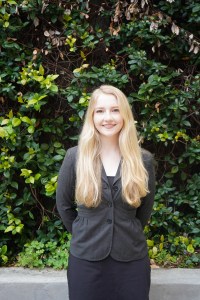
Despite these interests, like many people, I often find the study of paleontology fascinating. Whether it be the discovery of a new dinosaur species, a new Jurassic Park film, or even just scanning for fossils on a hike, it’s safe to say that paleontology is a very charismatic and enticing field. Today, from biomechanics to ancient DNA, this fast-growing study is one that now even involves the integration of biology, physics, and chemistry alike, helping make creative discoveries and shining a light on new scientific perspectives. After earning my B.S. in Biology at FSU, I intend on earning my PhD in Geological Sciences or Integrative Biology, so that I can become a researcher and professor in academia. Ultimately, I want to be a scientist who conducts good-quality, impactful research, and paleobiology is precisely the field I intend on doing this in.
One subject, though, has also weighed heavily on my mind: today’s mass extinction event. The looming threat of climate change and the current biodiversity crisis is one I want to play an active role in fighting. With the research I do, I intend on publishing my work through the lens of “how the past can inform us of the near future”, regarding what specific biological and ecological traits allowed organisms of the past to survive natural rapid climate change events, and how those traits can inform us of how to help modern organisms survive the unnatural climate event occurring today. The research I’ll be doing this summer is very important to me for exactly this reason; for the first time, I’ll get to use paleobiological data to directly look at extinction patterns and implications.
To conduct this research and gain more experience in my field, I’ve gotten the wonderful opportunity to embark on my first extended field-work trip. In June, I’ll be leaving for Montana with my research lab here at FSU, Dr. Gregory Erickson’s lab, where we will search various field sites for paleobotanical fossils called “phytoliths”, as well as various other Cretaceous-age animal fossils relevant to our current research. In July, I’ll transfer to work with Dr. Christopher Griffin’s lab from Princeton University, where I will spend the entirety of the month assisting the team and working on my main summer project. The excavation sites we will be working on are located right where the Cretaceous-Paleogene lies, meaning fossils from both before and after the meteor-induced Cretaceous mass extinction event occurred.
Data collected from both plant and vertebrate fossils at the FSU and Princeton-based sites will allow me to interpret which taxonomical clades (types of organisms) survived this rapid extinction, versus those that didn’t. Specifically, the types of organisms we will be looking at include conifer trees, flowers and bushes, birds, small mammals, and reptiles. By looking at patterns of the morphological and environmental traits that enabled survival, we can earn a glimpse into how today’s fast-acting extinction event may also impact different extant (non-extinct) species.
Ultimately, my project will highlight the most important trends in species survivability, what these results imply for future environmental change, and solutions we can take to help mitigate resilience is the most vulnerable species. Although data collection is the main event of the summer, I will spend August in the books, using scientific literature and the collected data to put together my results in a thorough, evidence-based way. I am very excited to get started, and keep track of this new experience along the way! “

