By Najmussahar Faizan, University of Missouri–Kansas City
The Spanish democratic transition of 1978 is that of one of Europe’s most dramatic political transformations. For a nation developing for nearly forty years from Francoist dictatorship, where women lacked legal autonomy, couldn’t work without husband permission, and faced systematic repression, the new Constitution promised something revolutionary: real equality. But their story is greater than the legal text alone.
My research explores a specific question: How did the 1978 constitutional transition alter the mechanisms through which women in Spain influence foreign policy decision-making? To understand what changed in 1978, we first have to understand what existed before:
Spain’s history consists of a persistent pattern: women who stepped beyond patriarchal boundaries faced consequences. During the 15th-17th centuries witch hunts, particularly in Catalonia and Galicia, women practicing traditional medicine or living outside male control became targets. Research from the Universitat de Barcelona documents several executions in Catalonia alone, where accusations served as social control mechanisms against widows, healers, and independent women.
For some cultural and historical context, here in Galacia, Maria Solina’s 17th-century prosecution is a prominent example of the deep-rooted mechanisms of female subjugation that shaped Spanish society for centuries. She endured torture and imprisonment in Santiago de Compostela but her case was not an anomaly, it was a pattern. Witch trials functioned as a form of social control that targeted widows, healers, and independent women precisely because they represented challenges to the patriarchal order. This historical legacy directly correlates with our
understanding of Spain’s 1978 constitutional transition, which tried to end this kind of oppression.
The Franco dictatorship (1939-1975) institutionalized this control. Women reverted to legal guardianship under husbands or fathers, requiring permission for bank accounts, employment, or travel. Even divorce became illegal. Political organizations were banned except for the state-run Sección Femenina. Even University access to law, medicine, and engineering faculties were restricted until 1964. Under this regime, women’s influence on any policy, including foreign affairs, was essentially nonexistent.
The way prostitution was controlled is another example. During Francoism, the Patronato de Protección a la Mujer confined sex workers alongside “abandoned girls” in nun-run institutions, apparently for rehabilitation but actually as surveillance apparatuses over “female morality”. The state basically resorted to women’s bodies being cited for public order concerns, not civic participants.
The transition to democracy emphasizes the constitutional articles that fundamentally changed women’s political standing in Spain:
Article 14: Prohibits discrimination by sex, guarantees legal equality
Article 9.2: Obligates public authorities to promote real and effective freedom and equality Article 23: Grants ALL citizens equal rights to participate in public affairs and access public functions
Article 23 provided a legal foundation for women to enter formal political institutions where foreign policy decisions are actually being made. Article 9.2 created affirmative obligations for the state to remove barriers for participation. The impact was quite measurable.
Between 1977 (first democratic elections) and 2024, Spain transformed from having zero women ministers to reaching nearly a 1:1 ratio cabinet. Soledad Becerril became the first woman minister since the Republic in 1981. By 2023, the Spanish cabinet hit a gender balance, with women in ministries that were historically dominated by men (e.g. Defense and Foreign Affairs).
Mechanisms of Influence under Franco:
No independent women’s organizations permitted
Formal political exclusion from drafting processes (only one woman, María Teresa Revilla, participated in 1978 constitutional drafting, and only in its later stages)
Civil society activism was criminalized
Foreign policy was decided behind closed doors by male-dominated military and diplomatic corps
After 1978:
Freedom of association restored (1964 partial opening, full restoration post-1978) Parity legislation: 2007 Organic Law for Effective Equality mandated balanced candidate lists Feminist movement resurgence: 2018 International Women’s Day strike drew 5.3 million participants nationwide
Academic infrastructure: Gender studies programs at major universities (Complutense de Madrid, Barcelona, Vigo) produce research informing policy
International alignment: Spain adopted feminist foreign policy frameworks in the 2020s This was creating structural pathways for civil society to influence policy. Feminist organizations could lobby parliament, submit testimony to committees, organize public campaigns, and leverage media access that was previously denied.
Despite all of this progress, gaps are inevitable. Women constitute the majority of university students yet remain underrepresented in senior diplomatic posts. The 2024 Solo Sí Es Sí law on sexual consent sparked controversy. It uncovered some ongoing tensions between conservative and progressive forces. Debates over Nordic Model prostitution laws continue, with sex worker advocates arguing for labor rights while some feminists prioritize abolitionist approaches.
Gender-based violence remains endemic despite the 2004 Organic Law on Integral Protection. The ~13% gender pay gap is basically economic inequality that translates into reduced political organizing capacity. These domestic constraints inevitably affect women’s ability to shape foreign policy priorities.
Spain’s trajectory shows just how constitutional democracy can just as quickly dismantle institutional barriers but also how informal patriarchal cultures persist. The transformation from one of Europe’s most repressive gender regimes to enacting progressive equality legislation (2004 Gender Violence Act, 2007 Equality Law, 2022 Sexual Freedom Law) offers lessons for other democracies.
Understanding this history helps explain why women’s formal political presence matters. It determines which issues receive attention. Foreign policies addressing migration, trafficking, climate change, and international development are highlighted in a much more emphasized light when women are in negotiating positions, backed by organized civil society demanding accountability.
The 1978 Constitution didn’t immediately create women’s foreign policy influence, inevitably that required decades of movement building, legislative refinement, and institutional pressure. But it did establish the essential legal architecture that enforced rights rather than just aspirational promises. It allowed citizenship to be autonomous rather than derivative and political participation as guaranteed rather than exceptional. As Spain continues to deal with gender equity in the 2020s, the constitutional framework remains both an achievement and an obligation.
Centro de documentación e recursos feministas de vigo
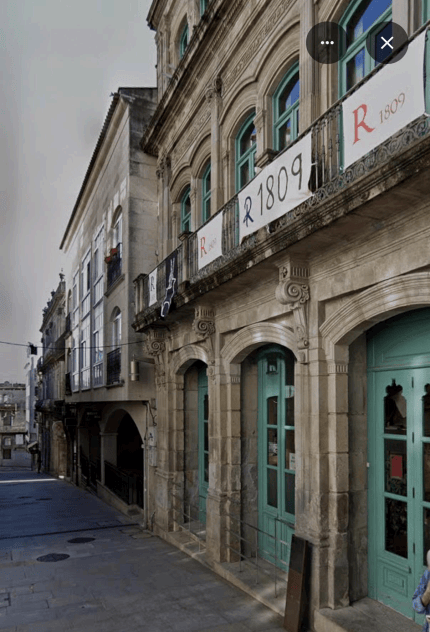
Biblioteca pública de vigo juan compañel

Vigo, Municipality of Vigo
Campus Lagoas, Pontevedra