How active engagement, curiosity, and lived experience in Tanzania are reshaping my understanding of education and research
By: Fleur Van Buuren
This summer has shown me that qualitative research is much more than gathering information through articles and reports, it is much more personal. For me, taking an active role in data collections has meant intentionally seeking opportunities to learn rather than simply observing. I make a conscious effort to ask questions and engage in conversations. Instead of limiting my learning to the classroom where I volunteer, I have looked for additional opportunities to better understand my community-based inquiry. For example, I have visited women’s educational centers, spoken with teachers and community members, and participated in outreach activities throughout the community. These experiences have given me a broader understanding of the factors that influence educational access.
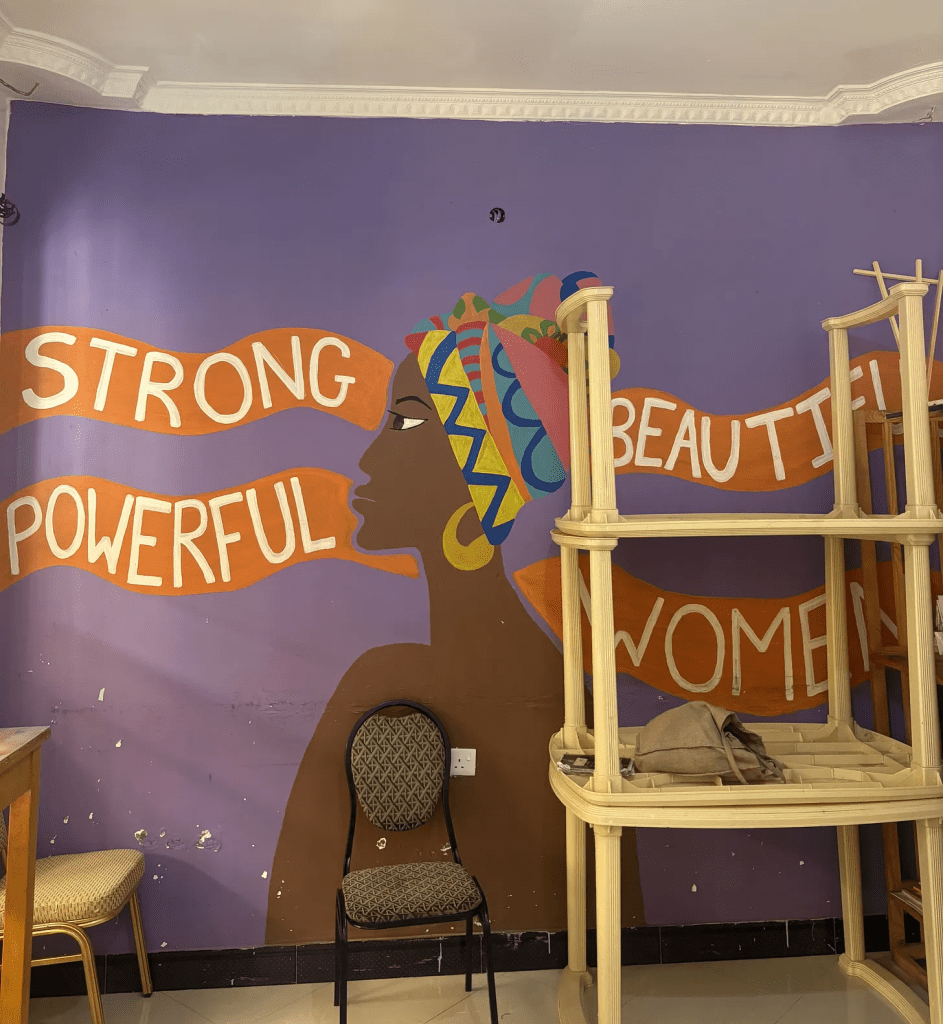
Women’s Educational Center
Being actively involved also means staying curious. Instead of accepting situations at face value, I try to understand the reasons behind them. If I notice a challenge, I ask questions and try to find multiple perspectives. This approach has helped me gain a deeper appreciation for the complexities of the issues at hand.
While comparing my personal perspective, the community perspective, and theories discussed in my literature review, I have noticed several important gaps. Before arriving in Tanzania, much of my understanding came from academic research. These sources often focus on large-scale challenges such as funding shortages, enrollment rates, and education outcomes. While these factors are important, the community members I have met often focus on everyday realities. Conversations with teachers and local organizations have shown challenges that are not always visible in research, such as transportation barriers, access to school supplies, and the larger effect of economic conditions on education.
I have also noticed that my own personal perspectives are shaped by my experiences growing up. Certain aspects of education that I once viewed as standard are often not universal. Spending time in Tanzania has challenged some of my assumptions and has reminded me that solutions must be informed by local contexts and perspectives.
Documenting and reflecting on data has become an important part of this experience. Whenever I observe something meaningful or learn something new, I write it down in a document on my phone. Since internet access is not always available, I keep these notes offline. Later, I will go back to these notes and reflect on what I observed, and how it connects to my community-based inquiry.
As I continue to gather information, I can begin organizing my data by identifying recurring themes. For example, I can group observations related to education access, government policy, community involvement, and resource availability. Looking for patterns across my different observations will help me move from collecting information to analyzing it.
So far, this summer has taught me that research is not just about collecting facts. It requires active engaging with people, participation in the community, and listening to different perspectives. By being intentional with my research and recognizing my role as the instrument of research, I can become a more thoughtful researcher and develop a better understanding of the issues that I hope to address in the future.

