Well, in a sense anyway. I am no longer knee-deep in a dirty pit, but I am beginning to organize and review my data!
By: Kathryn O’Connor
Ciao tutti! Friends, it has been a while but I am back with some updates and insight into my past month. Tomorrow marks the one month anniversary of when my time in Italia came to a close, and I have been doing a lot of adjusting since. My first hurdle was to get over my jet lag (I don’t think I did anything but sleep and eat for a week straight afterwards). Once I had finally recovered I spent a good portion of my June making up for lost time with my family and friends. Now, that I have gotten my fill of summer fun, I wanted to touch base with my research and begin to organize my data! So without further ado, let’s begin!
An ever so flattering picture of me as I celebrate having a full row to myself on the flight back home.
My Perspective in My Research
With a qualitative research project, you don’t have the guidelines that quantitative research projects do. And it makes sense: it is much easier measure data collected in a lab then it is to measure data from a conversation or interview. This can be an easy thing to shrug off, because it does not seem like that big of a distinction. But qualitative research is much more prone to being impacted by an individual’s perspective or bias.
I knew coming into this project that all of my data would be coming mainly from my 6 week experience and the questions I asked. This immediately raised some flags for me, as I do not wish to present my data solely filtered through my own subconscious biases without any nuance or differing opinions. Another thing I had to consider is that both my topic and field is niche, and so I was immediately cautious to generalizing my findings for the wider archaeological world. To combat this I really tried to put myself in other peoples shoes. If all of my data would be from human experience then I needed to know what experiences had shaped the individual. One question that I asked all of interviewees was, “How has working at this site been different than working on other sites?” This really enabled me to see how their other experiences shaped their choices when working on our site!
I was also mindful of the fact that you can acquire just as much data, if not more, from engaging with people casually about it. As I have mentioned before, our role in this community is pretty well established, and this worked in my favor because I was able to ask questions like “how long have you known our director?” or “what is it like here in town when we are not here?”. By asking small questions like these while ordering a pastry or waving hello in the morning, I walked away with a much deeper understanding of the makeup of the community than had I just stuck to interviews.
Perspective Gaps
With the short time I spent there and the limited free time I had when I was not working, it goes without saying that I was not able to completely flesh out all of the perspectives in the area. There is a self care method out there called the Swiss Cheese Model, where you layer ‘slices’ of protection, such as sleep, friendships, and exercise, against everyday stressors. Each individual piece has holes in it, but when layered on top of each other they provide a complete defense. This is the approach I am taking with my research, by taking my personal, literary, and community perspectives and layering them, I will gain a clearer picture of my issue.
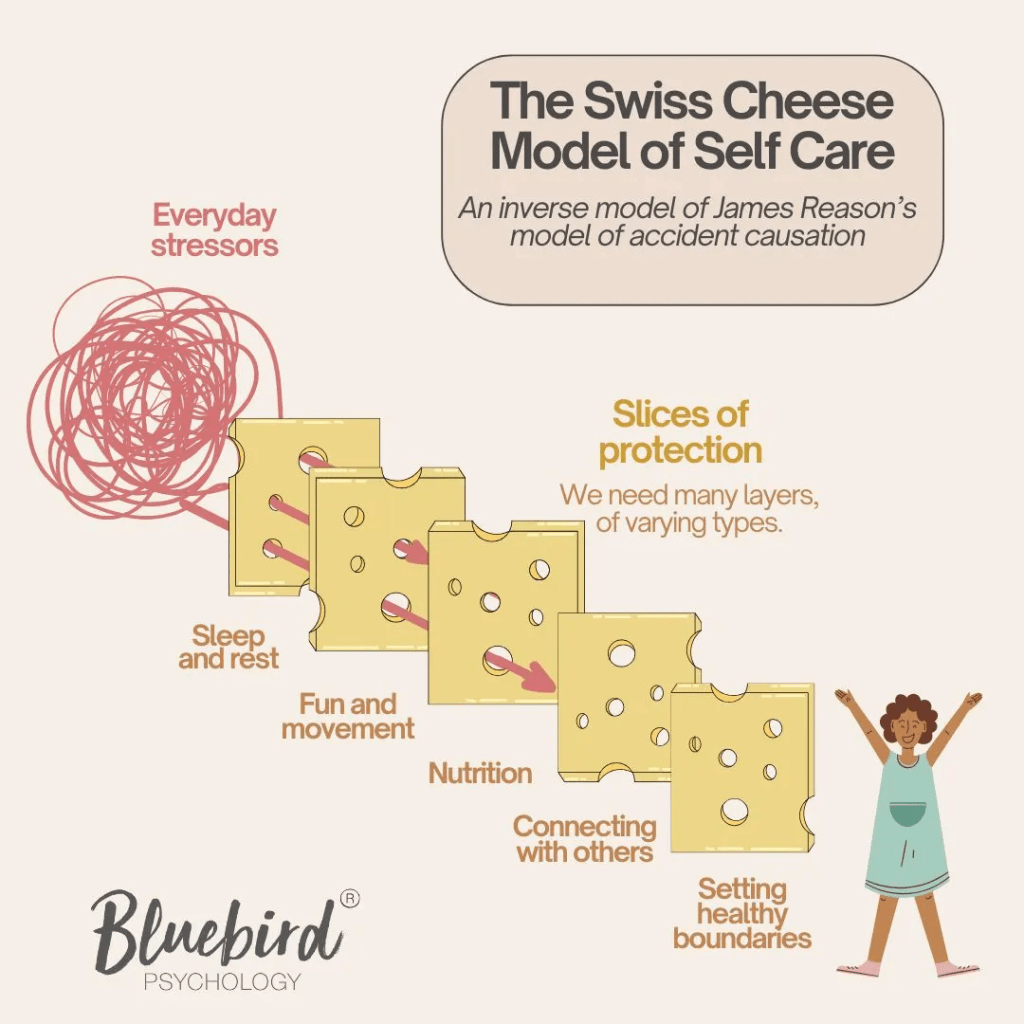
That being said, there are of course many holes in the individual ‘slices’ of perspectives. A big one for my topic is that many residents in the Tuscan area are not interested in archaeology. Well, let me rephrase, many residents in Tuscany do not feel a close cultural affinity towards the ancient cultures that lived in the area before they did. Of course, there is a cursory interest, as it is not every day a horde of archaeologists take over your town, but it is not an issue that is in the front of everyone’s minds. In terms of my literature slice, one hole I noticed was that many of my sources seemed to discuss the issues of community based archaeology from afar. Many of my sources, while addressing the issues, did not include any descriptions or mentions of the people who the archaeology would affect. In other words, it seemed like the were concerned about the community from a distance. With the way my research panned out, at first I thought I was making the same choices as them, but I realize that even though I was not able to interview any residents, I was able to talk with them and see the impact of our program and work just through how they lived their lives. When it is time to generate my own literature on the topic, I will be sure to provide as many examples of how individuals were impacted, not just that they should be impacted.
Documentation Process
I am extremely happy to report back that I was able to secure 6 interviews during my time abroad! During those interviews, I wanted to make sure that I was engaging actively in the conversation at hand, which is why I came prepared two documentation strategies going in- voice recording and written notes. My interview process was relatively simple:
- Ask my participant(s) for consent to have the conversation recorded on a voice note.
- Open my notebook to a fresh page where I could write down phrases or questions I wanted the interviewee to elaborate more on.
- Take my interviewee(s) through a list of questions I had for them. Different people were drawn to or had more experience with certain topics, and so now I am able to gain a fuller understanding of the issue by overlapping their individual expertise.
With the data collecting period over, I am beginning to organize my data so that I can have an easily accessible tool for the fall phase of this program. The first thing that I am doing is digitizing the data, by going back through the voice recordings and notes and entering them into a master Word document. This will be helpful because it will fully flesh out my interviews and allow for easier accessibility for my data. Once all of the data is entered online, another strategy I will employ is a ‘mind map’. This is where a person link different topics using what they have in common so that they can better understand the larger themes in their research. I want to employ this technique to better understand what issue exactly my data is targeting.
Looking Forward
The road ahead will be very introspective, as I compile all of my notes, audio recordings, and memories into an organized and easily accessible document. As much as being in Italy getting to collect all of this data was exciting, I am just as excited to enter into this new phase of my research process. Ciao for now!

