By Olivia Leichter, Florida State University
There is a question that most string players eventually face, often in the middle of a practice session or right before a performance: something feels off with my instrument — now what? Maybe the strings sit too high, the bow isn’t responding the way it should, or an ache has started creeping into the wrist after long rehearsals. For most of us, the answer has been to simply push through, or hope we can find someone who knows how to help. This summer, I am setting out to change this standard.
My name is Olivia Leichter, and I am a third-year student at Florida State University, completing a dual-degree: a Bachelors of Arts in Violin through the College of Music, and a Bachelor of Science in Risk Management & Insurance, through the Wertheim College of Business. This summer, I have been awarded an IDEA Grant to pursue a research and education project that has the potential to positively impact string musicians for years to come: developing an adaptable, structured, and accessible workshop experience that teaches string instrumentalists the fundamentals of instrument repair, setup, and maintenance—skills that most of us were never formally taught.
Why This Matters
String players are routinely expected to care for and adjust instruments that are extraordinarily complex, delicate, and expensive—yet, limited educational resources exist to prepare them for this responsibility. Specialized luthiers (instrument makers and repairers) are largely concentrated in major metropolitan music hubs, making them geographically and financially inaccessible to countless students. The result? Instruments get adjusted inconsistently, infrequently, and musicians develop physical strain and repetitive-use injuries that could often be prevented with the right knowledge. I have seen peers play through discomfort for months because they did not know that a simple setup adjustment could relieve the tension they were experiencing. Moreover, the highly detailed and demanding work that luthiers do deserves the recognition, appreciation, and understanding by those who demand their services in order to expand the connection of trust and collaboration.
This problem hits especially close to home here in Tallahassee. FSU has a vibrant and thriving arts community, and yet students—including myself—often find themselves without a reliable, affordable resource when something goes wrong with their instrument within a physical distance that we are able to travel to. Our closest luthier is more than two hours away, and many do not have cars, the time, or cannot be without their instrument for multiple days due to rehearsals, performances, and shows. Not to mention, the additional fears of improper handling with shipping our instruments off for repairs. I started to think about how I could help address this problem.
The Heart of the Project: Cremona, Italy
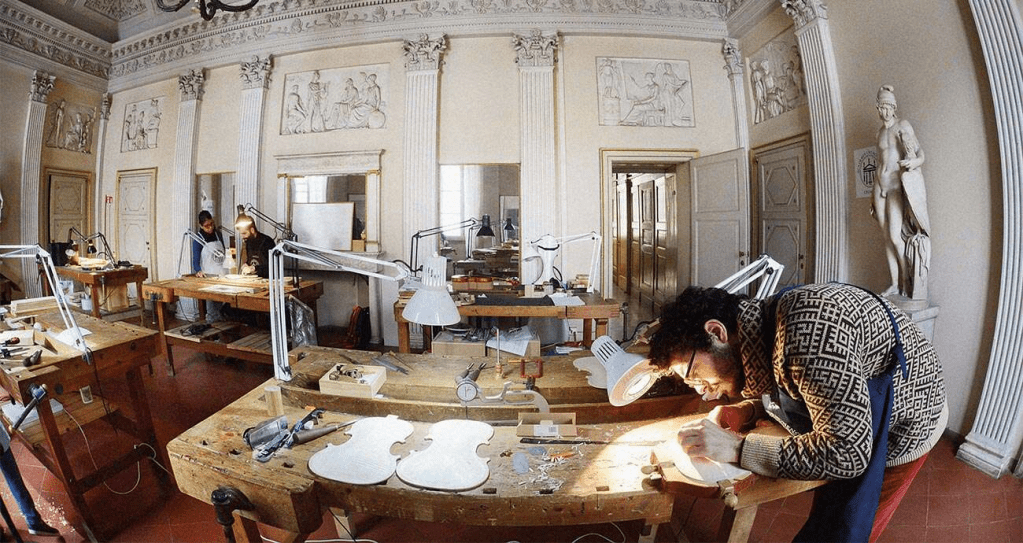
At the center of this project is an immersive research trip to Cremona, Italy—widely recognized as the birthplace of violinmaking and home to a living tradition of lutherie stretching back centuries. This is where the famous Stradivarius and Amati violins were made. This is where the techniques, materials, and philosophies that shaped the modern string instrument are still actively taught and preserved.
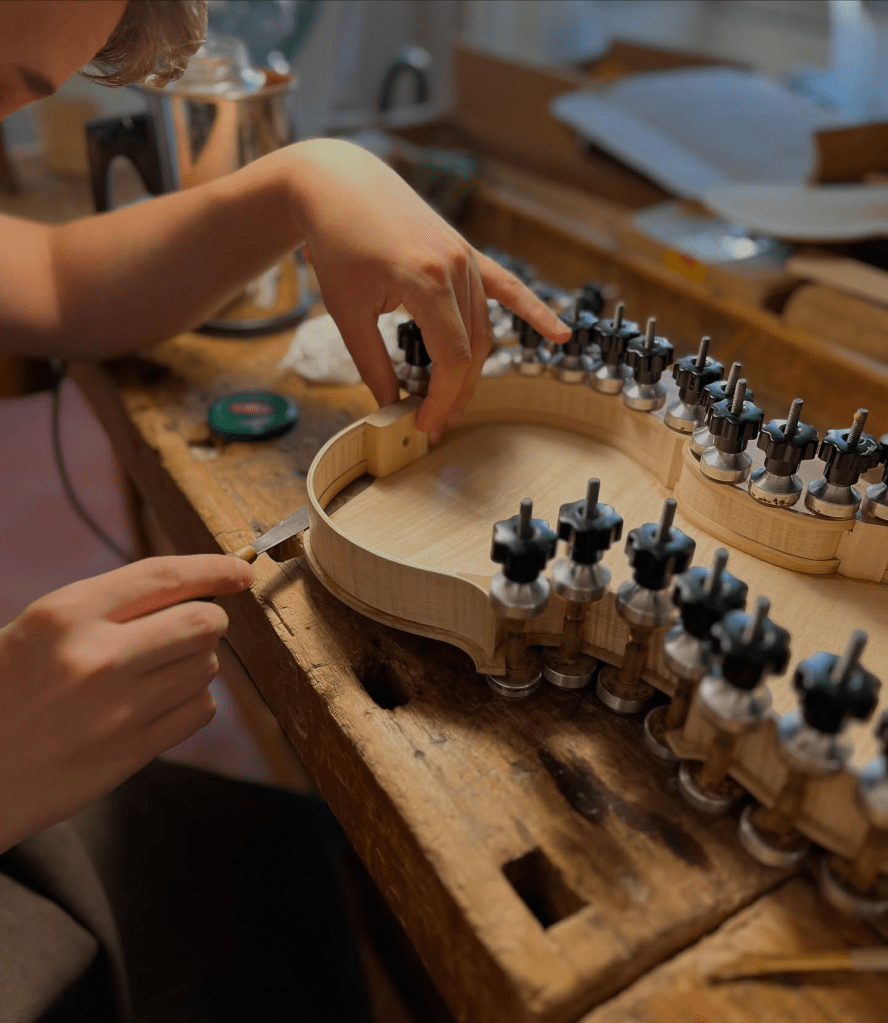
Over the course of several weeks, I will engage directly with this tradition through archival research in museum collections, observation of historical instruments, and hands-on instruction with experienced luthiers through an apprenticeship at the Academia Cremonensis, where I will hand-carve and build a violin from start to finish, to then bring back to the United States. I also hope to conduct structured interviews with preservation specialists to learn about historically sourced materials and contemporary ethical practices.
What I Will Build
Throughout the process of creating the instrument, I will be collecting data on acoustics, set-up, measurements, and Cremonese techniques, including materials, and how to diagnose certain “injuries” to the instrument. The primary deliverable of this project is a transferable educational workshop designed to be piloted at FSU’s College of Music and eventually adapted for use at universities, conservatories, and community music programs across the country. The workshop will include labeled visual diagrams illustrating instrument setup principles, a documented framework connecting setup techniques to physical positioning and movement, and practical, hands-on instruction that is rooted in historical context.
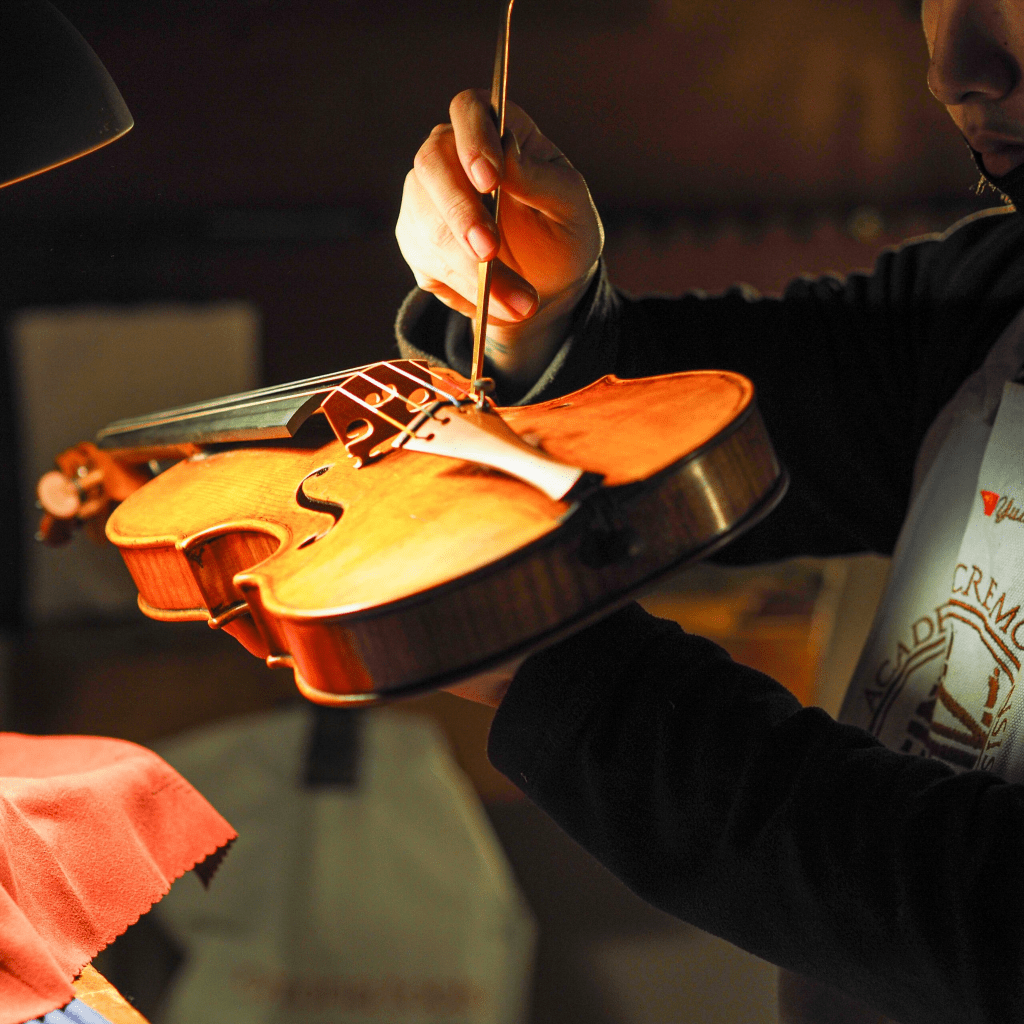
A central focus will be acoustics based on construction of the instrument, and the impact set-up has on the sound, tying together themes of proper maintenance, repair diagnoses, and injury prevention. The way an instrument is set up — the height of the strings, the angle of the chinrest, the curve of the bow — directly affects body alignment, joint position, and muscle engagement during performance. These relationships are rarely taught in a clear, visual, standardized way. My workshop aims to fill that gap.
Looking Ahead: Career Goals and Long-Term Vision
This project is just the beginning. After the summer, I plan to apply for FSU’s Honors in the Major program to continue this research at a deeper level, with the goal of publishing my findings and. Initially, I hope to pilot the workshop within FSU’s string community, gathering student feedback to refine and expand the curriculum over time, and taking the final workshop experience to other universities across the United States.
Every musician deserves to understand the instrument in their hands. They deserve to play without pain, to make informed decisions about their instrument set-up, and to access the kind of knowledge that provides the groundwork for our modern violin. This summer, I get to help build that bridge, and I cannot wait to share the journey with you.

