By Kristen Cavanagh, Florida State University
I am Kristen Cavanagh, a first-year student at FSU who is majoring in English. As a literature student, I see stories as instruments that explore the human condition—our arc, psyche, and vulnerabilities. My particular fascination with the novel has grown alongside my desire to understand religious phenomena. I think these disciplines are united in their pursuit of studying human character. T.S. Eliot asserted, “Our literature is a substitute for religion, and so is our religion,” pointing to humanity’s tendency to try and create meaning with hollow tools, such as novels to help cope and superficial faiths to help distract. In an age that is far more mechanized, distracted, and divided, I see literature and religion as two ways people choose to anchor themselves and find understanding.
For my Honors-in-the-Major project, I hope to dissect the Catholic Literary Revival in Europe. I plan to look at the works of Waugh, Chesterton, Greene, among others, as a “literature of protest,” adapting modernist techniques to critique the ideologies that had begun to permeate throughout Western society. However, my love for religious studies has encouraged me to first study the person outside the page.
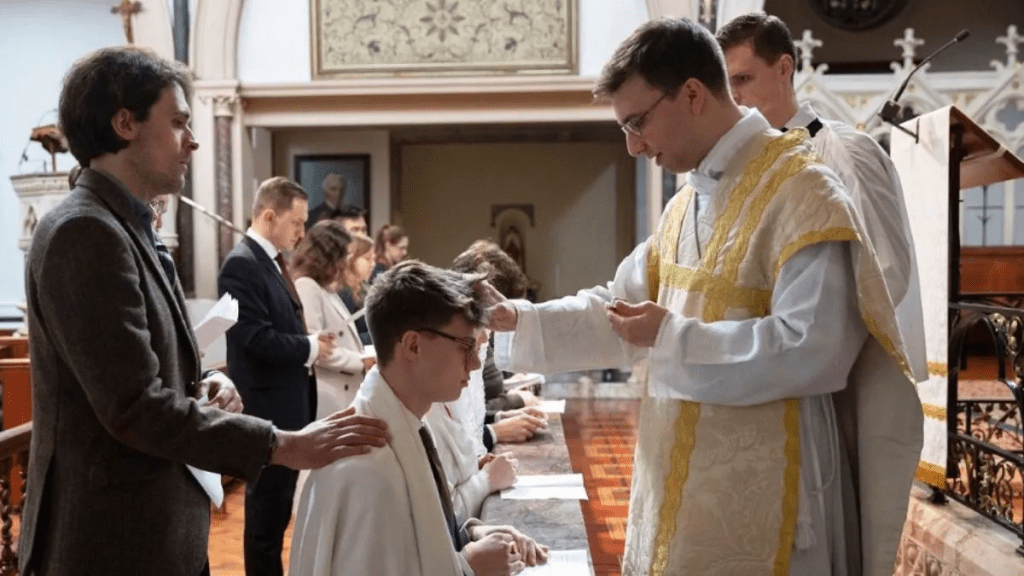
Therefore, I plan to travel to Oxford, UK, this May to understand the motive behind the resurgence of Catholicism among young adults. Recently, a wave of conversion was reported in England. Unlike past Catholic moments, this is driven by the laypeople and the youth. Given the tense social and political landscape in England, I hope to ascertain the factors contributing to this return to Rome. I plan to interview priests, organization leaders, and converts to grasp the extent of the revival, the impetus for it, and the social and religious implications of such a movement. Going beyond literary portrayals will allow me to acquire an ethnographic view of this claimed revival, helping me to understand the character of Catholic movements.
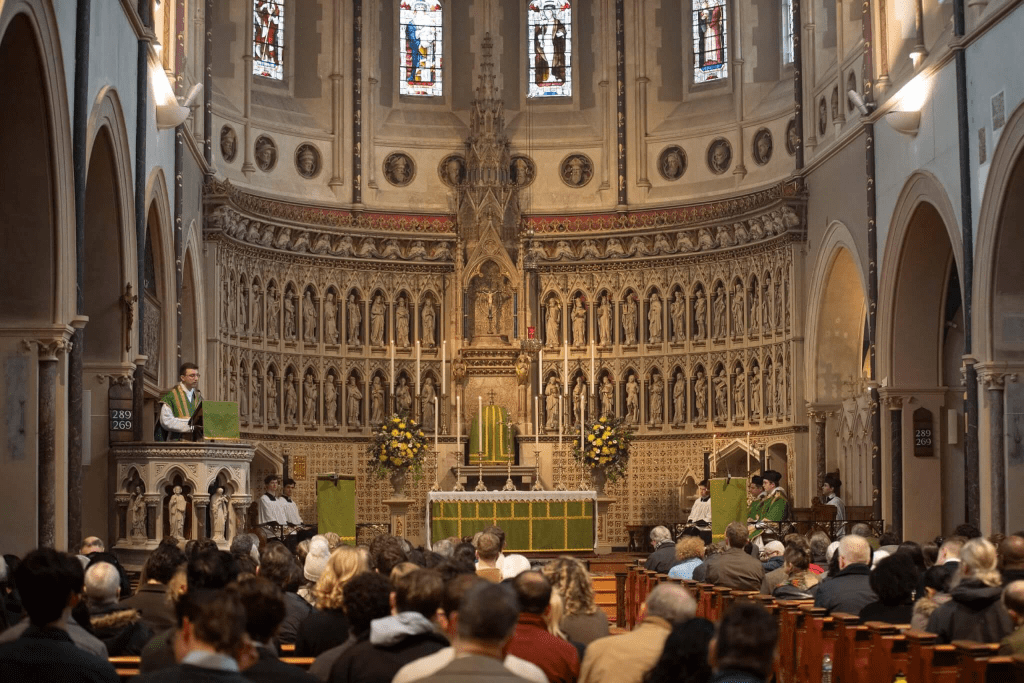
I chose to explore the rise of Catholicism in Oxford due to its ties to the literary revival and theological Tractarian movement, which sought to reframe Anglican history to be more aligned with Catholic practices. Furthermore, the city is linked to multiple religious communities and has a rich tradition of exploring matters related to faith and culture.
One may be wondering why this is relevant. After all, religion is supposedly meant to be a private matter. Yet, conversion is a process that signifies change not just in the soul but in society at large. Meredith McGuire identified conversion as being a gradual but transformative process, shifting “one’s view of the world.” Given the deep roots of Anglicanism in British society, such an alteration in perspective could mark the beginning of the end for the monarchy and the English church. More than this, the revival indicates a further return to religion and traditionalism among the youth—a trend that has appeared prominently in the United States. Certain scholars have suggested that this is indicative of a political dimension to the revival. Others feel that this return is pointing toward cultural dissatisfaction; at large, it is aligned with a rejection of spiritual vacancy and moral confusion. Through interviews and thematic analysis, I hope to understand the religious, political, and cultural drives behind this movement.
As an English major and religious studies minor, I am passionate about this project. I aspire to go deeper into academia in the future and also explore religious journalism. Therefore, this research will enable me to understand the interview process and research at a deeper level. More than this, I will be able to study human character outside of the page, interrogating people’s relationship to the Supernatural. I am beyond grateful for this opportunity and cannot wait to see what the future holds.

