My community based interest this summer is environmental justice. I want to learn more about how climate research and urban design can intersect to create more resilient cities. Social activism is a fundamental aspect of environmental justice and sustainability, so I think identifying what role I can play to support these causes will be helpful.
This summer, the direct stakeholders are my classmates in my TU Delft summer course, Planning for the Just City. We will make a presentation where we apply planning principles into a case study of a town nearby. The indirect stakeholders include the underserved community who we’re working with to propose revitalization of public spaces for. Since my experience includes two parts, the other direct stakeholders are the scientists in Sweden who I’ll be collecting samples with. Indirect stakeholders include scientists back in the US who will use the samples to study permafrost and how biological processes are affected from climate change.
My initial interest in environmental science was mainly conservation, restoration, and research based. In high school I was a research intern for a soil ecology lab where I did field and lab work for an experimental prairie project. I found natural science and research really interesting, but I was also inspired by David Attenborough’s documentaries. The stories highlighted there made a lasting impact on how I view nature and the urgency of the threats it faces. However, when I began to study environmental science in college, I realized I wanted to work on projects that would serve people more practically. I started to get interested in urban planning as well since well planned cities can improve environmental sustainability, economic development, and overall quality of life. For my global scholar’s research, I’m curious to learn about how community attitudes in more environmentally progressive regions like the Netherlands and Sweden influence sustainability initiatives there. I’m hoping to take these interests and gain perspectives this summer that I can apply to an environmental consulting role in the future and work on projects that help facilitate a strong sense of community and mitigate environmental harm.
There are some very interesting papers about how the mindset of an individual correlates to their general support of sustainability initiatives. For example, a study in Sweden found that individuals with higher levels of mindfulness were more supportive of sustainability transitions. In the Netherlands, a focus group study looked at generational differences in sustainability priorities, where there was a gap in values across age groups. This gap is important to consider when facilitating discussions about sustainability. For my summer course in the Netherlands, the pre-course work includes a paper about the history of Dutch urban planning, which has implemented versions on modern sustainability principles since the early 20th century. For example, they preserved stretches of green space between cities, created overspill towns for projected population growth, and applied a more scientific approach to city design that accounts for both social and economic needs. This course also explores spatial justice concepts, meaning how social justice influences the urban space. In my opinion, however, there is a lack of research that connects cultural attitudes towards the environment and how they influence sustainability efforts in a region.
After reviewing all four roles and considering my individual strengths, I can see myself fitting into the advocate role. Personally, I find it interesting to create detailed plans that can be executed with the systems we already have in place such as lobbying for government legislature and nurturing grassroots organizations to pressure fundamental change in the current system. Persuading leaders to change flawed policies and working in the private sector to create change is something I can see myself advocating for in my career. For my Global Scholars research, by learning from more successful systems, I’m hoping to further prepare myself to make a positive impact in this field.
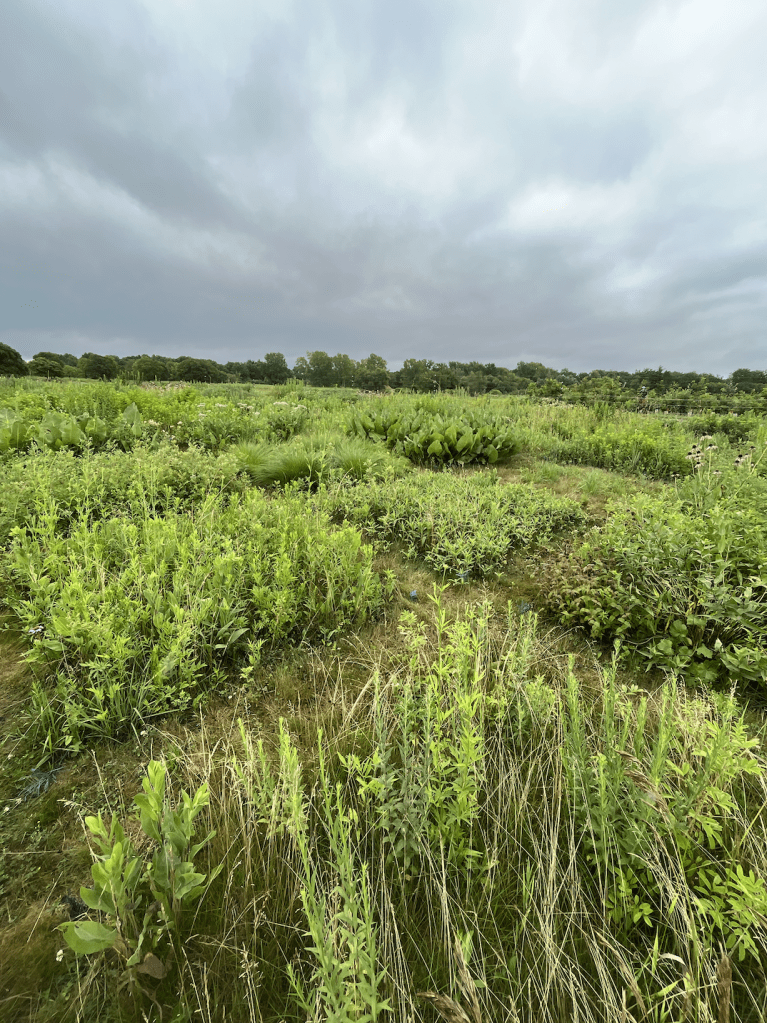
The Experimental Prairie where I did my first research internship in Lisle, Illinois
– Kaetlyn Patnaude

