
My research this summer aims to uncover the genetic basis of venom variation in the Florida bark scorpion. While that may seem like a rather random thing to be trying to investigate, it all leads back to my primary goal of being able to understand venom variation as a whole. Venom composition can vary significantly between populations and even between sexes within the same species. By investigating the genetic and biochemical foundations of this venom diversity, I hope to shed light on the mechanisms driving these differences.

One of the primary objectives of my research is to map out the genetic blueprint that dictates venom composition. By sequencing the genomes of male and female Florida bark scorpions and comparing their venom profiles, I can pinpoint the genetic variations that lead to differences in venom composition. This involves not only identifying the specific genes responsible but also understanding how these genes are regulated and expressed. The biochemical analysis of the venom components will further reveal how genetic differences translate into functional variations in venom.
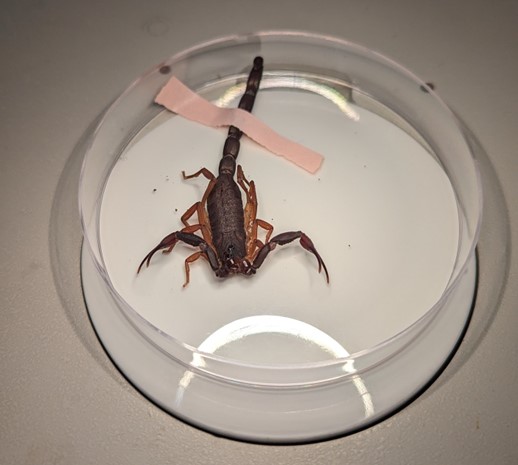
Through this work, I aim to contribute to the broader field of venom research, offering insights that can be applied to other venomous species. Understanding how this system is genetically regulated can help us understand how venom evolves and adapts as an organism’s environment changes around it. Additionally, understanding venom variation has implications beyond just understanding evolutionary mechanisms, such as discovering new pharmacologically active compounds that could be used in medicine as well as developing more efficient and targeted antivenom therapies.
Antivenom inefficacy remains a significant challenge in treating venomous bites and stings, and is something that I have seen first hand through my work as a snake rescuer in India. Current antivenoms often fail to address the full spectrum of venom variability, leading to less effective treatments and higher risks for those bitten by venomous creatures. Addressing these issues requires a more comprehensive understanding of venom diversity. Specifically understanding why these variations can occur may help to produce more targeted antivenoms that are tailored for specific populations of snakes or other venomous animals. My research aims to identify the specific genes and biochemical pathways involved in venom production, providing a clearer picture of how venom evolves and varies between sexes. Ultimately, I hope to use my research to help in the development of next-generation antivenoms that are tailored to neutralize a wider array of venom toxins more effectively.
The Featured image above is by Max0rz – https://www.flickr.com/photos/maxorz/4415457421/, CC BY 2.0, https://commons.wikimedia.org/w/index.php?curid=26266837

