By Danny Faust, University of Missouri-Kansas City
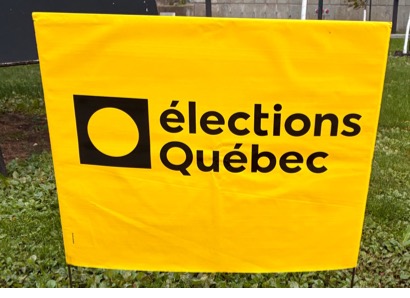
A sign indicating a polling place in Montréal, Canada
An Election like No Other
The Québec election was highly consequential, not only for regional and national politics, but for US-Canada elections, the upcoming Alberta separatism referendum, and as an expression of nationalist politics across the political West. The results of the election, seeing the big-tent Coalition Avenir Québec (CAQ) go from governing majority to zero seats in the Québec national assembly represents a seismic shift in Québec politics. Not two months ago had polling suggested CAQ polling in second place in Canada’s second largest province. While not fully indicative of seat allocation given Québec’s “first-past-the-post” system of electing members of the Québec parliament—the system of whomever wins the most votes wins the seat—the broader alignments of the province had suggested a diminished share of the proverbial Québec parliamentary pie for CAQ. This reality, however, was flipped on its proverbial head with consistent Québec Liberal Party gains and the ascendency of the Parti Québecois (PQ), a Francophone political party with a platform aimed at achieving Québec separatism. This, combined with the assurgence of the Québec Conservative Party (conservatives) coalesced into a truly shocking, meaningful result that provided substantial, compelling work for me before, and after, the election.
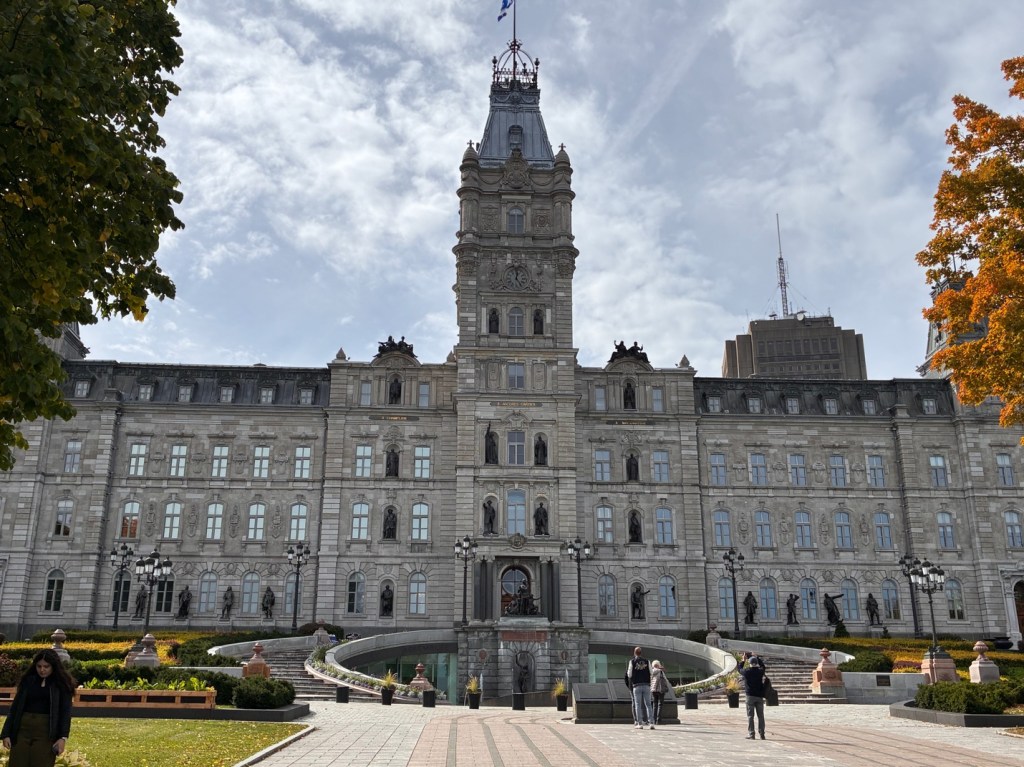
The Parliament Building of Québec in Québec City, Canada
My fieldwork in Québec provides me with relevant, substantive experience to complement my research interests. Formulated as an analysis of Québec party messaging on the US-Canada relationship and salient American political themes, this project transformed into an analysis on Québec party behavior on the topic of English language more broadly. This transition was highlighted through the focusing on strategic party pivots towards the highly polarized, politically salient issue of English language in Québec. Through the use of physical political media cataloging, party manifestos, and party leader statements, this research was able to provide insights into Québec political party behavior. Specifically, this research visualized the deliberate scarcity of English language messaging in Montreal by the QS and the PQ as deliberate targeting of reliable voting blocs of Francophone voters. Likewise, the heightened presence of party messaging by CAQ, the conservatives, and the liberals in Montréal reflects both greater access to Anglophone voters and a deliberate targeting of English as a salient political interest for vote-winning ends.
Seven (Thirteen) Years (Days) in Tibet (Québec)
If I may share a brief insight I jotted down in Québec City:
I feel a sense of insignificance and inadequacy in such a fundamentally different environment, surrounded with and in familiarity yet substantive distinctness. Hampered by my fear of inadequacy and indolence in my language capabilities, I oft resigned myself to silence, owing to my already-present fear of confrontation and a newly-discovered fear of difference, an undeniably odd juxtaposition for myself (see below!).
I feel so radically changed in my perception of out-groups, an experience I know I cannot possibly adequately perceive as much as I find myself different. I cannot possibly imagine how a refugee, someone who truly finds themselves usurped from their reality into a place so fundamentally different. Color, creed, language, architecture, smell. There is extraordinary substance in the literature describing how linguistics and language shapes thought, perception, dreams, experience. I have never so ably recognized how that may be true.
It remains my status quo that I exist within my society’s in-group. Regardless of the many disagreements I hold with the history, politics, and beliefs of what can be defined as American society, I can undeniably attach myself to every indication of being American. My experience has been, is, and will be, American.
This research provided me with both a deeply moving personal paradigm shift as well as the fullest expression of the research experience. It allowed me to explore my most integral social assumptions and challenge how I conceive of my environmental ideal. It provided a platform to not simply see, but feel and acknowledge difference through meaningful, sensory experiences; an impossible understanding without the fieldwork itself. Global research, to this end, provided a holistically unique and fulfilling experience unlike any other I have yet felt.
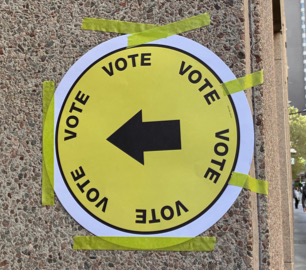
A sign indicating a polling place in Montréal, Canada
Acceptance of Disappointment
Academically, this trip was incredibly fruitful. Between experiencing comparative fieldwork in action and feeling both the positives and not so positives of the research process, I feel my ability to both learn and communicate information has been undeniably strengthened. For much of the trip, I worried about the consistent lack of data, data I had expected to encompass the scope of this project, enhancing both the project’s academic strength and my appearance as a researcher entering the grad school market. To fully expect to experience, see, understand something simply because you have a hunch is exactly the sort of academic mindset I was hoping to disavow in favor of critical, objective hypothesizing founded on prior research and my own body of critical and academic thinking.
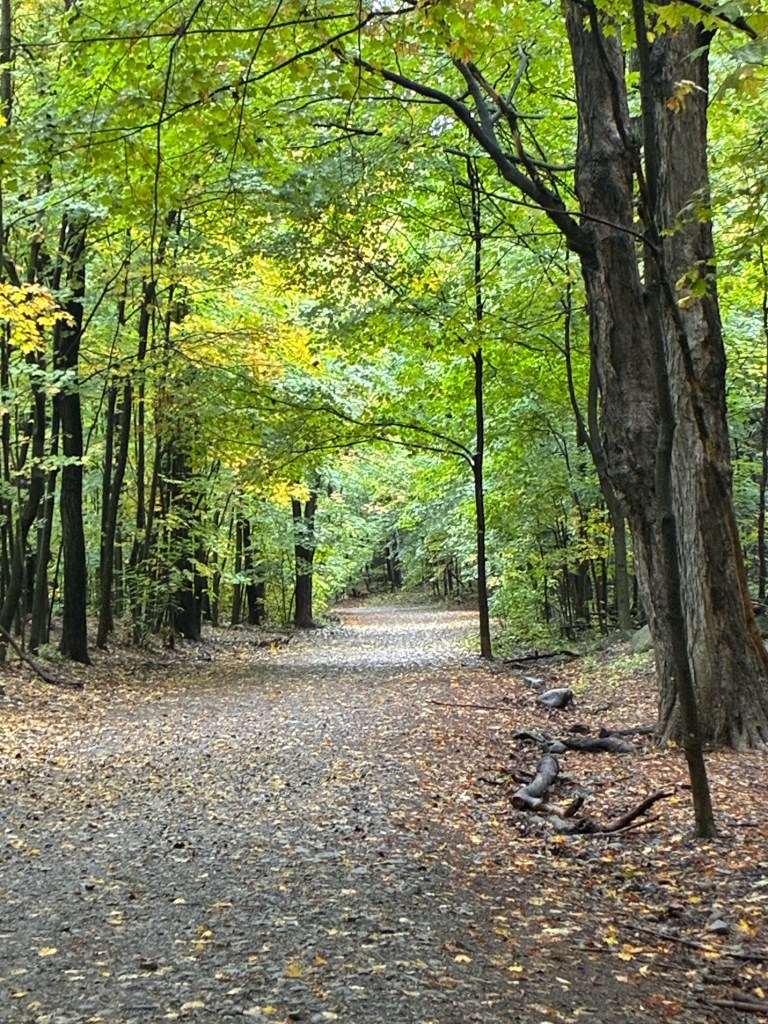
Mount Royal Park in Montréal, Canada
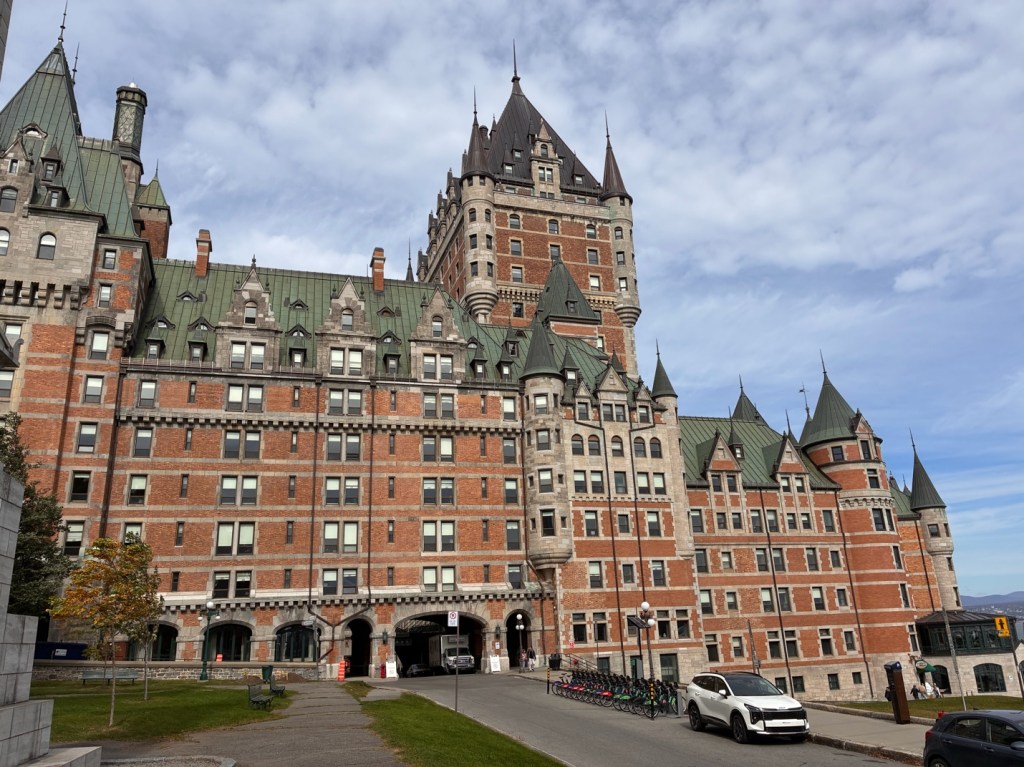
Fairmont Le Château Frontenac in Québec City, Canada
Among the most meaningful of academic skills I developed during my research was the ability to recognize that sometimes research doesn’t go the way one hopes and that is an entirely acceptable state of affairs! It certainly took the support of other faculty and peers who had been in a similar situation and who had felt what it’s like for your project to not be realized in the manner in which you hoped. Yet, that is the great gamble of research. The Onion, my go-to for factuality, once ran a skit where an academic came on to discuss his lifetime of work conducted on anteaters, just for him to realize mid-interview that he had felt he had wasted his life. It’s certainly played for laughs—it is the Onion after all—but there is a strange acknowledgement of lost time that I can sympathize with. Still, it wasn’t defeat that drove me to Canada (I flew) but a drive for tangible, lived research experience in the field of political science. Reframing this shortcoming into a victory, a “I had the opportunity to conduct research as an undergrad and go abroad and actually envision a substantive project” type of victory. I—we—got to experience the world in a manner that only dreamers can. We saw the opportunity to do something life-changing and we did it. We are better for it. I am better for it. I am a better academic now that I’ve experienced success and shortcomings in the field. I am a better professional knowing I can handle the sort of disappointment I experienced in Canada while simultaneously using disappointment as a vehicle for positive, realized progress on my academic journey. University made me a student; the Tyler Center made me an academic. I’m incredibly grateful that I was able to experience Québec through the lens of not only a curious foreigner, but, for lack of a better phrase, a real-life researcher. A scientist. This is what scientists do: learn, hypothesize, observe, review, critique, consider. Scientists draw conclusions from evidence they gathered based on hypothesizes they formulated off of both acquired knowledge and intuition. In every possible conception, Québec provided me with a nascent, formative example of this process.
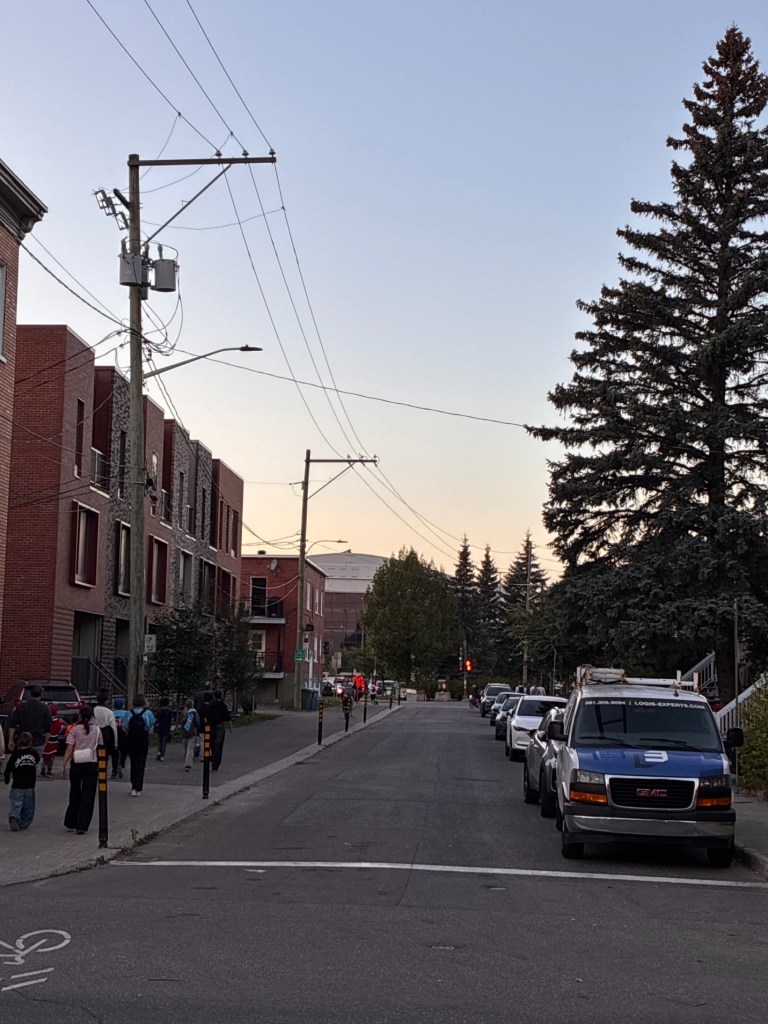
View of the Vieux-Limoilou neighborhood in Québec City, Canada
To the Future and Beyond
Canada taught me a lot, but now real life reenters the viewfinder. This experience solidified my desired trajectory of a PhD in political science. It taught me that experience isn’t simply a resume piece, but a bridge to new insights. This project has centered my academic interests towards approaching researching political party behavior through quantitative investigative methods like network analysis and spatial analysis to study cross-border diffusion and its give and take relationship with political party networks and the network of elites that dictate political party behavior in democratic countries. Through this pursuit, I hope to elucidate data-poor areas of import with both qualitative and quantitative analyses that help fill in the gaps of the biggest struggle of network analysis: insufficient data. I hope to pursue a research career investigating these behaviors, how political parties both organize themselves and adapt to cross-border diffusion.

