By Angelika Austria, University of Washington Seattle
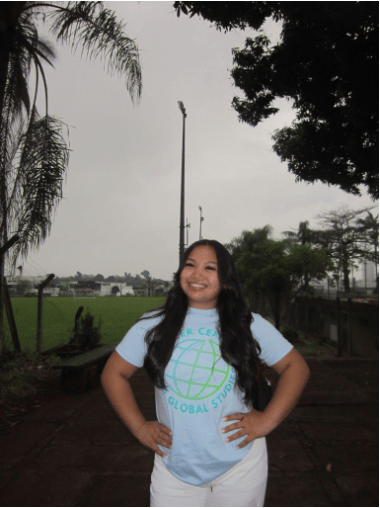
After embarking on my journey in Londrina and São Paulo, Brazil, I have gained a new perspective on what healthcare can look like beyond bedside nursing. As a nursing student, much of my education has focused on direct patient care, clinical skills, and the responsibilities nurses have at the bedside. While these are essential parts of nursing, this experience helped me recognize how research, public health, and community-based programs can make an equally meaningful impact on people’s lives.
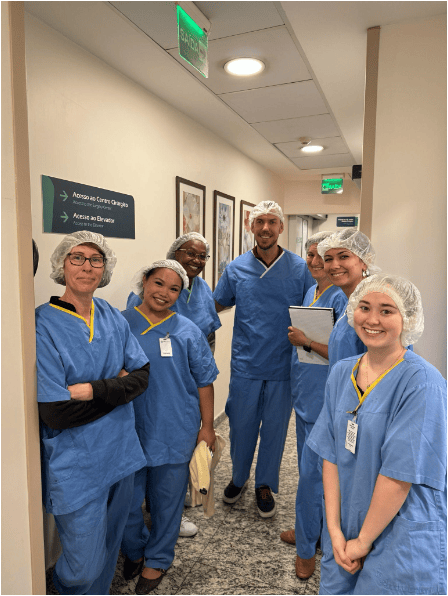
Throughout our time in Brazil, we visited public and private hospitals, explored university research programs, learned about Brazil’s Unified Health System (SUS), and interacted with nursing students from different universities. Each experience introduced me to different approaches to healthcare and challenged me to think beyond what I am familiar with in the United States. Learning about SUS, Brazil’s publicly funded healthcare system, was especially valuable because it gave me a better understanding of how healthcare access, research, and public health initiatives can work together to support communities. Seeing these systems firsthand helped me appreciate that there is no single way to approach healthcare, and that learning from other countries can help us reflect on our own practices.
One of the most meaningful parts of this experience was visiting a university research program focused on resistance training for older women. Before this trip, I mostly associated research with collecting data, conducting experiments, and publishing results. However, this program showed me that research can be so much more than that. The women attended exercise sessions several times a week, where they participated in strength training while also building relationships with one another. The program created a sense of community through music, dancing, conversations, and even checking in on each other outside of scheduled sessions.
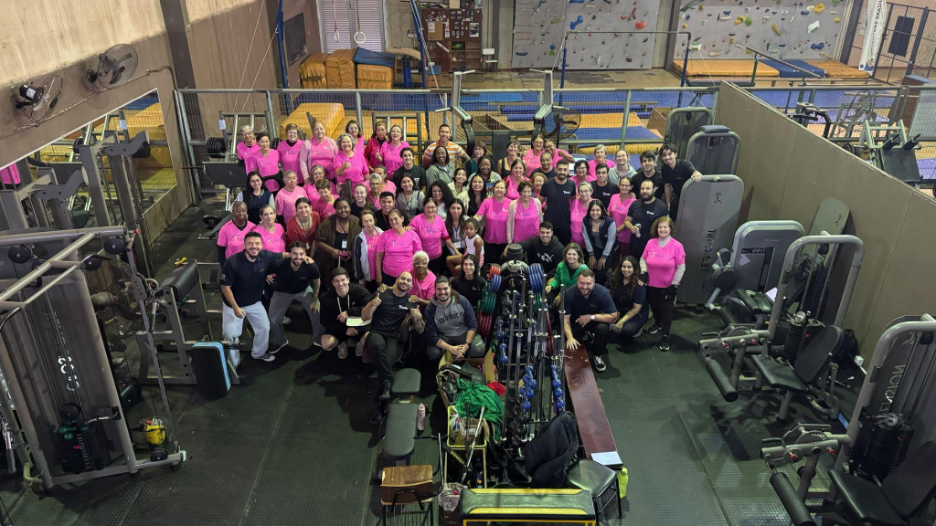
What stood out to me was how the program addressed multiple aspects of health at once. Resistance training supported physical health, while the social interactions helped create opportunities for connection and improved quality of life. The program also demonstrated how meaningful community health initiatives do not always require expensive resources to make a difference. With the involvement of university students, faculty, and researchers, a relatively simple intervention could provide benefits beyond its original research goals. It made me think about how similar programs could be implemented or expanded in the United States, particularly for older adults who may experience social isolation or have limited access to fitness opportunities.
A major theme I am taking away from this experience is that healthcare extends far beyond treating illness. It also involves creating opportunities for people and communities to stay healthy in the first place. Research and physical activity both play important roles in this process. Whether through exercise programs for older adults, public health education, disease prevention, or accessible healthcare services, these efforts can influence health long before someone needs to be admitted to a hospital. I also saw how research can become part of everyday life when universities and communities work together to turn knowledge into practical programs.
This message is important to share because public health nursing does not always have the same immediate, visible results as bedside nursing. In a hospital, a nurse may administer medication, stabilize a patient, or help someone recover from an acute illness. In public health, the impact may be less obvious at first. It might involve preventing disease, encouraging healthier habits, improving access to resources, or building programs that help people maintain their independence as they age. These efforts may not always receive the same recognition, but they are essential to keeping communities healthier and reducing preventable illness. This experience has helped me see that both approaches are necessary, and that nurses can contribute to health in many different ways.
I am also walking away with skills that I would not have developed in the same way without this global research experience. Living and learning in another country challenged me to step outside my comfort zone, communicate across language barriers, and become more comfortable asking questions when I did not understand something. I learned that even when there is a language barrier, people are often excited to share their experiences and explain their work when you show genuine interest. I also became more intentional about immersing myself in cultural experiences instead of viewing them only as a visitor. These skills will be valuable in nursing, where patients and families bring different backgrounds, beliefs, and experiences into healthcare settings. Being willing to listen, ask questions, and learn from others is essential to providing culturally responsive care. Comparing healthcare systems is not about deciding that one country has everything figured out. It is about recognizing different approaches, understanding their contexts, and identifying lessons that may be useful elsewhere.
Ultimately, I want this project to reflect my interest in becoming a nurse who looks beyond the individual patient and considers the broader community. My experience in Brazil has shown me that there is so much more to healthcare than what happens at the bedside, and I want to continue exploring those opportunities throughout my nursing career. As I move forward in my final year of nursing school, I hope to become involved in research in the United States, particularly projects that connect health promotion, community engagement, and improved quality of life. I look forward to working with community based participatory research in my BSN honors program this year.
I returned from Brazil with more than new knowledge about another country’s healthcare system. I came home with a greater appreciation for research, a broader understanding of public health, and a reminder that some of the most meaningful healthcare interventions happen outside traditional clinical settings. This experience has encouraged me to keep asking questions, seek opportunities to learn from different communities, and consider how the lessons I encounter can inform my future practice. Most importantly, it has helped me recognize that becoming a better nurse means understanding not only how to care for people when they are sick, but also how to help them live healthier lives long before they need that care.

