By Kate Laudy, Syracuse University
Hi! My name’s Kate Laudy, and I’m from the SF Bay Area, California. I go to Syracuse University in New York, although I’m currently studying abroad in Santiago de Chile, taking biology and policy classes at Pontificia Universidad Católica de Chile (UC), learning about the local and regional history of dictatorships through my home university program, and improving my Spanish living with a host family. I’m majoring in Biology and Environment, Sustainability & Policy, with a minor in Spanish, and I’m part of the Lamit Lab back in Syracuse, an ecology lab focusing on fungal ecology (especially mycorrhizal fungi), wetlands, and habitat gradients. After graduating, I hope to do some political campaign work before getting my Masters in International Relations. I want my career to focus on helping to create more effective scales of governance for some of the contemporary issues that don’t cleanly fit into lines on a map, and on the intersection of science and policy. Later in my career, I hope to return to scientific research, especially ecological and animal behavior fieldwork.
I spend a lot of time outdoors: I love hiking, skiing, trekking, diving, and I’ve finally been learning to climb while I’ve been in South America! The first thing you’ll see me do with free time is travel – I love seeing new perspectives on the world, building connections across geographical and cultural distance, and visiting the hometowns of friends abroad. I’ve often found ways to integrate my travel with my other passions, whether through volunteer work or personal research projects. This will be my first research abroad that I’m having officially funded and documented, so I feel incredibly lucky and excited for this experience.
My project will explore the underground world of bofedales (high-altitude Andean peatlands) in Northern Chile, with a focus on the human nature of these ecosystems and the indigenous communities that actively engineer and maintain them. My guiding research question is: How do different land management strategies influence below-ground microbial communities in high-altitude peatland ecosystems? The specific practices I’m most interested on studying at the moment are the presence of certain wild and domestic camelid species (i.e. llamas, alpacas, vicuñas, guanacos), and the use of check dams, although this may change as my project develops. My favorite part of research is being in the field in any capacity, gathering data and collecting samples, so the opportunity to get to physically go to these field sites is incredible.
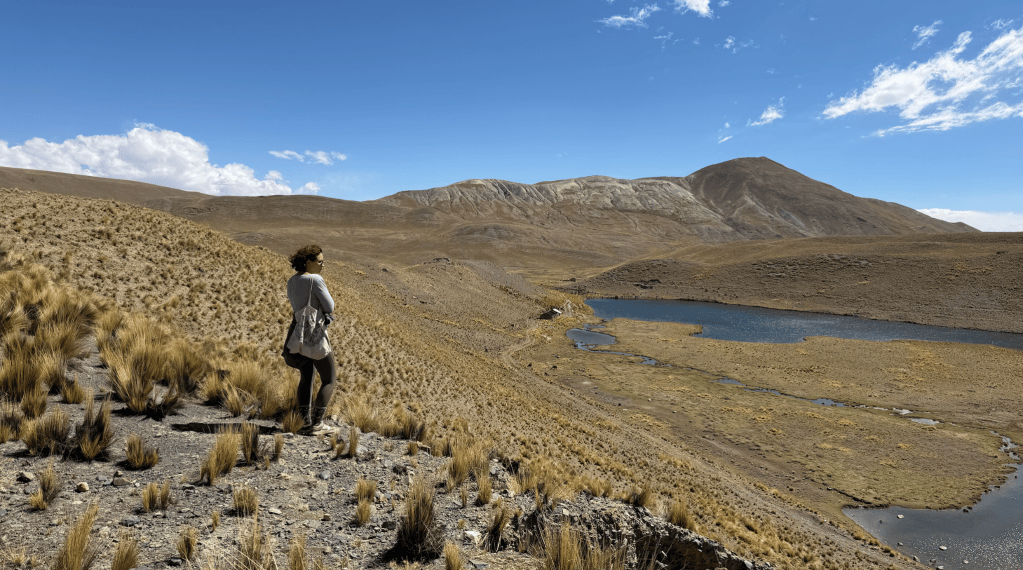
I originally got interested in bofedales because I knew I wanted to try to do ecology research while I was abroad, and came across these incredibly unique ecosystems pretty early in my preliminary research on South American wetlands. I mentioned the idea to my lab mentor, who shared that he had actually done research in the past on the Bolivian side of the border, and would be super excited about getting complimentary samples on the Chilean side. That same semester, I took a class with a professor who did a lot of work in bofedales, which is how I came to learn a lot more about the human side of these environments. As a STEM/humanities double major, I’m consistently frustrated by the structural divide between the two fields, and I became really excited at the idea of a project that would showcase their deep interconnectedness, especially one that so clearly serves as a case study for the current and disproportionate impacts of climate change on certain human and nonhuman communities.
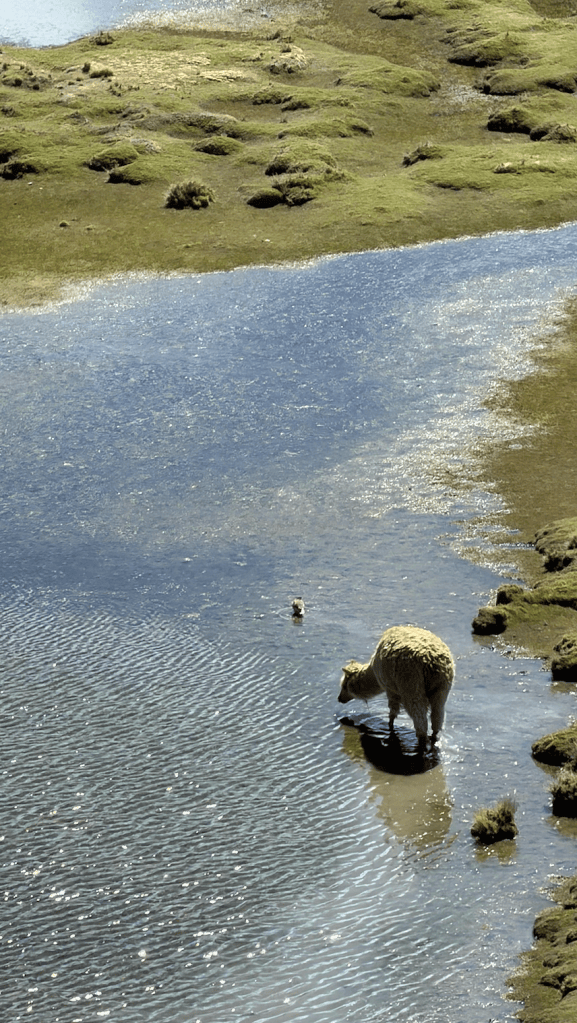
Most of my fieldwork will take place in early December, at the end of my semester here in Santiago. I had the opportunity to go to Bolivia this past weekend to check out some of the bofedales outside of La Paz (photos above!), which will be a super cool qualitative point of comparison when I’m up north in Chile. I plan to fly to Calama, take the bus to San Pedro de Atacama, and from there depending on how much time I have available I will either rent a car to drive to my field sites, or camping gear to trek there. I plan to visit 2-3 ayllus (local management parcels), spending a week or so in each collecting soil samples and talking to locals. To be honest, I’m a bit overwhelmed thinking about language barriers, transportation/access, and permits – but I’m planning ahead, being proactive, and leaning on people more knowledgeable than myself!
Doing research abroad can be an ethically complex process, especially when taking physical samples, because while the underlying work might be important, it often tends to re-create extractive patterns between the Global North and South. I am particularly conscious of this coming from the United States to do work in South America, where the historical and present international economy tends to fall strongly within that narrative. I’m making sure to work collaboratively with Chilean and other South American researchers, and trying to be conscious about not only what they can do for me, but what I can do for them. Sitting in and navigating this nuance is all really important experience for the career I hope to have.

