By Aleksandra Woźniak, Johns Hopkins University
After returning from my travels, I feel as though I have stepped into a world separate from the one I have inhabited throughout the summer. Or perhaps it is the perspective I have gathered that has suddenly made the familiar seem distant. Somewhere between airport gates, where the language slowly changed back to English, I began to feel the distance: recognizing that the people and places that I spent my summer with were an element of the past, but I also sensed the gap between the person who left in May and the new person returning.
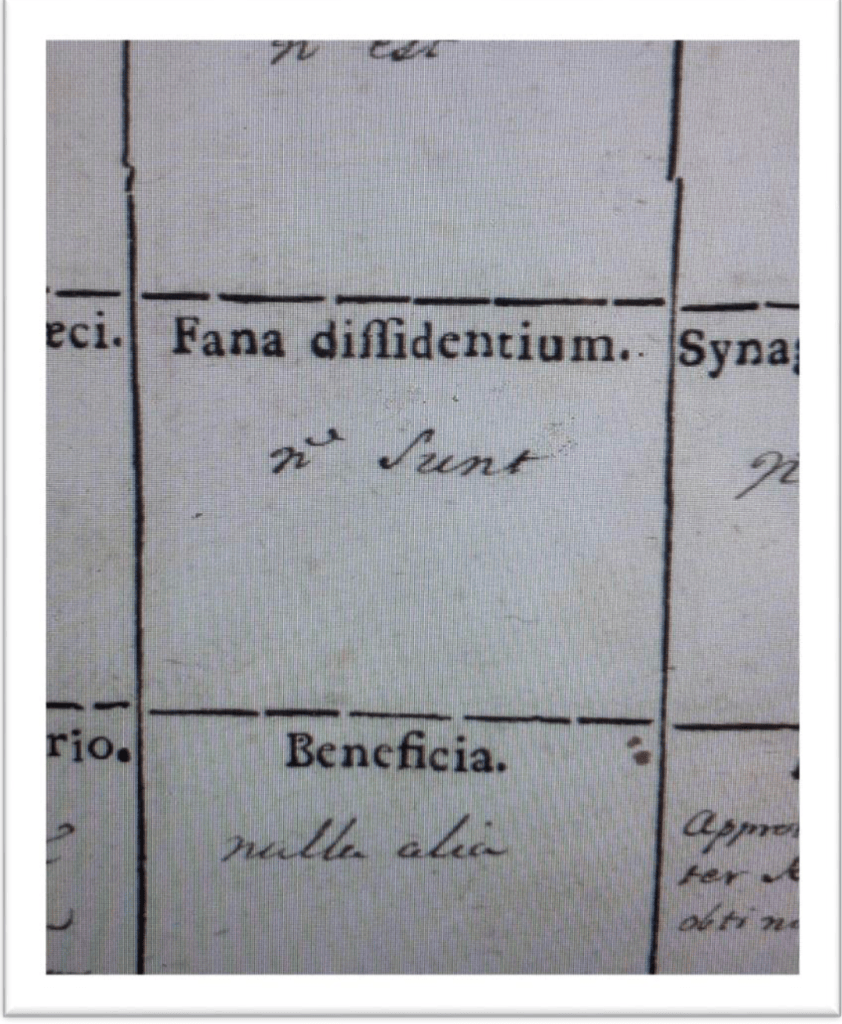
This summer was unlike any I have had before—completely separating my studies from my usual campus setting, I gathered observations from changing scenery rather than changing slides. I was presented with the challenge of translating Latin and navigating where potential evidence might lie, and I began with conversation, which proved to be the most invaluable tool I encountered. Conversation opened portals to local memory and to the theology of the land, which contains a form of memory that cannot be accessed through an archive alone.
It was through conversation that I met historians and their students and found myself enveloped in the academic sphere there. And with every exchange more was revealed, supplementing my readings at this time.My research consequently developed in several directions. I began to understand the history of the region within the broader context of the Polish Reformation. Archival documents established a strong and continuous connection to the royal city of Kraków, while situating the local nobility within the greater szlachta context. In searching for evidence of Arian activity in Limanowszczyzna, I encountered Nowy Sącz as an epicenter of the Reformation in Lesser Poland, and my research began to move in that direction.
The old chronicles offered anecdotes that brought particular histories into view. When examining these sources, I found confirmation of a date I had initially believed to be fictitious: the establishment of the Arian congregation in Nowe Rybie.
This discovery changed the scope of my inquiry. Having confirmed the presence (and considerable extent) of Arian activity in the region, I was able to establish the historical context necessary to approach the final part of my hypothesis: the possible influence of liturgical music. My research has now turned toward the church itself, and I am sorting through digital archives in search of musical materials. In this sense, the music comes last—a coda, if you will. The development was what makes its arrival effective.
Alongside these discoveries, I experienced a more personal shift in how I understood historical fact. I had previously approached historical explanation as something that could be made increasingly rational and complete through the accumulation of evidence. This summer made me more attentive to the human aspect present in all of it. The influence of power dynamics, individual motivations, and other deeply human qualities in shaping both historical events and most certainly visible in the ways they are preserved. To historicize, then, is not simply to place an event within its chronological context. The people I study lived in the sixteenth century, but they were not so distant from us both in their fears and desires.
As my experiences and thoughts continue to crystallize, I am beginning to consider how they might reshape the history I have been trying to reconstruct. The region I study housed communities that inhabited the same landscape without necessarily sharing theological convictions, yet the religious diversity of early modern Poland is often obscured by the perception of the country as historically uniform in its faith. Perhaps this is what it means to look next door: to recognize that proximity does not necessarily produce familiarity, and that the histories closest to us may still contain worlds we have yet to discover, while simultaneously being worlds away.