By Eleni Klissas, William & Mary
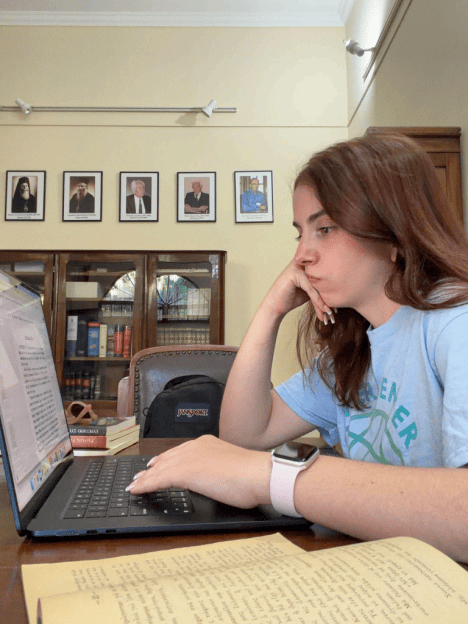
Archival research on the other side of the ocean is lonely work. An hour on the Pikrodaphne tram line, a ten minute walk through the residential area of Nea Smyrni, one small flight of stairs, a quick hello and chat to the secretary. This was my morning routine. All towards a stack of books and files that would contain the most fascinating, gruesome, and tragically mundane experiences of Pontian refugees. Any complaints I felt well up inside me at my own discomfort at the isolation and long commute became almost ridiculous. Here were the names and statements of hundreds of people, if not thousands, lying before me, who had been forced to migrate thousands of miles from their now hostile homes to a “homeland” that welcomed them with clenched fists, social isolation, and a world that would slowly forget them. Refugees with my own last name told stories that contained visions of nightmares beyond my true comprehension.
My body ached thinking of the pain it would never feel, with this passport that makes me an untouchable citizen of the world. How ironic that my research that deals so thoroughly with the role mobility played in the dissolution of these peoples lives, my own mobility comes at the expense of those outside the imperial center. Who are the Pontians of today, forced from their homes while the world forgets them? And who were the analogous versions of me in the 1930’s, who sat comfortably in the cool dark archives of some country foreign to them, and who locals greeted with tight lips.
The value I took away from engaging with research in foreign contexts is not just the knowledge that “foreigners” hold, in their books and minds, but the way it forced me, as a student of the metropole, to reckon with the present. Because the same systems and treaties that smothered five generations of Pontians exist today, this research is relevant and alive. Young people in Greece do not like Americans, and yet they love the idea of America. A Pontian-Greek friend I made told me “I say ‘tourists go home,’ but it has always been my dream to move away from here, to move to Manhattan and see a place that’s not being left behind.”
My research was my entry point into seeing not just myself, but the world as a whole, as an immediate reality, and not something I can purely study as an unattached observer. As is said in the popular proverb, “Even if Pontos has died, it will blossom and bear again.” I learned that there is real weight attached to the production of historical analysis, and that to be a neutral party is never an option. As fraught with tension as that proverb is, I want to take an active role in its rebirth. I feel more conviction than ever to learn Pontiaka, to travel to Pontos, and to continue my research. A PhD doesn’t seem like a ridiculous far-off dream anymore, but a tangible goal I can and want to work towards.