Before this summer, I probably would have watched UnCharitable, agreed with most of its points, and moved on. After spending six weeks in Florence researching nonprofit organizations, I found myself watching it very differently. Instead of simply accepting what the documentary was saying, I was constantly comparing its arguments to the organizations I visited and the conversations I had throughout my research.
UnCharitable focuses on one of the biggest misconceptions surrounding nonprofits: the idea that spending money on salaries, technology, fundraising, or other operating expenses is somehow a sign of poor management. The documentary argues that this way of thinking actually hurts nonprofits because organizations need resources to grow, attract talented employees, and continue serving their communities. Rather than judging a nonprofit by how little it spends, the film encourages people to focus on the impact it creates.
I thought the documentary did a great job explaining why this misconception exists. Before beginning my research, I had never really considered how much pressure nonprofits face to keep administrative costs low. It is easy to assume that every donation should go directly to a program, but the documentary makes a strong case that organizations cannot create lasting change if they are afraid to invest in themselves.
At the same time, my experience in Florence reminded me that there is no single formula for a successful nonprofit. Every organization I visited approached challenges differently. Some depended heavily on donations from individuals, while others worked closely with local governments or community partners. Their financial situations looked different, but they all shared the same goal of serving people in meaningful ways.
One thing I think the documentary could have explored more is the role that local communities play in nonprofit success. Throughout my research, I noticed how much trust and personal relationships mattered. Many of the organizations were deeply connected to the people they served, and those relationships often became one of their greatest strengths. Financial sustainability is important, but it is difficult to separate it from the sense of community that helps organizations thrive.
Watching the documentary also made me think about how easy it is to look at nonprofits only through financial data. As an accounting and finance student, that was naturally where my attention went when I first chose this topic. Spending time with nonprofit leaders challenged that mindset. Every conversation added context that could never be captured in a spreadsheet. I began to see financial decisions as choices that affect employees, volunteers, donors, and the people who rely on these organizations every day.
One of the biggest lessons I will take away from this summer is that research is not just about collecting information. It is about listening, asking thoughtful questions, and being open to ideas that challenge what you already believe. Watching UnCharitable after conducting my research made me realize how valuable firsthand experience really is. The documentary introduced important ideas, but visiting organizations allowed me to see how those ideas play out in real life.
As a Global Scholar, I have learned that understanding a topic requires more than reading articles or watching documentaries. Those resources are valuable starting points, but they cannot replace conversations with the people who live these experiences every day. Looking back, I think that is what made this summer so meaningful. My research was never just about nonprofit finance. It became an opportunity to better understand the people, communities, and relationships that allow organizations to make a lasting impact.
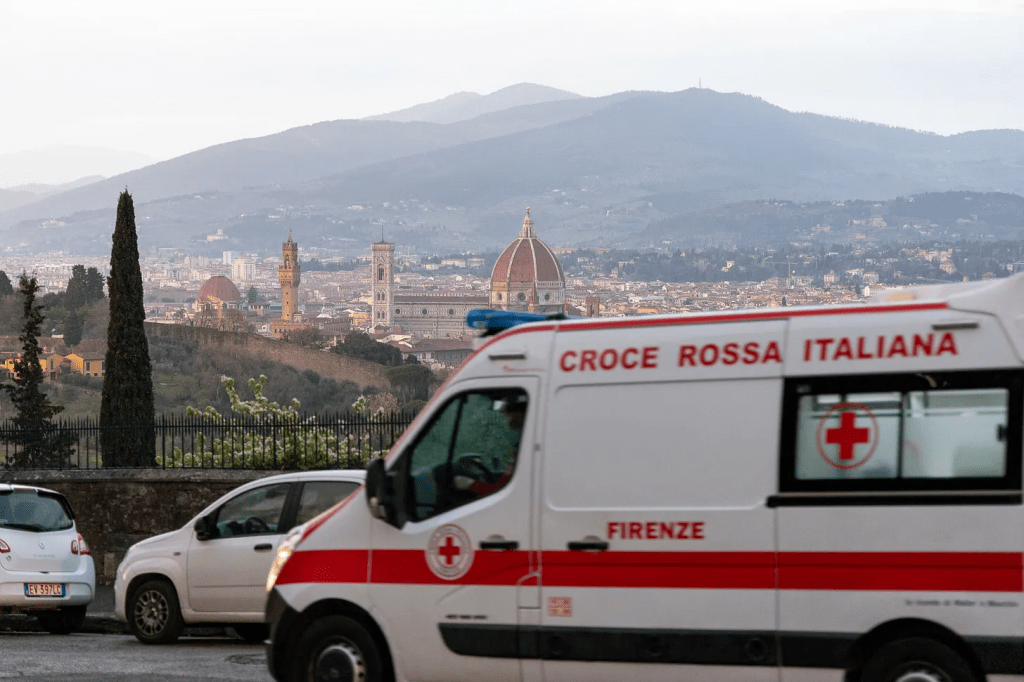
An Italian Red Cross ambulance in Florence.

