From traveling to data collection, let’s check in on what I’ve been up to since touching ground in Florence!
By: Madalynn Stackow
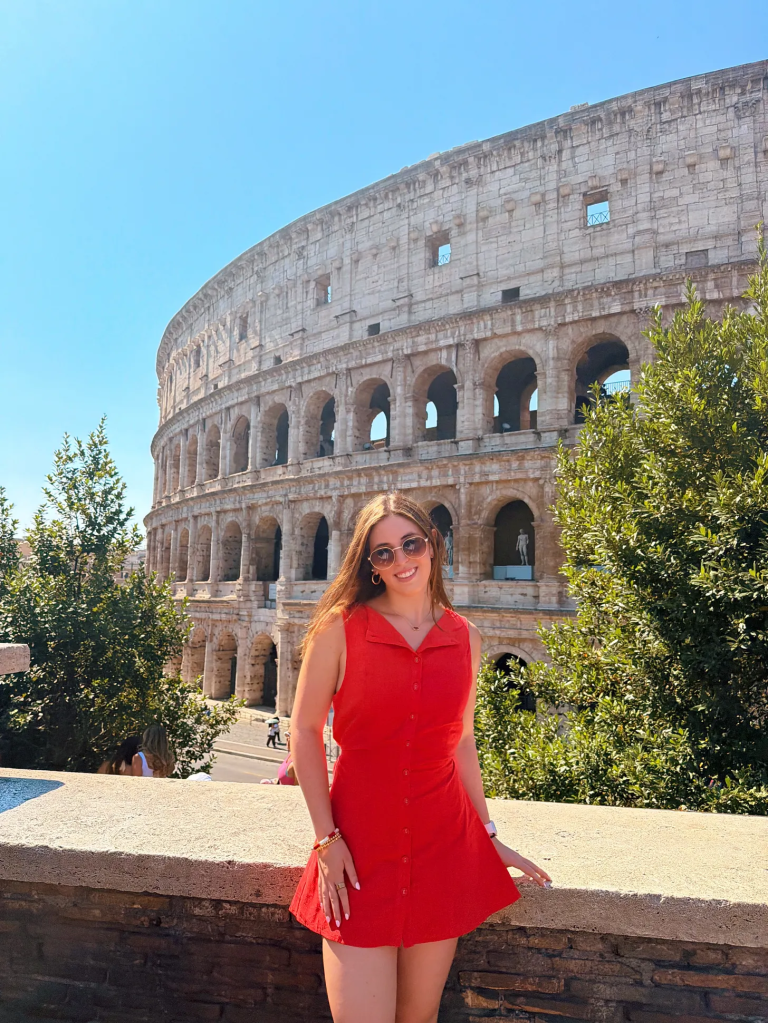
Here we are! I am settled into Florence and I can’t believe I am over half way into my study abroad experience! I’ve gained new friendships, tried new foods, and made countless memories. On that note, I have also enjoyed weekend trips to Croatia and Capri, and day trips to Rome and Cinque Terre. I am forever grateful to have experienced life in Florence, and am eager to dig deeper into the lives of Italian individuals through my project.
I am happy to share that I have launched data collection! I met with my first round of clinicians, and had a lovely experience with Dr. Mary Ann Bellini. We had a productive conversation and I learned about the mental health concerns of Italians and even some history. I have several more interviews arranged and I look forward to meeting with more clinicians and learning more about the ins and outs of psychology in Florence.
N – New Information
From my first interview, I learned a great deal of information that will be useful for my project. One thing that stood out to me was that adolescents in Italy appear to be a population of concern and may be especially vulnerable to mental health challenges. There is an immense amount of pressure on this group as they move closer to making decisions about their future. Italy’s education system is different from that of the United States; high school lasts five years and students choose a specific educational path. If a student chooses not to continue in a traditional academic setting after middle school, they may pursue a trade or technical route instead. In some ways, this is similar to the United States, but I would argue that academic education is more commonly expected and pursued through adolescence in the U.S. than in Italy. The decision to pursue a trade in the United States is typically made later, often around a student’s senior year of high school.
These significant life decisions can create considerable stress and uncertainty for adolescents. While young people in both Italy and the United States face pressures related to their future, the sources of that pressure may differ based on cultural expectations, educational structures, and societal norms.
I have always known that adolescents are a population of concern when it comes to mental health conditions. However, I never realized how prevalent these concerns are in other countries as well. Prior to this interview, I tended to think about adolescent mental health primarily through a United States lens. Hearing that Italian mental health professionals identify adolescents as a particularly vulnerable population highlighted the fact that many of these challenges extend beyond national borders. Although the specific stressors and cultural contexts may differ, it appears that young people in many countries face significant pressures as they navigate important educational, social, and life transitions.
S= Self reflection and evaluation
I won’t lie, settling into Italy at first was difficult. I am a very routine oriented person, and I set my daily habits and lifestyle aside to spend 6 weeks abroad. It’s good for me to do this while I am young, and quite frankly this is the only time I will be able to do this. I’m glad I did, but it wasn’t as easy as it seems for some people. I was talking with my roommate and we both discussd how social media seems to romantize study abroad and how amazing it is. Don’t get me wrong, this is an amazing opportunity, but social media only shows individuals out galavanting in new cities and living their best lives. Social media doesn’t show individuals who are homesick or having trouble adjusting to their new surroundings. I’d say my homesickness wore off after a week in. I found a gym I enjoyed, made a group of friends, and tried a variety of Italian cuisines. Once classes began, I started to feel more settled into life in Florence. If someone had told me back in January, “You’re going to be doing laundry at a laundromat surrounded by people from all over the world,” I would have laughed in their face. Yet, those small, everyday experiences have become part of my routine and have helped make Florence feel more like home.
At the start of Global Scholars, I didn’t know what I wanted to do while in this program. It was a bit intimidating because my peers had these grand global ideas, whereas I didn’t entirely know what I wanted to do. I applied for Global Scholars after I just started my Undergraduate Research Opporutnity Program fellowship. I was new to research, and I hadn’t even been offerred a position in a research lab yet. All I had was an acceptance into the FSU Florence Study Abroad Summer B Program. I knew I had a desire to conduct research. Afterall, I aspire to earn my Ph.D in Clinical Psychology, which requires an immense amount of research experience under an applicant’s belt. I felt as though this was a unique opportunity to have an international learning experience. In December, I was offered a position to work as an undergraduate research assistant in the Laboratory for the Study and Prevention of Suicide Related Conditions and Behaviors. I worked with my mentors on how I could make the most of this experience. I originally ran with the idea of comparing psychological services offerred in both FSU Tallahassee and FSU Florence. What I have since realized is that at the FSU Psych clinic, most therapists are graduate students, whereas in Florence, Dr. Lucrezia Fossi, who is the Director of Student Affairs for FSU Florence, recommends psychologists within the city to students. With that information, I decided to change my CBI to focus solely on the common mental health concerns in Italy and how psychological services address these challenges within the country’s cultural context. This felt more appropriate, as the clinicians in my sample work with a broader population than just FSU students.
E= Environmental influences
Let me start off with sharing one thing: Italy is HOT. I’m talking 100º+ days. But, I knew that going into the program. I will say, and I was discussing this with a few friends at lunch, it is interesting how the class attire dynamic varies from Florence to Tallahassee. I spent several shopping days at the mall prepping for my Italian summer. But if I look around me, everyone is doing this. In Tallahassee, some students say they roll out of bed in sweats to class. Here, students prioritize wearing matching linen sets, cute sundresses, and maxi skirts to their 3hour 45 minute classes. When I look around Florence, everyone is dressed that way, even the locals. On top of that, I have enjoyed walking around the city of Florence. I walk whenever I can in Tallahassee, so that is a major similarity. No one really has a car, there aren’t many places to park. Trains, buses, and taxis are the primary modes of transportation.
Another thing I’ve noticed, Florence is very touristy. While chatting with our program assistant, she mentioned that there can be more than 18,000 tourists in Florence at a given time, underscoring the city’s popularity among visitors. That is a crazy number to fathom, but I believe it. She added that prior to COVID-19, it was hard to find individuals who even spoke English. While I cannot say for certain how tourism impacts mental health in Italy, the city’s large and ever-changing tourist population may influence the experiences of both residents and visitors in ways worth exploring further.
Regarding my CBI, I am grateful for the relationships I have formed with the clinicians thus far. They’re very attentive and seem genuinely interested in my project. I even have received more contacts of clinicians that may potentially participate in my project.
Overall, I am adjusting well to my environment, it is just something you must prepare for when going into study abroad.
W= Where do I go from here?
In my last two weeks of study abroad, I am still collecting data. In fact, these next two weeks will be the most rampant with data collection. I have decided I am going to ask all of my clinicians for additional contacts, and if I recieve more willing participants, I will continue to conduct those interviews in the fall on Zoom. The greater my sample size, the better. I am honestly really glad I changed the scope of my CBI to focus on the common mental health concerns and how psychological services address these challenges within a cultural context in Italy as a whole. This change has elevated my project and allows me to broaden the scope of my project instead of limiting it to just FSU. My goal is to conduct a thematic analysis of my data and identify key patterns, themes, and insights related to mental health care in Italy. I have conducted a thematic analysis as a research assistant in the Joiner Lab, so I feel as though I have a pretty good bearing on what my next steps entail. In my interviews, I often find myself going off script and asking additional questions so that I can fully understand what participants are sharing. These follow-up questions help me gain deeper insight into their experiences and perspectives while allowing the conversation to flow more naturally. I am looking forward to transcribing my data and to run my analysis. I feel ready for it, and that is honestly the best feeling to have.
As study abroad is wrapping up soon, I am grateful to have spent a large part of my summer in Florence. These are memories that I will never forget. I am also proud of myself for stepping outside of my comfort zone and conducting this project. I feel like the old me would have been too scared or nervous to do something like this. I am better for it, and have appreciated this opportunity.
Ciao for now!

