My realization of the complexity of legal language and communication
By: Alison Hoburg
As I sit here at the dining table of my second host family in Costa Rica, the concept of “reflexivity” makes me proud of the work I’m doing, but also acutely aware of how my own personal stake in this project shapes my perception. There is no doubt that my subjectivity and my environment influence how my project unfolds. However, reflecting on that fact helps me realize how much deeper this unique lens has actually taken me. Here, I am organizing this reflection like a compass: North for new information, South for self-reflection, East for environmental influences, and West for where I go from here.
Starting with East: my environment has changed dramatically, and so have I. Stepping entirely out of my comfort zone, I am living in someone else’s house and adopting their daily habits. Being a guest is a humbling experience. While you can never reach pure, thoughtless comfort when consciously thanking someone for everything throughout the day, it has caused more natural gratitude in my life. Nothing here is truly mine, which makes me profoundly grateful for the amazing people supporting me, and for the baseline of comfort I enjoy at home, which I know not everyone has.
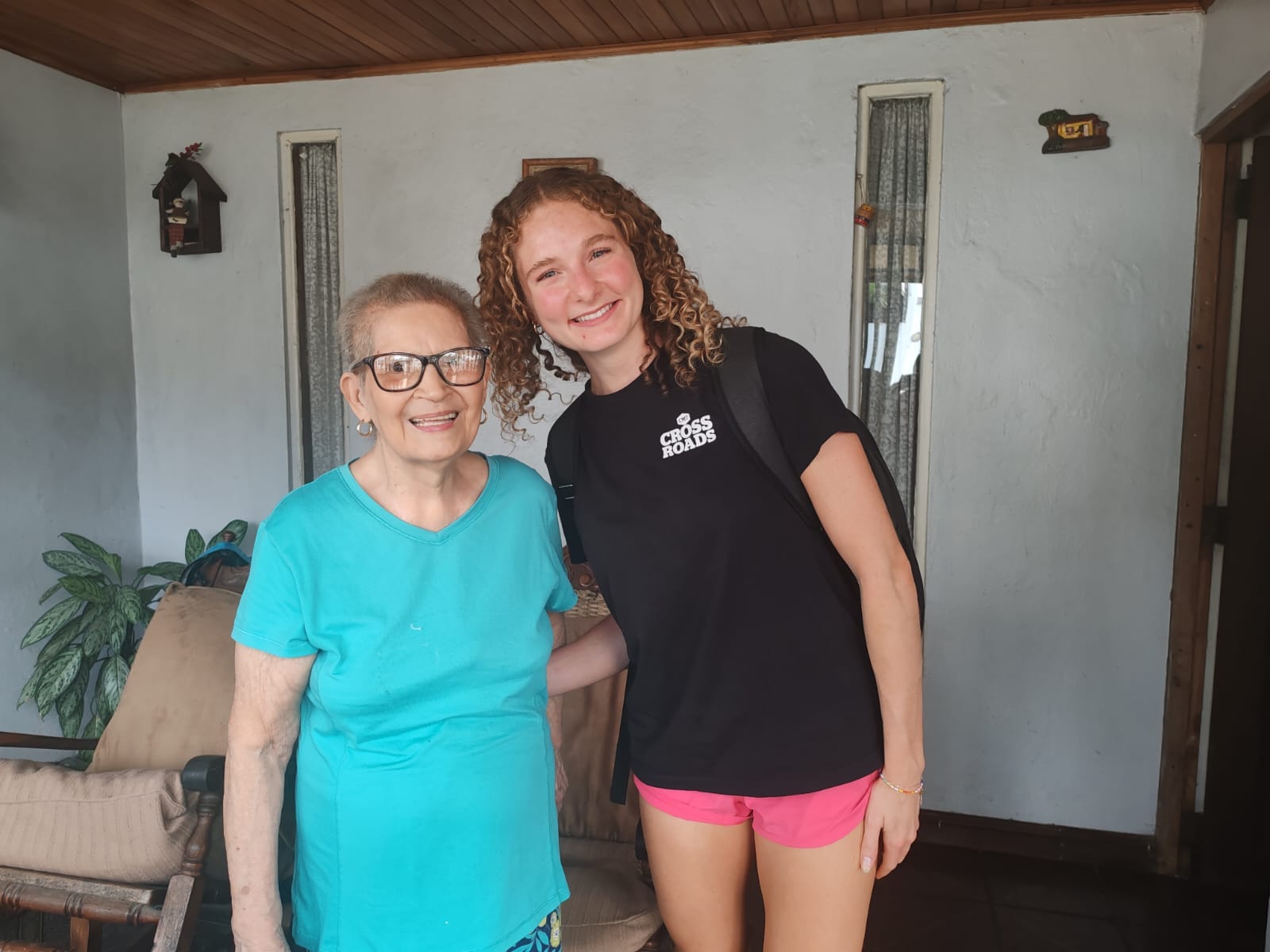
The two places I’ve stayed in Costa Rica have been family-centered, small-town environments. Monteverde was a tight-knit community where my Mamá Tica’s family visited nearly every day. Now, in San Joaquín de Flores, I am with an 86-year-old Mamá Tica who is essentially the “town mother.” With six kids and practically countless grandchildren, not a day goes by without family members coming over to cook and support each other. I am accustomed to living near family, but the constant movement of a large family empire is entirely new.
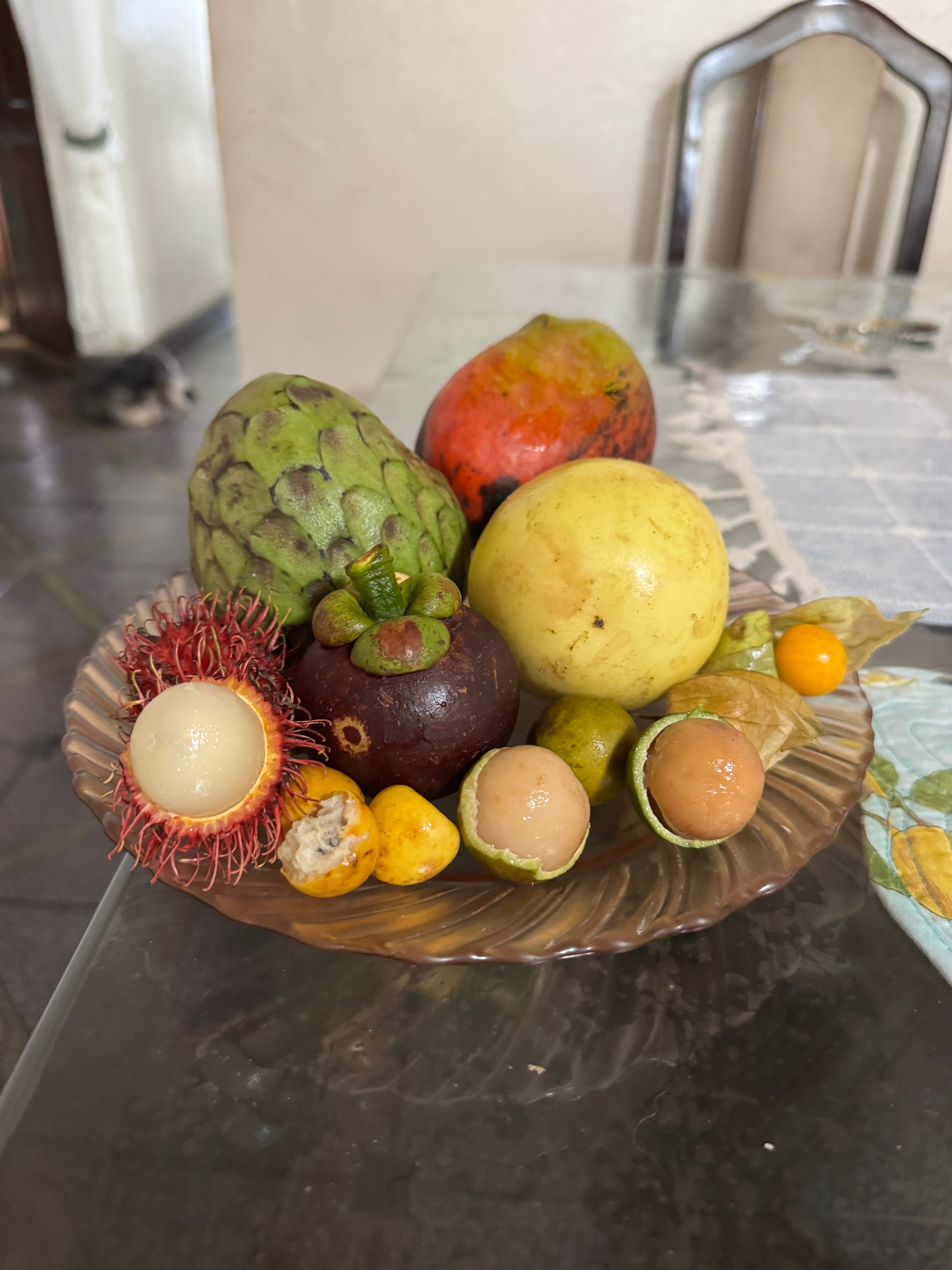
There are aspects of life here that are different from home—in a beautifully neutral way. Crisp showers, tropical wildlife, more comfortability with bugs, adapting without air conditioning, more traditional family roles, younger parents, higher fences, and incredible fresh fruit. But there are similarities that warm my heart: the deep love within families and the willingness of many people to help one another.
Then, there are the similarities that are more unpleasant—like shared safety concerns on the streets at night, the issue of human pollution, and, most importantly for my research, the universal discomfort and frustration people feel when dealing with the law.
This physical and cultural shift naturally points me to the South: self-reflection. When I first arrived in Costa Rica, I was beyond nervous. What if I can’t understand correctly? What if I’m not able to communicate how I’m feeling? It was intimidating. But here is the difference: my stakes are a privilege. If I don’t catch something in a conversation, I am not going to suffer any real consequences. I will simply be confused in a joyful, lighthearted chat over dinner. I have the luxury of learning and practicing in a low-stakes environment, slowly building my comfort.
People in need of legal assistance do not have that privilege. They have to face those exact same fears of miscommunication, but with their livelihoods, families, or freedoms on the line.
This brings me to the North of my compass—the new information that has fundamentally shifted my Community Based Inquiry (CBI). Originally, I was primarily interested in the communication gap between two people who speak different native languages. But being in Costa Rica, where Spanish is highly uniform, has given me unexpected insight. People here still struggle with legal communication. Why? Because legalese is essentially its own language.
Before this trip, I was neglecting the breach of understanding that almost always occurs when everyday people come face-to-face with technical legal writing. I’ve heard from many people that a deep fear of misunderstanding comes with almost every binding document, contract, or form. It has made me realize that lawyers already have to act as translators—it is their job to lessen the complexity of the law and translate it into terms a normal person can completely understand and feel comfortable with.
Therefore, if a lawyer and a client don’t speak the same native language to begin with, how can the lawyer possibly translate that second language of the law? The first language barrier is only complicated by the second.
This realization has changed my relationship with my research. Before, my CBI was an academic question to ponder. Now, it feels like a living, breathing entity. Because my inquiry is ultimately about how people feel—their fears, their confusion, their need for trust—I feel like I have a much greater personal stake in it.
So, looking toward the West and contemplating where I go from here: I am continuing to seek out a diverse set of perspectives. Interviewing people in both California and Costa Rica has been very interesting, especially seeing how participants in such vastly different places respond so similarly to the intimidating nature of the law. Every piece of information I gather only sparks more curiosity.
Moving forward, any opportunity to work or volunteer in a place with Spanish-speaking clients is a step toward the exact role I want to play in the world. This fall, I will begin working at Ausley McMullen, a law firm in Tallahassee. I am eager to see if I can be of service answering bilingual phone calls or assisting with translation, and I plan to continue seeking out outlets where I can improve my Spanish while helping a community. Eventually, I hope to pursue internships in highly linguistically diverse areas like Miami or specific regions of California.
My ultimate goal isn’t just to become a lawyer and then learn how to practice in Spanish. If I do that, I will never reach the level of fluency my future clients can trust. By integrating Spanish into every single stepping stone right now, the language will eventually generate in my brain without a second thought. At the end of the day, that is what every person deserves: absolute trust in their lawyer’s words. And true, empathetic advocacy cannot be achieved without sharing those words directly.

