By Aryeh tenBroek, University of Hawai’i at Mānoa
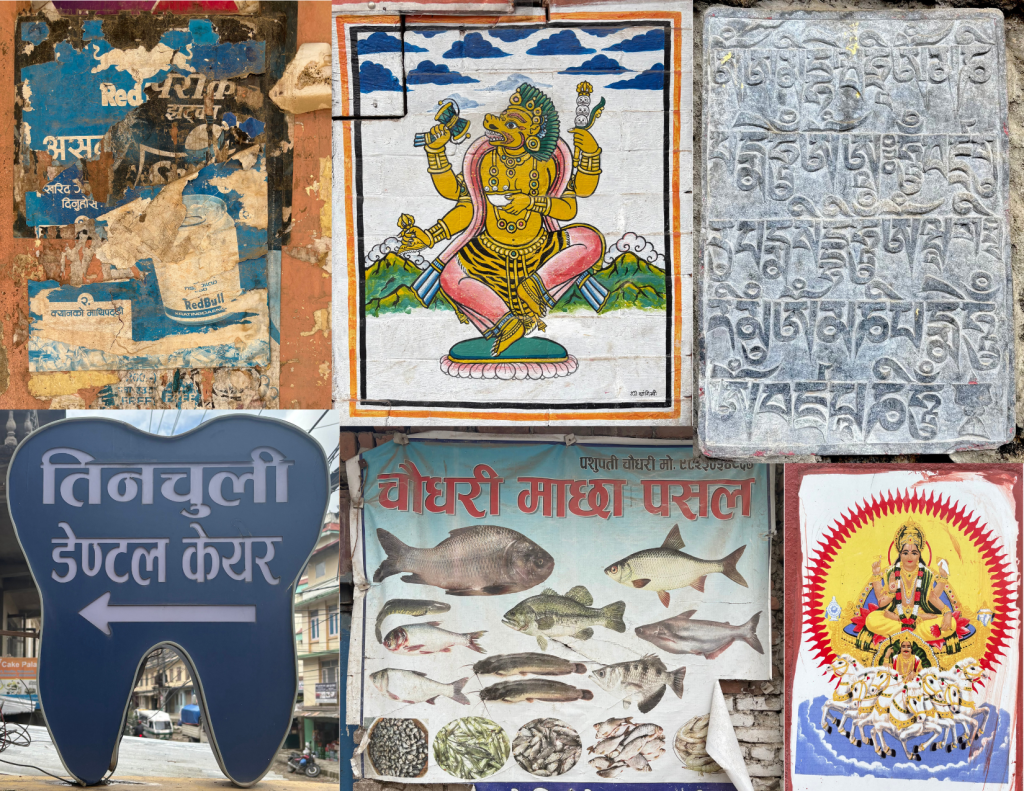
Semiotic Landscape of Kathmandu, photos by Aryeh tenBroek, Kathmandu, Nepal, summer 2025.
When we communicate with each other every day, we make choices about what languages we use, and how we use them. What words we say or don’t say, how we pronounce them, what symbols we use to write them down; most of the time these decisions come to us naturally, without us having to think about them. When examined, however, these choices can tell us a lot about ourselves and the cultures we are a part of, and can unlock insights into our values, beliefs, identities, and ways we structure and make sense of the world around us.
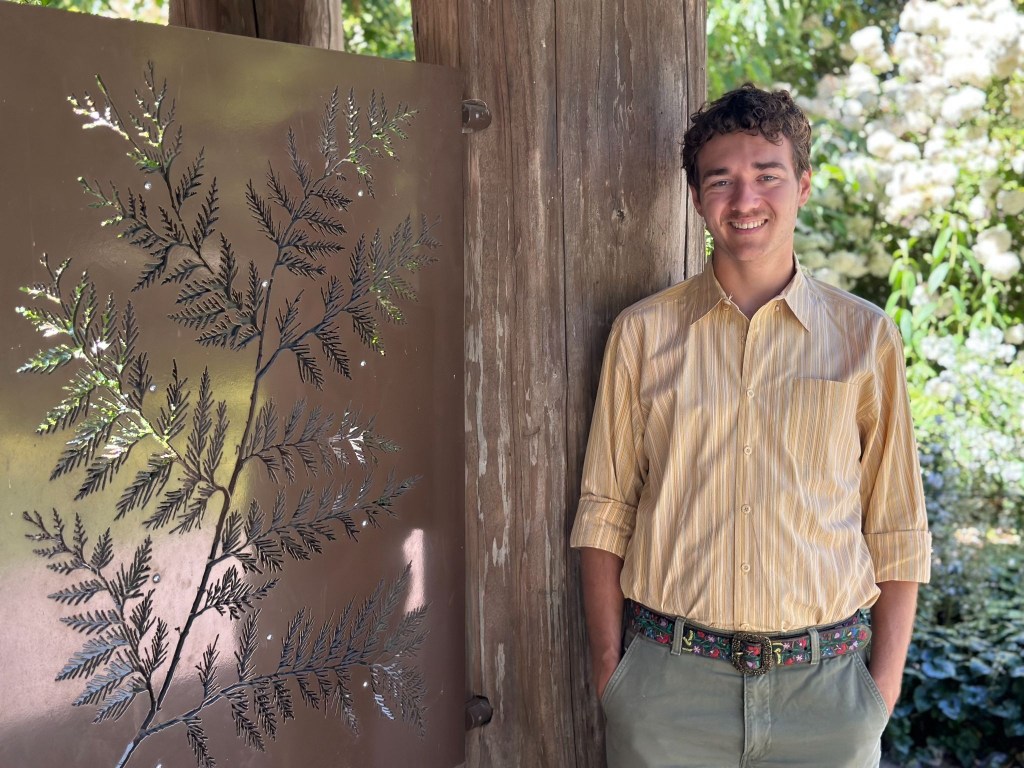
My name is Aryeh tenBroek, and I was born and raised in Seattle, Washington. I’m currently a senior at the University of Hawaiʻi at Mānoa, where I’m getting my bachelor’s degree in Tropical Agriculture and the Environment, with a focus on plant molecular biosystems. I also began pursuing my longtime interests in Tibetan culture and linguistics when I started studying the Classical Tibetan language, and later joined the University of Hawaiʻi’s first study abroad trip to Nepal in the summer of 2025, where I continued my studies at Rangjung Yeshe Institute in Kathmandu. When I’m not in school, I enjoy spending time outdoors; hiking, camping, fishing, and riding my bike. I also love gardening and growing and cooking food with my family and friends.
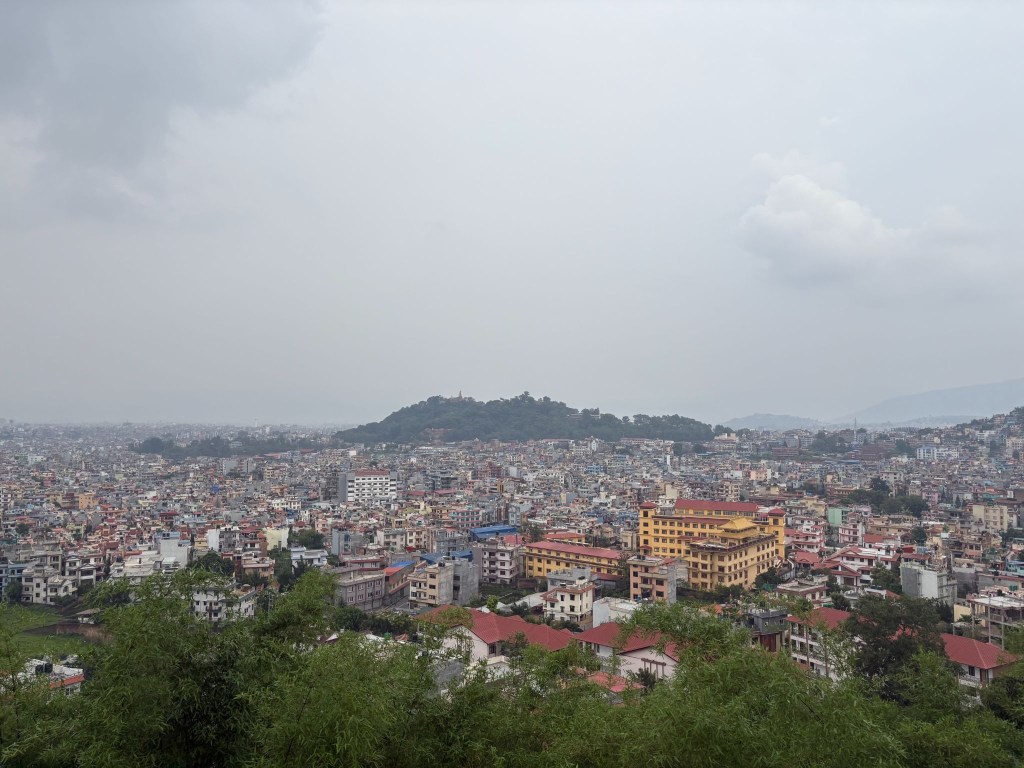
View of Kathmandu valley from Triten Norbutse monastery.
Last summer when I was in Nepal, I was interested in learning more about the Tibetan religion of Bon, and the sacred language of Zhangzhung. The majority of Tibetan people are Buddhists, but a large minority are followers of Bon, or Bonpos. The Bonpos believe that Bon was the original religion of Tibet, and was suppressed during the conversion of Tibet to Buddhism in the 7th century. Today, Bonpos and Tibetan Buddhists share much in common between their traditions, but something unique to Bonpos is their use of the Zhangzhung language, which was once spoken over a thousand years ago in an ancient kingdom of the same name in western Tibet.
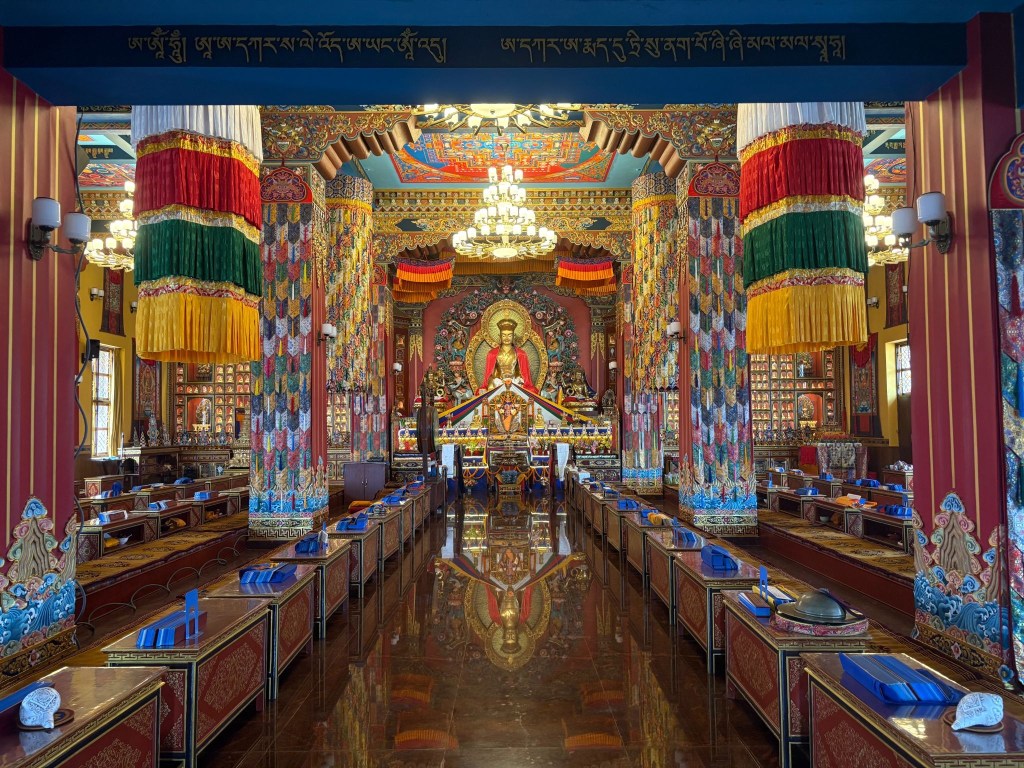
Inside the new gtsug lag khang (temple) at Triten Norbutse monastery.
I visited Triten Norbutse, a Bon monastery in Kathmandu, several times over that summer. I sat in on rituals, had coffee with monks, and observed Zhangzhung inscriptions on the monastery’s temple walls. Witnessing Bon culture in person told me so much more than I had been able to gather through just reading about it. But even so, after every visit I left the monastery with more questions than answers, and by the end of my stay in Nepal, I knew that I would have to go deeper in order to finish what I had started.
Zhangzhung is neither the everyday vernacular of Bonpo communities, nor the primary language in which the sacred texts of Bon are written. In fact, Zhangzhung is attested almost entirely in fragments scattered throughout only a small portion of the Bon canon. Despite this, Zhangzhung clearly has a continuing presence in Bon traditions: major deities and sages bear Zhangzhung names, and manuscripts titles and prayer wheels are adorned with Zhangzhung calligraphy. To me, these facts prompted the question, “If Zhangzhung isn’t used for day-to-day communication or for transmitting religious teachings, why has it been preserved to the extent that it has, and what roles does it play in Bonpo culture today?”
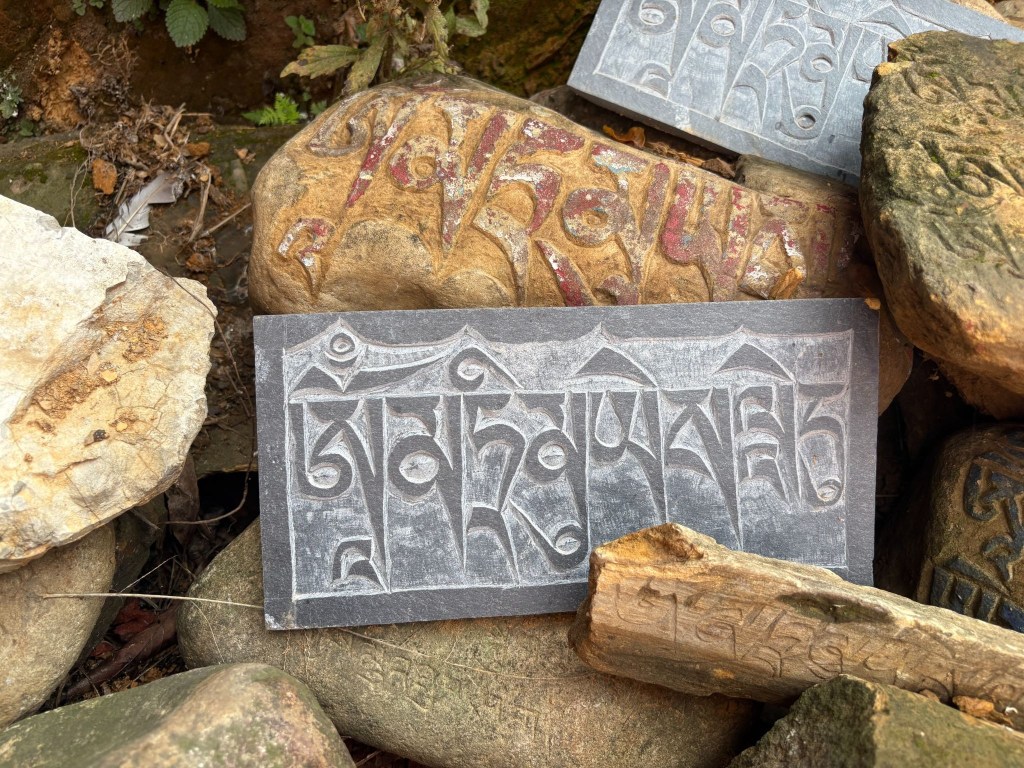
Bon mantra carved into stones, Triten Norbutse monastery.
Zhangzhung is considered by scholars to be a dead language, meaning that it is not known to have any native speakers living today, and probably hasn’t had any for hundreds of years. Maybe this is one reason why practically all of the little research done on Zhangzhung to date has come from the fields of philology and historical linguistics, approaching the language more as a fossil than as an element of a dynamic, present-day cultural context. The study of Zhangzhung, like much of the study of Bon until recently, has been confined to the examination of texts which have been dislocated from the living communities of Bonpos who produced and preserved them.
This summer, with the invaluable support of the Tyler Center for Global Studies and UH Mānoa’s Undergraduate Research Opportunities Program, I have the opportunity to travel back to Nepal to continue this research, and investigate this fascinating language within the context of the living traditions of Bonpo communities. In July I will be accompanying an interdisciplinary team of researchers to the remote Himalayan region of Dolpo in northwestern Nepal, home of the Dolpopa people, where both Buddhists and Bonpos have lived together for hundreds of years.
As we travel through Dolpo, I will be conducting ethnographic interviews with local Bonpos and observing Bon temples and shrines, in rural villages and ancient monasteries. Drawing on theory from the field of linguistic anthropology, and emphasizing non-extractive research methodologies, I will be collaborating with Bonpos to create a comprehensive account of the life of the language of Zhangzhung in their communities, and describe the language’s place in their symbolic and material cultures. I aim to practice reciprocity throughout the course of the project, and will work to address the local communities’ concerns so that the results of the research can be shared towards the preservation of Dolpo’s rich cultural heritage.
This project will examine the findings in the light of ongoing discussions around the construction and boundaries of Bon religious identity, in its complex entanglement with Buddhism and both traditions’ shared Tibetan heritage. I hope that this project will contribute to our knowledge of this understudied language, as well as broaden our understanding of the different roles languages can take in cultures around the world.
I am really grateful to the Tyler Center for their generous support of this project, and I can’t wait to share more along the way!

