By Olivia Leichter, Florida State University
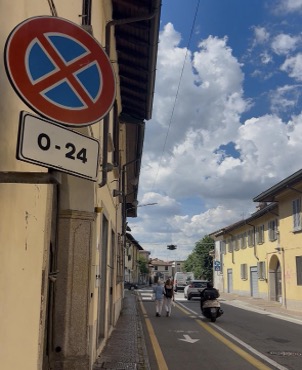
To open this post, I am happy to report that I have made it safely to Italy!
I have enjoyed the last few days preparing for travel, navigating the train systems, practicing basic Italian, and exploring the local Italian culture with a lovely host family in a small town near Magenta, Lombardy, west of Milan. Amidst eating pasta, gelato, and crustata, I have been in the planning stages for my data collection journey once in Cremona.
My vision for this project is what I have chosen to lead my planning with, but it has been difficult navigating how best to start with cataloging, organizing, and collecting resources, as much of my data collection regarding the physical instrument (e.g., measurements, analysis, varnish, etc…) will be happening in parallel with the apprenticeship work that is yet to start. Though, I made a unique discovery just before leaving the country that has made this process much clearer.
I happened upon a bookstore in Fort Lauderdale, the Old Florida Book Shop. Their tall hand-carved wooden bookcases were lined with vintage, second-hand, and one-of-a-kind edition copies of classic literature, art books, botanical resources, comics, poetry, and so on. My curiosity regarding the music section led me to climb up one of those wheely library ladders to the top shelves, and there, sat the title: “Old Violins,” by Rev H.R. Haweis.
The book, which was labeled as a collectors edition, was in near perfect condition and relatively unassuming from the outside, but packed with handmade pages that have those slightly frilled edges that tell you the paper was handmade. But imagine my surprise when I skimmed through and found that this edition seems to have been printed in 1884, an original copy from nearly one-hundred and forty two years ago!
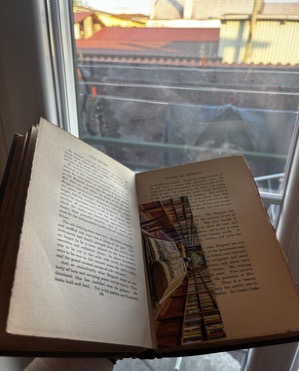
Moreover, the next day, when I pulled it from the ziplock back I kept it in for protection whilst on the plane, I discovered that there were bookplates throughout each chapter. There are original photographs of Cremona from the 19th century alongside illustrations and etchings of famously commissioned instruments for royalty, violincellos, and more. As they are too fragile for me to expose to the elements at this time, I plan to wait until I am settled in Cremona to dive deeper into the contents and create scanned copies of the pages. With how rare and well-preserved this book is, it is important to me that I try my best to maintain its integrity until I am back in the United States and am able to discuss proper safekeeping with the FSU College of Music’s library.
This discovery has not only eased some of my concerns about where to start with data collection, but also provides a plethora of information. There are chapters that discuss the lineage following key makers in the Italian violin world, connecting them and their training to the other historical violin-hubs of Europe (e.g., France, Germany, Austria), and providing detailed descriptions of the stylistic choices and materials used in instrument building techniques and varnish, varying by region. This book is a goldmine for my research journey and I am very excited to utilize it for my project throughout my time in Italy this summer, as well as showcase it in the near future. Once in Cremona, I will plan to document each chapter thoroughly, keep a catologue of citations, and take detailed scans of the bookplates for digital reference to limit their exposure to the elements.
One of the research and professional skills that I am eager to develop through my research is the application of information; being able to connect what I’ve learned to my instrument and finding the best way to teach others is highly motivating. The Academia Cremonensis will be providing all of the wood, carving, and varnishing materials necessary to create the violin from scratch. My prior experience of apprenticing to a luthier in Sarasota, FL back in high school was a transformative experience for me, igniting a passion for luthier work and an interest in learning about how the construction of the instrument affects one’s playing beyond the love of performing. This project will build upon that beginning experience, and introduce traditional ideas while expanding upon what I have learned thus far. Ultimately, at this time, I foresee my biggest areas for improvement will be maintaining proper compilation and organization of data, having to use resources that may need to be translated into the English language, as well as deciding which direction to take in the first steps of workshop creation,
*Note for prior post: to maintain transparency and for citation purposes, all photos provided were from the official Academia Cremonensis Facebook Page, for visual reference of apprenticeship work, and instrument creation techniques. All photos going forward will be taken from personal data collection for this project (photography by me) unless cited and stated otherwise.

