Global Scholars Blog 3 – Reflexivity Compass Points
By: Janna Lellis
I’ve been in Huaraz for 3 weeks now, which means I am almost halfway done with my service in Peru. It’s crazy how fast time has flown by.
As I’ve been settling in Huaraz, I can’t lie when I say it’s been a perfect experience. When people travel, only the successes and highlights are posted. However, so much goes on behind the scenes.
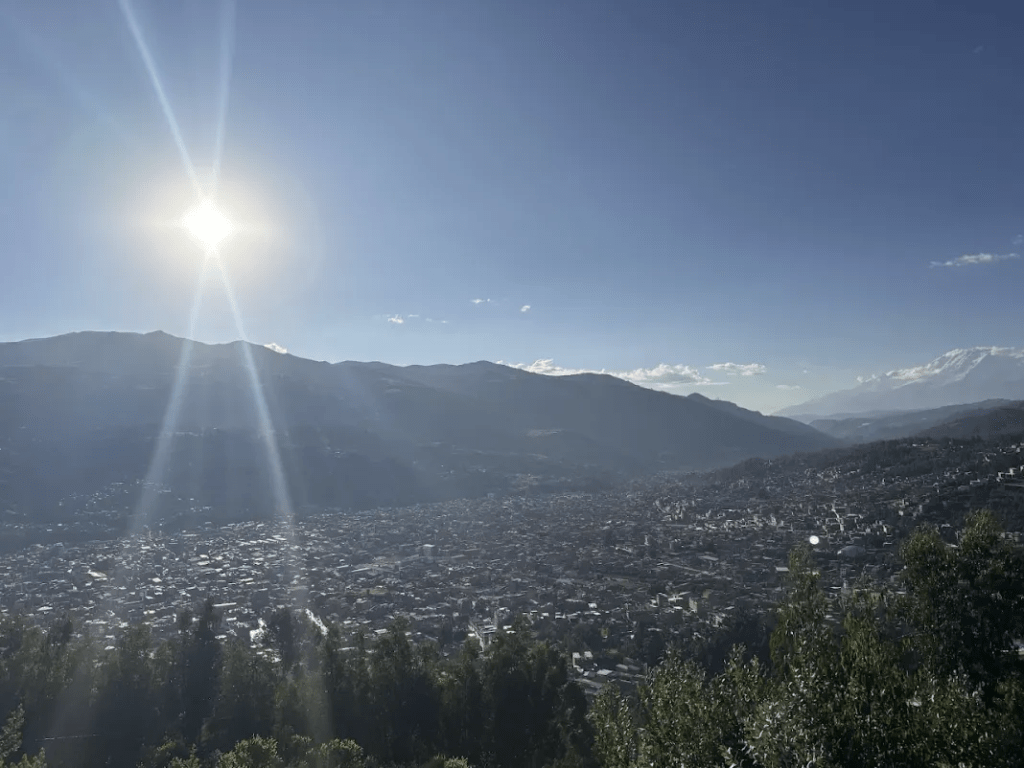
The view from Mirador de Rataquena that overlooks Huaraz city!
A quote that sticks with me is, “Wherever you go, there you are.”
I believe people can have the tendency to view traveling as a way of “running away” from their problems back home. When you visit a new country, everything is so fresh and unfamiliar that you don’t have to think about your struggles and responsibilities you have in your home country. But as a solo traveler, I spend a lot of time by myself. When I’m not volunteering, I’m usually by myself. For some people, it sounds like a nightmare, being alone with your own thoughts all the time. When I go on hikes, walk around the city, eat a nice meal at a restaurant, or have a really successful day, honestly, all I can think about is how much I wish I could share this experience with the people I love back home.
Solo travelling has made me more appreciative of my inner circle back in Florida, the people I meet while I’m here, and my own company. I chose the prompt, “Reflexivity Compass Points” for this Global Scholars blog because this experience has allowed me to stop and reflect a lot. About who I am, the relationships I hold, my experiences and my potential, my strengths and weaknesses, my life here versus my life back home.
- N = New information
What new information have I learned about my CBI? How does this compare or contrast to my views at the beginning of the summer?
The CBIs I focus on for this Capstone project are human rights, education, and language acquisition.
Working with a diverse range of students in Huaraz has gave me more perspective about the motivations and struggles of the youth here. The kids at Seeds of Hope are full of so much energy, personality, and ambition. Some of them are bilingual, speaking Spanish in school and Quechua at home. Some of their parents are illiterate and never got to finish their education, so they may not know how to help their children with their homework. Some of them don’t know their birthday. While I haven’t been able to learn all of their names yet, I can mainly recognize the kids by the same jacket they wear everyday. They are captivated by YouTube reels on the computer and playing video games on the tablets. Some kids are begging to be given more practice multiplication and division problems, while others may need a little more push to complete their homework for the day.
While attending SOH after school seems like a consistent part of these kids’ routines, something that changes all the time are the volunteers. I notice that these kids are extremely familiar with welcoming new people, opening up slowly, and then saying goodbye to the volunteers. Because the international volunteers play such a pivotal role in the tutoring program for these kids, I can only wonder how this can take a toll on these children, especially for the volunteers who stay for months.
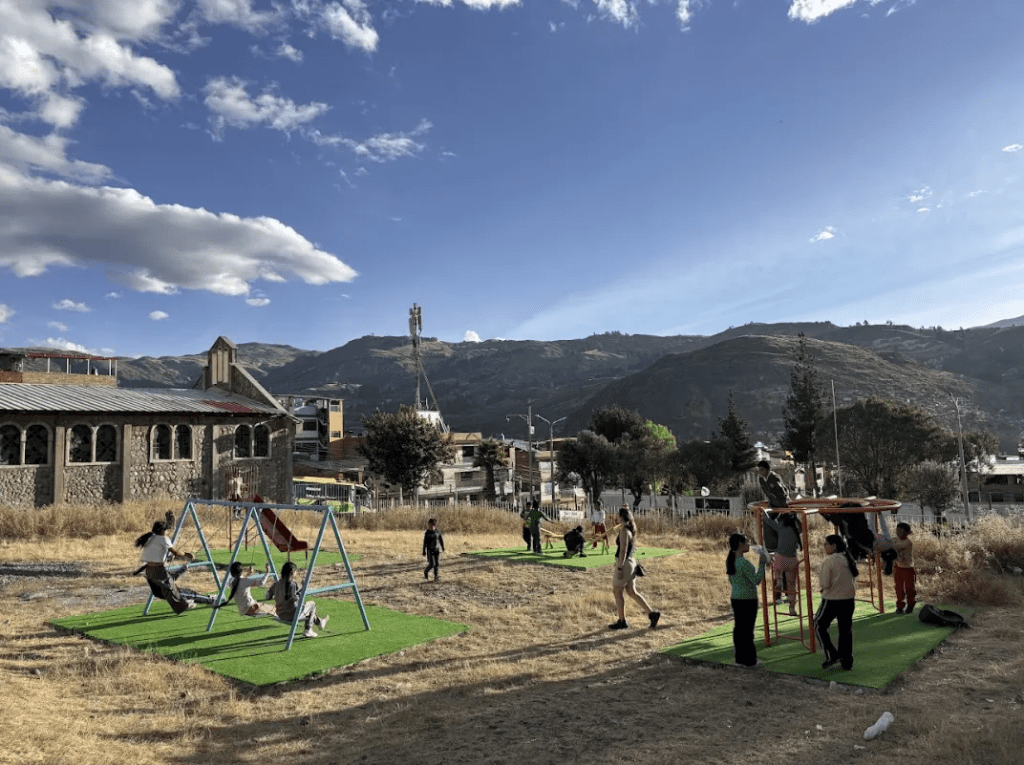
We played at the park this day since it was three of the volunteers’ last day.
Additionally, the motivation behind English language acquisition is vastly different depending on the group of people. The students I teach at SOH show up every Monday and Wednesday, eager to learn. The small class size (four people) allows for more interaction. They have an advantage because they get the opportunity to interact with foreigners on the daily with the international volunteers at SOH, but I notice that they are a little more shy at speaking. At the colegio, it can be a bit more difficult to keep the students’ attention, especially when it’s a class of 30. I notice that games, interactive activities, and PowerPoint slides keep the students’ attention more than a lecture. The student teachers, who come to the school to practice teaching a class as part of their internship at their university, have some of the best English I’ve heard so far in the city, so I’m wondering what types of English classes they took and what teaching methods their professors used, especially since I want to go into teacher training.
- S= Self reflection and evaluation
How have I changed since the start of the Global Scholars program? Since the start of my summer experience? How has my relationship to my CBI changed?
This question has made me wonder whether traveling “changes” you or just reinforces the values and traits that create who you are.
When you are put in unfamiliar and uncomfortable situations by yourself, your body is going into fight-or-flight mode. On one hand, your mind is telling you to be strong, confident, and to push through it, whether it’s completing a physically demanding hike or navigating a new city without understanding the language. On the other, your body wants to protect you, so it wants to stay in your comfort zone. I believe that if we never fight through these fears, you never get to unlock what you’re actually capable of. Unlocking your potential makes you more confident and allows you to grow into the person you want to be.
The Laguna 69 hike was one of the most challenging things I’ve done in my life. I was struggling with the altitude and my whole body was hurting. I felt bad that I was falling behind and that people were passing me so quickly. I ended up being the last person to make it to the bus. The whole time, I honestly was thinking to myself, “Wow this sucks. I can’t breathe and my legs are in so much pain right now.”
But even when I didn’t want to, a voice in my head was telling me, “YOU can do it. YOU are capable of finishing this trek. Imagine how proud you will be once you finish.” I didn’t think I would make it, but there I was. 4,604 meters in the sky. 4 hours of climbing.
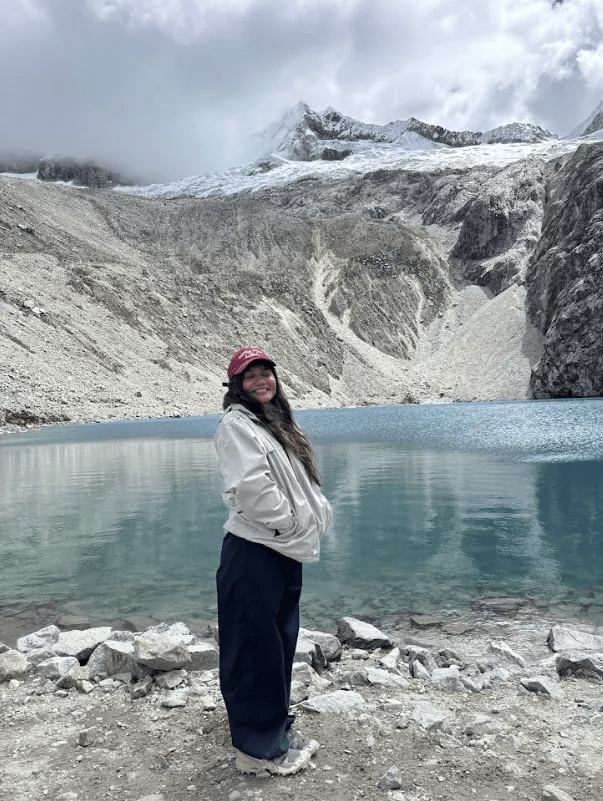
Cheesing because I made it to Laguna 69!
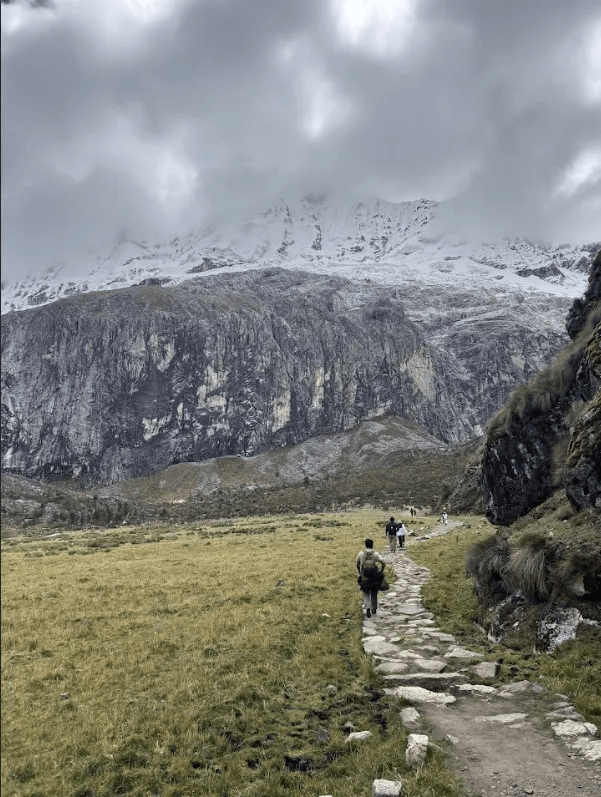
Everyone gets to their destination eventually.
This experience taught me: You are on your own pace. On a hike. In school. In your career. In your hobbies. In life. I was gentle and understanding of myself because I had only been in Huaraz for 6 days and this is my first hike in a year. Yet, I made it up, just like everyone else. Maybe it wasn’t the fastest, but I was still consistent. I kept going. In addition to living abroad on my own, I have also started to cut my social media use, which has helped me appreciate going my own path.
I would consider myself outgoing, but these past few weeks have difficult it can be to find your community while living abroad. I find myself to be in this weird crossroad between the foreign and local community in Huaraz. Most of the tourists are just visiting for the treks, and not many of them are my age. On the other, it feels just as ostracizing when I interact with locals and I am reminded that my Spanish still has a long way to improve. When I arrived in Huaraz, I found it a bit challenging to “feel like I belong” with the volunteers who’ve already created a tight bond with each other in the past few weeks. But I also found my identity and perception by the locals to be limited as “la extranjera” (the foreigner), where the students at my school would assume that I have a lot of money and I speak with a fancy accent. Honestly, as much as I enjoy meeting people from around the world, I felt relieved when I met another volunteer who was a recent university graduate from the US. I felt like I was finally being seen as myself and not limited to a position, my nationality, or my ethnic or socioeconomic background.
This allows me to reflect on who I am as a person and also my place here as a guest from the United States.
I didn’t realize how memorable my presence would be here until I passed by one of my classrooms at the public school and the students wave at me with smiles, or when I enter the SOH classroom for tutoring and the children I usually tutor greet me with a hug, or when I pass by the workers at the cafe downstairs and they mention a movie I suggested, or when the students I teach for English class are excited to tell me about something. I think moments like that keep me going during times when I feel lonely.
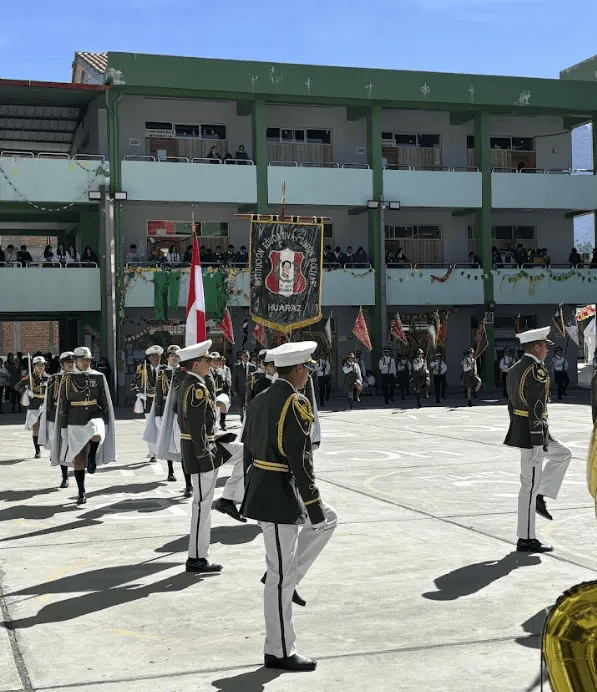
Flag ceremony at the school’s 61st anniversary.
3. E= Environmental influences
How has my environment changed over the summer? What similarities and differences are apparent between my home and my host city/country? How have interactions with my new environment and with new people influenced how I see and understand my CBI? What relationships are forming that are helping my Capstone take shape?
Huaraz is the exact opposite of Florida in terms of climate and weather. My hometown, Jacksonville, is 0.91 meters above sea level. Huaraz is 3,052 meters higher. The weather is consistent – sunny during the day, averaging about mid-60s to 70 degrees Fahrenheit with high UV, and cold during the night, reaching 40 degrees. The air is dry and I realize how much I take the humid air for granted whenever my nose bleeds.
Growing up with two different cultures (Philippines and USA) and spending some time abroad in Japan, I am extremely lucky to be given the privilege to explore these countries and see what makes them unique. As for Peru, it reminds me a lot of the Philippines. That’s what being colonized by Spain for hundreds of years will do (lol). The population is majority Catholic and is still a traditional, conservative society. Talking about the schools with my parents reminded them of when they had to wear uniforms in school and when religion was a part of their curriculum. I’ve seen a lot of parallels, especially with the current election involving Keiko Fujimori, the daughter of former Peruvian dictator Alberto Fujimori, and Roberto Sanchez. It reminded me of when Bongbong Marcos, the son of the former Philippine dictator Ferdinand Marcos, won the 2022 Philippine election against Leni Robredo. It is interesting how political family dynasties can hold such a tight grasp on current politics.
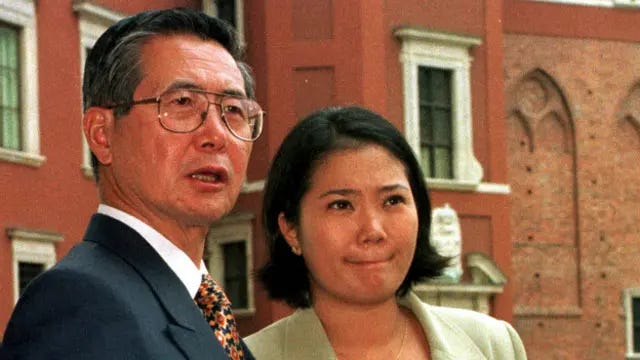
Alberto Fujimori (President of Peru from 1990 – 2000) and his daughter, Keiko, who is currently running for president.
4. W= Where do I go from here?
What decisions have I made so far and am making right now that will influence the direction of my Capstone? What goals can I set for myself to help me better understand my CBI? How is my Capstone coming together as I experience my CBI first-hand? What other opportunities exist that can allow me to continue exploring this issue?
I think learning the language of the place you are visiting can greatly impact your experience. Continuing to improve my Spanish, taking note of my observations, and talking to local people can give me a better perspective of what my community’s values and needs are and how I can use this experience to grow my knowledge on teaching, education, and nonprofit management.
The goals I am setting for the next few weeks are:
- Continue practicing verb conjugations in Spanish and continue to apply new vocabulary I learn in my daily routine.
- Brainstorm and develop more productive lesson plans for my students by covering different skills and finding fun task-based activities and games to engage students.
- Talk to the children at SOH about their interests, dream career, and hobbies.
- Talk to the new incoming volunteers about their motivations to volunteer at SOH.
- Journal and take care of my mental and physical health.
Since I am now heading into week 4 of my time in Peru, I am now slowly transitioning into the “recruitment” stage of my data collection. I now have a clear idea of who I can interview and talk to for my project, the challenge is now deciding what is the most productive way to communicate if my Spanish is still at beginner level. I guess this is just more motivation to keep practicing my Spanish 🙂

