By: Meggie Huggins, University of Texas-Austin

The flight from Austin to Amsterdam is 9.5 hours. Thankfully, for the person who will be sitting next to me during the flight, it is an overnight red-eye flight and I have every intention of getting comfortable, eating junk snacks, and pretending to watch something while I fall asleep and wake up across the vast Atlantic Ocean, disoriented by the loss of seven hours of what could have been quality sleep time.
Otherwise comes the question, “Why are you going to Amsterdam?” and suddenly my aisle mate is trapped with an information dump about access, inclusion, institutional
structure, cultural norms, and the ways societies shape autistic experiences within universities and research institutions.

So, welcome to my research information dump, brought to you by a nonspeaking autistic undergraduate on a journey to share the lived experiences of autistic individuals and examine the deficits of societies.
Why Amsterdam? It’s a nonstop flight away and connected to the greater European rail network. Otherwise, Amsterdam is just the landing spot: a colorful system of sidewalks disguised as waterways and evidence that someone looked at a map, added more water, and called it an improvement.
Over the course of the summer, I will travel through nine countries using trains, ferries, public transportation, and a willingness to occasionally stand in the wrong place looking confused. My route currently includes the Netherlands, Belgium, Germany, Denmark, Norway, Sweden, Finland, and Slovenia. Along the way, I will be staying primarily in
hostels while attempting to navigate transportation networks, cultural norms, and languages that are entirely unfamiliar to me.
Every part of Europe is new to me. Every train station, transportation network, university campus, accommodation system, and cultural expectation is unknown territory.
At the same time, uncertainty is also part of the research.

My project focuses on how institutional structures shape participation, accessibility, cognitive load, and mental health for autistic individuals within higher education and research environments. That sounds complicated, but the question itself is fairly simple: when autistic people struggle within institutions, what belongs to the individual and what belongs to the institution?
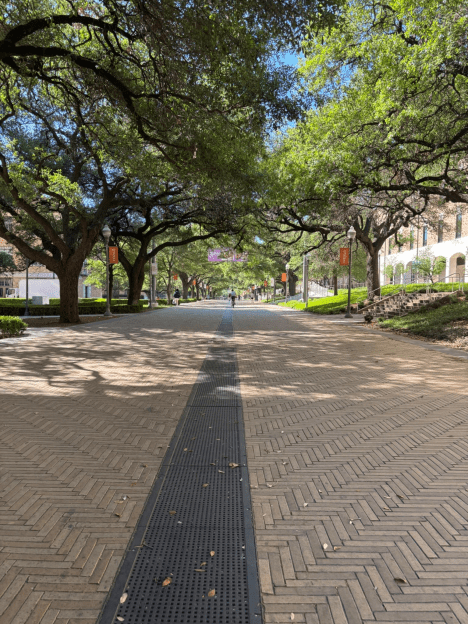
Universities are full of systems that most people rarely think about. How do students obtain accommodations? How many forms must be completed? How much information is clearly communicated versus implied? How much self-advocacy is expected? How easy is it to find information without asking for help? How much predictability exists within the system itself?
These questions affect everyone, but they often affect autistic individuals differently.
In many places, accessibility is treated as an individual responsibility. If someone encounters a barrier, the assumption is often that they must work harder, ask for help, disclose a disability, request an accommodation, or adapt themselves to the existing structure. Other systems place greater responsibility on institutions themselves to anticipate barriers before they occur.
This summer, I want to learn how different societies approach those questions.
I currently have interviews scheduled with a traditional undergraduate student, a student pursuing a second bachelor’s degree, a master’s student, a PhD student, a university researcher, and a university professor. Interviews are currently planned in Cologne, Leuven, Uppsala, Stockholm, Helsinki, and Turku, with additional recruitment continuing throughout the summer.
One of the most encouraging aspects of this project has been the response from the autistic community itself. Many autistic individuals have expressed how important it is to
document experiences that are often overlooked in conversations about accessibility and inclusion.
Much of the public discussion surrounding autism focuses on diagnosis, treatment, childhood, intervention, parenting, or individual deficits. Those conversations are important, but autistic children have a tendency to become autistic adults. Once that happens, they still have to navigate universities, workplaces, healthcare systems, public transportation, and the countless other institutions that organize daily life.
As a result, many participants are interested in discussing the institutions around them: the policies, expectations, communication systems, and cultural assumptions that shape participation. Rather than asking why some autistic individuals struggle to participate, they are interested in examining how institutions themselves shape who is able to participate and under what conditions.
The research itself will take many forms. It will involve interviews, demographic questionnaires, accessibility planning, and document analysis. It will also involve wandering university campuses, navigating transportation systems, reading policies, observing how information is communicated, and paying attention to the countless small interactions that most people never notice.
As a disabled autistic researcher, I am not simply observing these systems. I am navigating them myself.
Some environments will likely make participation easy. Others may require extra effort, additional planning, or creative problem-solving. Some barriers will be obvious. Others may be invisible until I run directly into them—sometimes metaphorically, and occasionally because a building designer decided stairs were a personality trait.
I am particularly interested in how different societies distribute responsibility. Who is expected to solve accessibility problems? The individual? The professor? The university? The government? The transportation system? The community?
The answers to those questions influence who participates, who gets left behind, who has a seat at the table, and who must exhaust themselves simply reaching the same opportunities as everyone else.
Ultimately, this project is not about identifying a perfect system. Every institution, culture, and country has strengths and weaknesses. Instead, it is about understanding how different approaches shape lived experiences and what we can learn from one another.

For now, however, the immediate challenge is surviving a 9.5-hour flight, crossing an ocean, and convincing my suitcase that nine countries is a reasonable summer plan.
The research begins soon.

