By: Lily Beckerman, University of Hawaiʻi at Mānoa
Hello! My name is Lily Beckerman, and I’m an undergraduate student at the University of Hawaii at Manoa studying anthropology. Outside of class, I sail for the University of Hawaii, and love to spend time outside in any fashion – hiking, swimming, or just reading at the park. I also love to cook and enjoy eating good food! I’m originally from Seattle, a city full of adventure enthusiasts. Growing up in a city where the human-environmental relationship is a constant conversation, as well as engaging in a sport so closely tied with nature, has fostered my interest in environmental Anthropology
As a transfer student (I previously studied at Cal Poly, San Luis Obispo), I’ve taken classes in a wide array of topics, including women’s health, plant science, psychology, and natural resource management.
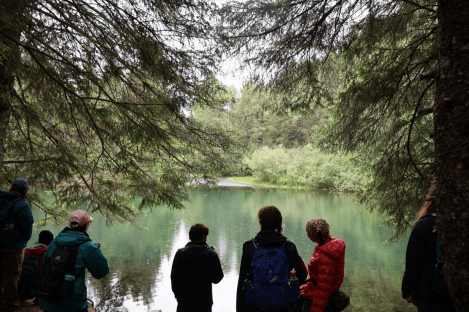
During this time, I contributed to research on proverbs and their use in teaching us how to cooperate and use resources effectively. Last summer, I also participated in a research-oriented trip to rural Alaska with Wildlands Studies. During this trip, we examined how local lifeways are disrupted by industrial development and climate change. Working with a group of peers during this trip to look at and critique climate policy gave me a more nuanced idea of the importance of resource management.

These experiences have deepened my interest in understanding how sustainability, indigenous sovereignty, and equitable access to resources can work together.
My research this summer is planned with these goals in mind, and will be part of a larger project I’m conducting on water use for my honors thesis.
For my project this summer, I will examine how cultural and religious practices influence water use in Nepal. Water management is a pressing issue in Nepal, where unequal access to sanitary water shapes ongoing struggles for water governance and everyday access for residents.
However, discussions about development often overlook indigenous water-management systems that have successfully supported communities for millennia. These systems embed water management within cultural values, religious practice, and community responsibility. These cultural connections support sovereignty, providing a sense of stewardship. My background in environmental management and Anthropology coursework will inform my investigation of water governance in Nepal.
This summer, I will conduct field research in Nepal focused on the Gosiankunda aquifer and the historic hiti (stone fountain) system of the Kathmandu valley.
The first part of my field research involves a 10-day trek to Gosiankunda and the Langtang Valley in Langtang National Park. At Gosiankunda, a sacred lake essential to the Kathmandu Valley’s watershed, I will interview people traveling on the Dasara pilgrimage, documenting ritual practices and community relationships with water.
Following the trek and a cultural tour, led by colleague Rachel See, I will conduct ethnographic interviews in Kathmandu, asking residents about their views on sacredness and scarcity, everyday water use, and engagement with the hiti.
Conducting this research in Nepal gives me the opportunity to learn from a vastly different resource-management system. Observing these methods (and challenges) in the field is invaluable, and I look forward to getting the chance to highlight local voices and learn about stewardship cross-culturally.
One thing I am nervous about for my research is conducting interviews across language barriers. While I’ve conducted similar interviews before, working with a translator is something that is new to me! I am excited to learn from this experience, though, as I believe it will make me a more confident researcher and traveler (I hope to pick up some Nepali along the way as well!).

