By: Caleb Mulugeta, University of Texas-Austin
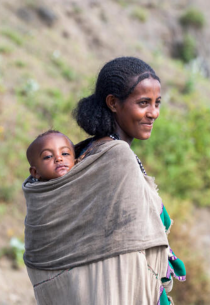
The cradle of humanity, the land of the descendants of the Axumites, and the victors of Adwa. Ethiopia has an illustrious past, but its relevance does not end with history. As home to the African Union and more than 130 million people, the trajectory of Ethiopia has broader implications for the prosperity and stability of the rest of the continent.
That pride in Ethiopia’s historical presence and modern significance reverberates in the hearts of many Ethiopians and members of the diaspora, and like the child of any diaspora, it was passed down to me. Born and raised in Fort Worth, Texas, one might assume I felt torn between my Ethiopian roots and my home state, but that was far from the case.
Although Texas and Ethiopia are very different places, their underlying similarities helped shape my interests. The fierce independence embodied by the Ethiopian warrior and the Texan cowboy, though I must confess I am neither, along with a strong appreciation for history, pushed me to chart my own path and gave me a love of the past.
One offshoot of that love of history early in life was an odd interest in government. Although I can’t remember the exact moment the spark for government developed, I have a hunch it was around the time I learned about Abraham Lincoln. As I read my first “historical” book, a children’s book on Lincoln’s life, in the second grade, I soon became enamored with the man and interested in the political process he was a part of. Incidentally, that year was also an election year, and I remember being the only person in my class who was interested in the election outcome, even if I didn’t understand how things were going to turn out.
This passion grew as I realized the impact, both positive and negative, that governments could have on people’s lives, including in my parents’ homeland. I kept wondering to myself: how is it that this country with such a rich history, once described by ancient historians as among the great civilizations of this earth, is so poor and backward? How is it that the descendants of the people who collectively defeated the Ottomans, Italians, and any force that threatened their sovereignty are unable to reconcile the tapestry of ethno-linguistic diversity and live together in peace? Finally, what role did governance and governments have to play in the sad results of a storied past?
Although these questions started as a hobby, the political events of the early 2020s here in the U.S. also pushed me to try to get a better understanding of governance and its impact on people’s lives. Before I knew it, I was off to the University of Texas at Austin, majoring in
Economics and Government and taking classes on politics, economic development, and the systems that govern our world.
Along this journey, one of the professors who really helped guide and focus my interest, Professor Wendy Hunter, opened my eyes to the importance of infant mortality. Infant mortality made development feel concrete: if a government is truly improving lives, one of the clearest signs should be that more children survive their first year. As the saying goes, a life not lived is a life that can’t be improved.
Oddly enough, Ethiopia performed remarkably well at reducing infant mortality from the mid-1990s onward. However, a closer examination of the data shows that this progress was not equal across the nation’s regions. Some regions that began in similar positions did not improve at the same pace. This led me to Amhara and Tigrai, two regions with similar geographies, cultural contexts, and initial infant mortality rates, but different levels of success in reducing infant mortality.
What makes this question especially interesting is Ethiopia’s unusual federal system. On paper, Ethiopia was federal, with regional governments holding formal authority over many policy areas. In reality, the ruling coalition controlled much of the political system from the top down. This creates the central puzzle of my project: if policy was heavily centralized, why did regions that started in similar positions experience different outcomes?
My project tries to understand why that difference emerged. I am especially interested in whether Tigray expanded state capacity more quickly than Amhara. By state capacity, I mean the government’s ability to actually do what it says it wants to do: provide services, implement
policy, and reach people across its territory. My hypothesis is that because the leading party in Ethiopia’s ruling coalition came from Tigray, the region may have developed stronger administrative capacity, allowing health policies to be carried out more effectively.
I am also interested in whether differences within the ruling coalition itself mattered. Even if policy was directed from the top, regional parties still had to implement those policies on the ground. Differences in cadre training, party organization, and public buy-in may have shaped how effectively health programs reached ordinary people.
To study this, I plan to combine quantitative and qualitative methods. On the quantitative side, I will use Demographic and Health Survey data and road network data to examine regional differences in infant mortality, access to services, and state presence. In Addis Ababa, I plan to access party documents, interview stakeholders, and review materials related to health policy rollout to examine the qualitative aspects.
Conducting this research in Ethiopia matters because this is not a question I can fully answer from a distance. Some of the sources I need may not be available online, and some of the context may only become clear through conversations with people who lived through, studied, or helped shape these policies. More personally, going to Ethiopia also means engaging with a place that has shaped my identity from afar for my entire life. I am looking forward to that, but I would be lying if I said I was not also nervous. Fieldwork is unpredictable, and Ethiopia’s politics are not easy to discuss.
Still, that is part of what makes the project worth doing. The questions that first drew me to government were never neat questions with easy answers. Why do some governments build while others don’t? Why do some societies overcome division while others remain trapped by it? Why does a country with so much history and pride still struggle with so much pain? Although the questions about governance that have guided me may never be fully answered, maybe coming closer to understanding this Ethiopian enigma will give me some peace at the end of the day.

