But…what does that mean…
By: Alison Hoburg
To me, the pursuit of becoming a Global Scholar is all about developing a wider perspective of the world. I want to gain this perspective by focusing on how people interact—specifically, the communication methods we use and how those methods impact the flow of information. Ultimately, I hope to use this awareness to position myself where I can make some kind of difference in my future and career.
Whether I’m at home or abroad, studying human connection will help me understand our interconnected world and the challenges that arise within it. No matter where my experience occurs, it’s the interactions between the people there that truly interest me. This summer, I’ll be observing these interactions in two very different places: my hometown in California, and Heredia, Costa Rica.
Research Focus
My research will focus on the interactions surrounding legal aid, access, and education. I want to observe how everyday people connect with the legal system—whether that involves local lawyers, legal aid organizations, or government agencies.
While there are many factors that influence the success of these interactions, I am especially intrigued by one: language. The concept of language is mind-blowing to me. Entire populations create a mutual understanding based on distinct sounds, while a different population halfway across the world does the exact same thing with a completely different set of sounds. In my opinion, shared language is so essential to effective communication. Technical translation is often just not enough; true understanding of a concept can only be achieved when two people share a common understanding of their words first.
Origins Of My Interest
This realization struck me the summer after my senior year of high school. I was sitting in the back of the Marin County Superior Court observing general misdemeanor trials. A man in an orange jumpsuit sat down at the defense table, looking skittish and scared. After some incoherent whispering, his attorney told the judge they needed to wait for a court translator to continue the trial. When the translator finally arrived, a brief trial ensued with the translator whispering into the defendant’s ear. Nothing seemed mutual; the defendant just looked helpless.
I’ve seen the other side of this, too. My mom is an estate planning attorney, and I’ve had the opportunity to sit in on some of her client meetings. The details of people’s lives and legal needs are incredibly nuanced. I can only imagine trying to convey those delicate details through a translator, or the exactness that might be lost unknowingly simply because two people don’t share the same words.
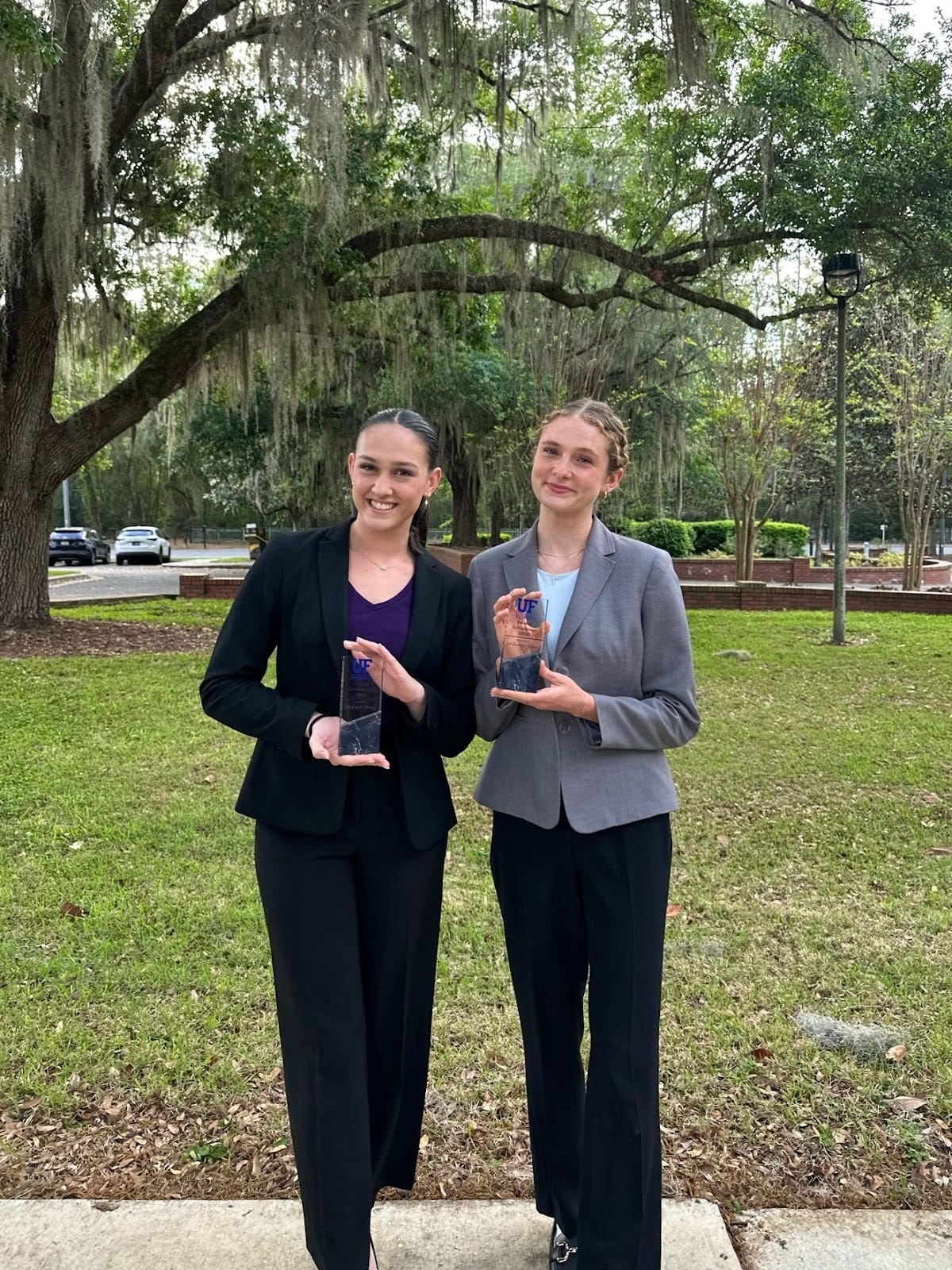
Myself (right) and my mock-trial captain Gracie (left) posing with our awards from the recent University of Florida Mock Trial Competition
Community-Based Inquiry
Therefore, my Community-Based Inquiry stems directly from these experiences. I want to investigate the language barriers that exist between citizens and effective legal representation. To get a complete picture, I’m going to look at both sides: the public and the legal outlets.
At home, I’ll be interning at a law office and connecting with legal aid services throughout Marin and Sonoma Counties, which both have significant Spanish-speaking populations. I plan to interview citizens for the local perspective while also making contacts with legal professionals.
In Costa Rica, my plan is to immerse myself completely. I will be attending the Centro Panamericano de Idiomas (CPI) for a Spanish Immersion Experience. I will live with a host family, sharing breakfast, dinner, and daily life with them. I plan to reach out to local community organizations, law firms, and immigration centers to learn about legal access, resources, and education.
Strategies & Considerations
As I engage with both communities through interviews, I plan to be incredibly transparent about my intentions: I am there to learn from them so I can help improve communication in my future career. I want to share my deep value for proper representation and make it clear that any information they provide will ultimately go toward helping people in similar situations.
I am slightly apprehensive that because my brain cannot completely operate in Spanish just yet, I worry about missing slight nuances during my interviews. I don’t want the people talking to me to feel that same fear that alternate-language citizens feel when seeking legal aid: what if they don’t truly understand me? However, I am excited to start building connections and improve my dual-language skills so that I can improve my future advocacy.

