By Kassandra Sevila, Florida State University
My name is Kassandra Sevila, and I am a sophomore at Florida State University double majoring in psychology and environmental science. This summer, I will be conducting an independent research project studying patterns of juvenile corals in the Caribbean to assess coral reef recovery potential. My research site is located in Bonaire, which is an island in the southern Caribbean. The reefs in Bonaire have been declining in coral cover due to annual coral bleaching events and coral disease. My research aims to identify areas of the reef that have higher recovery potential based on the abundance and health of young corals.
Coral reefs are incredibly important ocean ecosystems, but they are at risk due to an array of impacts. Over the past several decades, reefs around the world have been impacted by rising ocean temperatures, pollution, disease, and human activity. Bonaire is no exception. In recent years, its reefs have experienced coral bleaching, disease outbreaks, and increasing pressure from coastal development and fishing.
My research focuses on patterns of juvenile corals because they play a critical role in reef recovery from disturbances as they are the next generation of corals on the reef. However, not all juvenile corals contribute equally to reef building processes. In the Caribbean, coral communities are shifting toward smaller, fast-growing species often referred to as “weedy” corals. While these species can quickly repopulate an area, they do not build up the reef structure as much as larger, slower-growing corals. The shift towards weedy corals dominating Caribbean reefs has raised concerns about the long-term trajectory of coral reefs.
This summer, I will examine how juvenile coral populations vary across different reef sites in Bonaire. I will analyze patterns in coral abundance while considering factors such as depth, surrounding habitat, and coral type (weedy or reef building). I will also compare my findings to historical data to better understand how these reefs have changed over time. Through this work, I hope to identify areas of the reef with the greatest potential for recovery and contribute to ongoing conservation efforts by sharing results with organizations such as STINAPA Bonaire, which manages nature on the island.
My interest in coral reef research began with my involvement in Florida State University’s Undergraduate Research Opportunity Program (UROP), where I worked under the mentorship of Dr. Sarah Lester and her PhD student Laurel Field. As a UROP researcher, I analyzed coral reef images using a software called TagLab to identify patterns in coral health across different sites and depths. This experience inspired me to continue working in the Lester Lab and to develop my own independent project.
In addition to my research, I have been working toward becoming a scientific diver. I have earned multiple scuba certifications and plan to continue my training so that I can safely conduct underwater fieldwork this summer and in the future. This will allow me to directly observe reef ecosystems and collect data in their natural environment.
I plan to pursue a career in marine conservation and research. I am interested in exploring how scientific research can inform conservation and protect ocean ecosystems. This project is an important step in that process, and I am excited to further develop my research skills while contributing to the understanding of coral reef resilience.
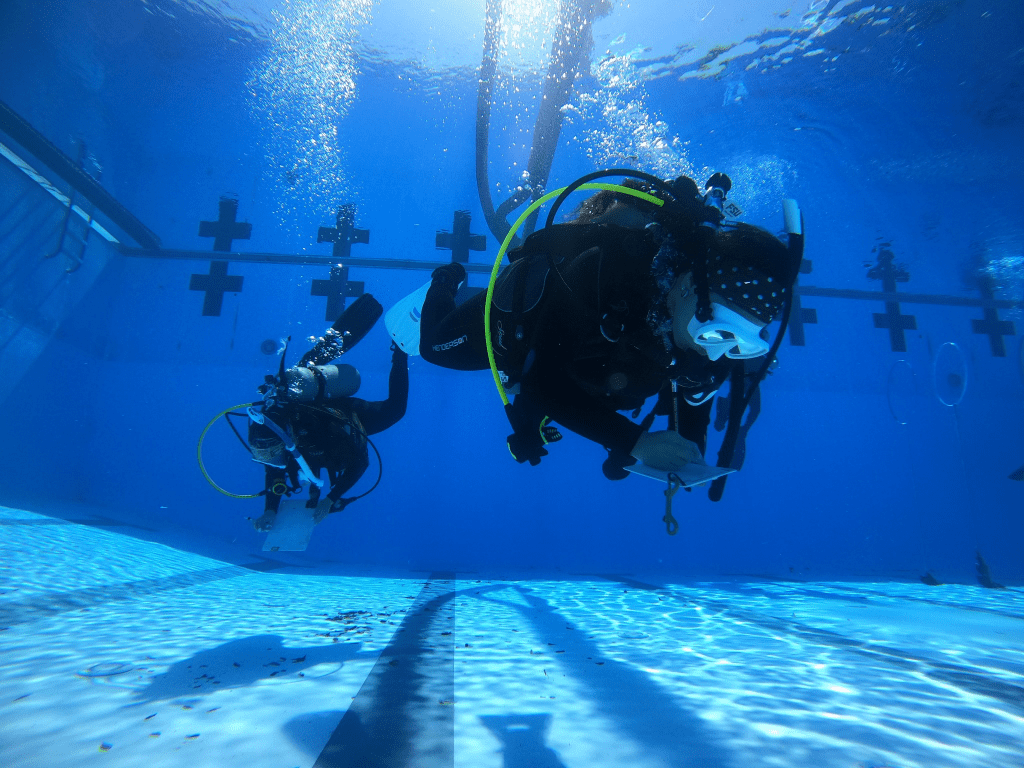
Kassandra Sevila practiced underwater data collection while maintaining buoyancy by identifying coin types and whether they are heads or tails at the Morcom Aquatic Center.
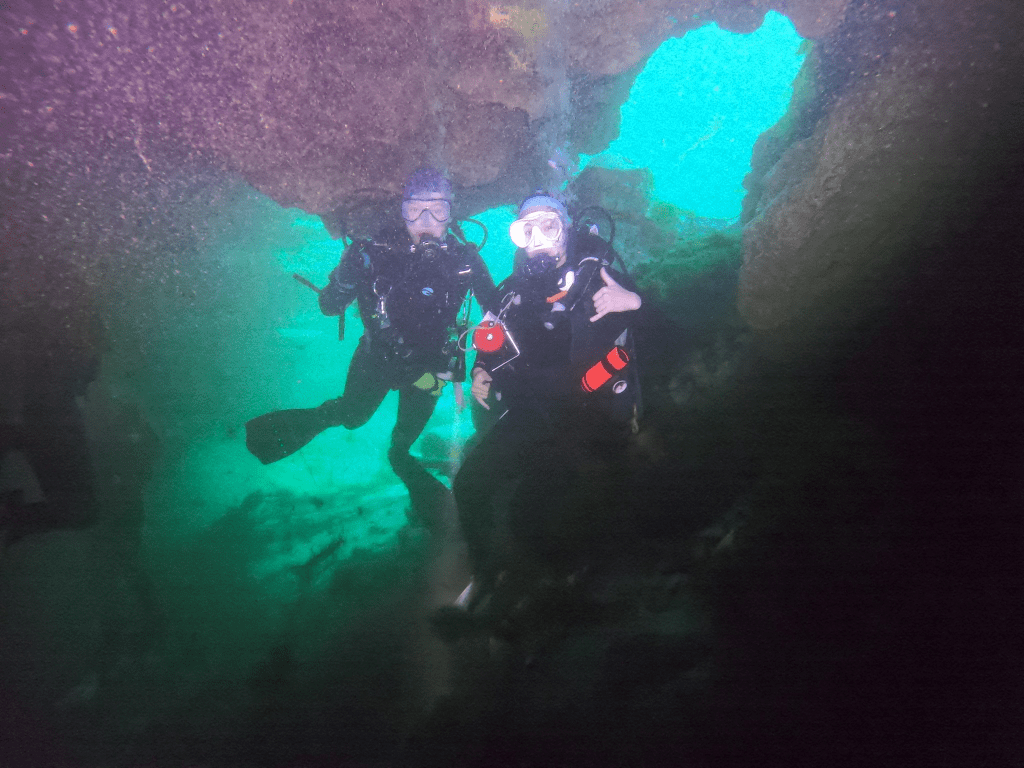
Kassandra and Dive Master, Mikayla, in a cavern at Troy Springs during her Advanced Open Water training.
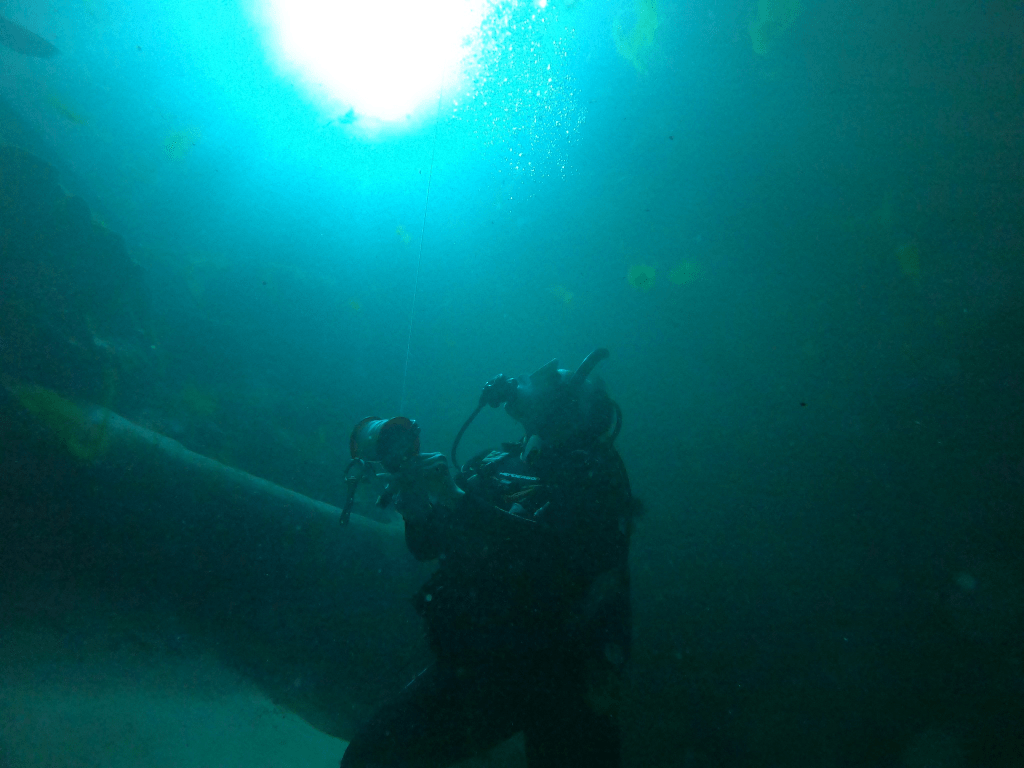
Kassandra practiced using a safety marker buoy at depth for her advanced open water certification.

