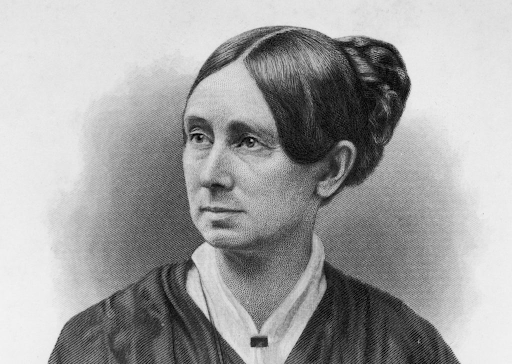
A woman called Dorothea Dix began touring American prisons with a notebook in the 1840s. What she discovered were horrific conditions – incarcerated people chained, beaten, neglected – and people with mental illnesses and disabilities in prison for no reason at all. Dix took it upon herself to lobby the Massachusetts government and draw attention to this heinous human rights abuse. Her efforts resulted in the first state mental institutions in the United States.
Over a hundred years later, in the 1960s, President John F. Kennedy led the deinstitutionalisation movement, which was intended to encourage community-based, humane care as an alternative to mental institutions. However, lacking adequate community resources, the movement led to a criminalization of mental illness and caused a surge of people back into the criminal justice system. In 2026, in our own state of Florida, mental illness continues to be unjustly criminalized.
Our IDEA Grant project, “The Legacy of the Mad Woman: Exploring Female Mental Illness in the Florida Prison System,” will look at women in our state’s criminal justice system. Female inmates, roughly 73% in state prisons, experience significantly higher rates of mental illness than men, and Florida’s female incarceration rate is higher than the national average. The Guardian reports that the number of women incarcerated around the world is rising at nearly three times the rate of men. The experience of incarcerated women needs to be investigated now more than ever.
Throughout the first half of the summer, we will interview different stakeholders in this issue: prison reform activists, justice-impacted individuals, community members, and legal, criminology, and human rights scholars. In the second half of the summer, we will begin writing. Our series of creative nonfiction essays will blend research, interviews, and personal experience.

As human rights and social justice students, we are both deeply invested in interrogating human rights issues and finding how and why certain populations are vulnerable to human rights abuses. We will trace the history of prison reform and examine how the “mad woman” trope in history and literature affects the present experience of women in the criminal justice system. Through our project, we want to highlight the potential for legal and systemic reform, while focusing on the very women who are currently disadvantaged by these systems.
Over two hundred years ago, Dorothea Dix saw a horrific abuse of human rights and imagined a better system; we hope to be part of that reimagining for the Florida prison system right now. We cannot wait to talk to scholars, activists, and the justice-impacted community to gain a deeper understanding of this human rights issue.

As novelist Chimimanda Ngozie Adichie said, “Stories matter. Stories have been used to dispossess and to malign. But stories can also be used to empower and to humanize.”
Half of our team is a creative writing major, and the other is art history, so we believe in the power of narratives and art to transform society. We believe the age-old “mad woman” story has real implications at the intersection of mental illness and the prison system.
Around 63% of people with a history of mental illness do not receive treatment while incarcerated. As female incarceration increases in Florida, telling the stories of incarcerated women with mental illness and little to no access to treatment becomes ever more important. Through our essay series, we want to tell a more humanizing and nuanced story about incarcerated women in the Florida prison system—and about a path forward.

