Last night I got around 3 hours of sleep right before my statistics exam this morning. “Why might this information be relevant?”, you may be asking. That’s because I SHOULD KNOW BETTER!!! My research is on how sleep deprivation affects the hippocampus which is the part of the brain that helps with the formation of memories. Sleep deprivation has effects on molecular signaling and gene expression of hippocampal tissue which we try to quantify. And needless to say, I’ll need to get some good sleep to come back from this academic massacre. (Shout out to STA 4321)

But before I go any further, let me introduce myself. I’m not really a fan of introducing myself or describing myself. It always feels like I fall short of describing “me”. But anyway, my name is Kishon and I am a double major in Statistics and Neuroscience. I like to talk about niche topics and doing random hobbies when I get the chance. In the long term, I hope to cure the need for sleep and all disease. But in the short term, and a slight bit more attainable (very slightly more attainable), I hope to go to medical school. I’m applying this year so, Yaaayy (It’s a bit brutal). I hope to have a job where I can help and interact with people in my day to day but still having the option to continue research like this in the future.
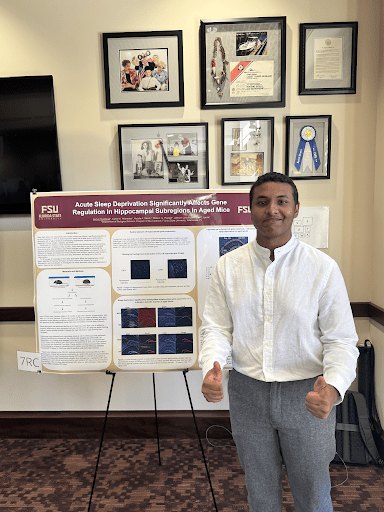
In all seriousness though, sleep deprivation is a global issue and one with a lot of attention. I hope to make an impact in discovering the mysteries behind sleep and sleep deprivation. I have been working with Dr. Lyons, my faculty mentor, and the rest of the lab for a year to date. So far we have measured the changes in RNA expression due to sleep deprivation in the 3 regions of the hippocampus: Dentate Gyrus (DG), CA1 and CA3. If DNA were a huge textbook locked away that gave instructions to build anything you could imagine, then the RNA that we study is a short instruction manual to build a chair for example that was copied from the book on a piece of paper so that we can carry it to a factory to eventually tell the factory how to build the item. The products of these factories help in the formation of spatial memory. We found some results pointing to down regulation in certain RNA molecules (fewer instruction manuals), so fewer factories have access to the plans, and upregulation in others (more instruction manuals), so more factories have access to the plans.
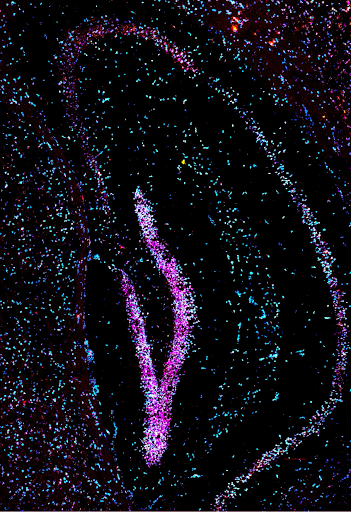
So the obvious next question is: if the number of instruction manuals changes, does that mean the number of chairs being built changes too? Over the summer I hope to expand on this work by attempting to determine the changes in protein abundance after sleep deprivation of mice in the 3 regions of the hippocampus Dentate Gyrus (DG), CA1 and CA3. Going back to our factory analogy, after the factory gets the instructions, it can then be used to build chairs or what is actually happening in cells, proteins. (These chairs can also further be modified and even put with other chairs and even a dining table to create a set, but that’s a conversation for another day)
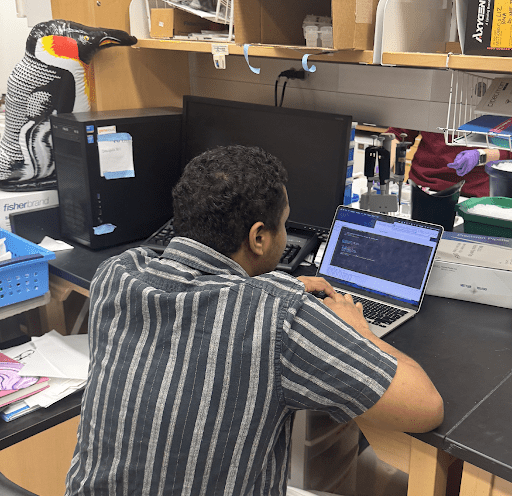
We want to validate if fewer instructions really mean fewer chairs get made and in the amounts we expect. To do this we will be using a method called western blotting. This will enable us to reliably detect the protein abundance of specific proteins in the hippocampus of mice who will be sleep deprived for 5 hours a day for 5 days and compare the abundance with mice that are not sleep deprived. With this data we will know a bit more about the effects of sleep deprivation on the hippocampus. This should help us eventually create a therapy to potentially reverse these effects which may or may not work and is outside the scope of this project. Hopefully this should bring us closer to a utopian future where we don’t have to sleep, and we can stay up all night watching One Piece. (This would be the only practical way to finish the story as a newcomer, 1158 episodes total) Hopefully we can get this done in 5-7 weeks, with some time for analysis and other miscellaneous things. It’s going to be a lot of work but that’s the reality of research from what I’ve learnt in my one year at the Lyons lab. So far I have had some training in the procedure that I will be doing but much less than I had planned due to other things going on in the lab in the last few weeks. It has been hectic lately.

