Hi everyone! My name is Claire Sullivan, and I am a sophomore majoring in Community Patient Care on a pre-med track. When I last wrote to you all, I was working to prepare for FSU’s 2025 President’s Showcase of Undergraduate Research Excellence. Now, six months later, I am excited to share with you how my original IDEA Grant project has grown and evolved into a new research project.
My initial interest in patient care came from my own experiences as a pediatric patient. Having struggled with a lack of local or affordable options for healthcare, and knowing the difference that finally getting necessary care made in my life, I started volunteering at my local free clinic, Shepherd’s Hope. As a volunteer, I assist in whatever way is most needed, whether it be taking vital signs, completing intake histories, conducting eye exams, giving discharge instructions, helping with administrative tasks, or providing Spanish language assistance/interpretation. Working at the Shepherd’s Hope has been incredibly fulfilling for me and has only confirmed my passion for patient care.
While Shepherd’s Hope provides excellent quality care, long wait times have historically been a common complaint among patients. Seeing how these idle wait times increased stress, discomfort, and dissatisfaction in patients, I worked to coordinate a partnership between my research lab and Shepherd’s Hope and secured a 2025 IDEA Grant to bring a brief mindfulness-based intervention to the free clinic waiting room.
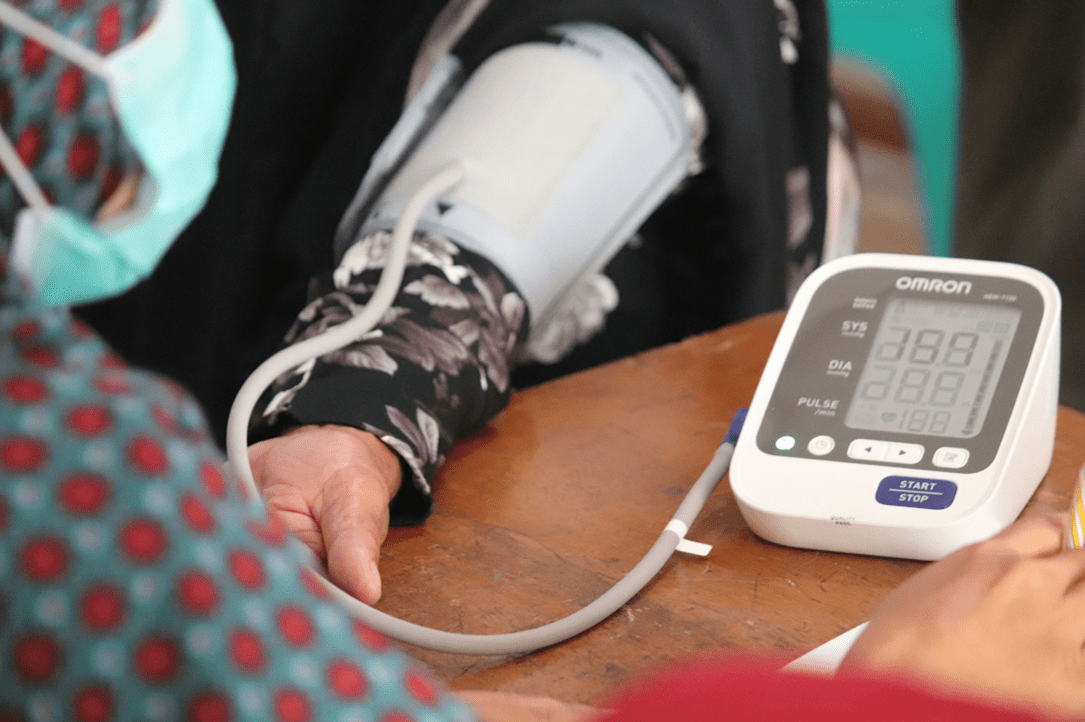
This intervention was met with great success. Patients saw the intervention as a welcome distraction while waiting for care, and both patients and clinic staff were eager to see if mindfulness-based interventions could be applied to other aspects of the patient experience. Hypertension is highly prevalent among Shepherd’s Hope’s patients. While these patients are often prescribed antihypertensive medications to manage their blood pressure, difficulties with affording antihypertensive medications mean that most patients spread out their doses or go weeks without medication.
In addition to being costly, current treatments for hypertensions do not address the psychosocial stressors that contribute to disease progression in low-income, uninsured populations. Such patients often suffer from elevated levels of psychosocial stress (Chaturvedi et al., 2023). Psychosocial stress has been shown to stimulate the sympathetic nervous system, contributing to vascular inflammation and exacerbating hypertension (Chaturvedi et al., 2023). Thus, low-income hypertensive patients could benefit greatly from complementary therapies that both lower blood pressure and decrease stress.
Mindfulness-based interventions (MBIs) have shown promise as a potential complementary therapy for hypertension. Previous research on 8- to 12-week mindfulness-based stress reduction programs demonstrates the potential of MBIs for reducing hypertensive patients’ blood pressure and stress (Babak et al., 2022; Palta et al., 2012). However, these in-person interventions tend to be very time- and resource intensive. As such, additional research is needed to assess whether a briefer, remotely delivered MBI can deliver similar therapeutic benefits while improving feasibility and accessibility for uninsured, low-income populations.
For this IDEA Grant Project, my research partner and I will work to bring a 4-week, remotely-delivered mindfulness-based intervention (B-MORE) to low-income and uninsured hypertensive patients, assessing the feasibility, acceptability, and preliminary efficacy of the intervention in this patient population. In doing so, we hope to provide patients with a more holistic approach for managing high blood pressure while also providing preliminary data on an approach to improving hypertensive care at scale. Currently, the project is under IRB review. I will continue to give updates as summer approaches and data collection begins.
Featured photo by Mufid Majnun on Unsplash

