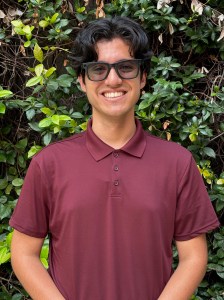
Hi! My name is Matthew Baca, and I’m an Exercise Physiology major at Florida State University on the pre-med track. I’ve always been interested in medicine, especially because of my love for sports growing up. Over time, that interest has expanded beyond athletics into a broader passion for understanding how the body works and how we can improve people’s health in meaningful ways.
This summer, with support from the IDEA Grant, my research partner, Claire Sullivan, and I will be working on a research project focused on hypertension, or high blood pressure, and how we can better manage it in underserved populations. Hypertension is one of the most common chronic conditions in the United States, but it can be especially difficult to control for individuals who don’t have consistent access to healthcare, medication, or monitoring tools.
For me, this topic is personal. Growing up in Miami, I’ve seen how healthcare access can vary depending on someone’s financial situation. My grandmother struggled with hypertension, and unfortunately, she couldn’t get to a hospital in time due to limitations with her insurance. That experience changed the way I see healthcare. It showed me that managing a condition isn’t just about treatment, it’s also about access, education, and support. Because of that, I’ve become more interested in understanding how we can make care more accessible and effective for different populations. That’s one of the reasons I’ve gotten involved in research.
Our project is built around the question of whether a short, online mindfulness program helps reduce both stress and blood pressure.
We’ll be working with Shepherd’s Hope, a free clinic in Central Florida that serves uninsured patients. Many of the patients there deal with uncontrolled hypertension, often because they can’t consistently afford medication or don’t have access to tools like blood pressure monitors. At the same time, many experience high levels of stress, which can make their condition worse.
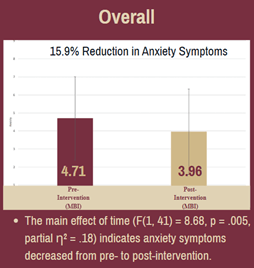
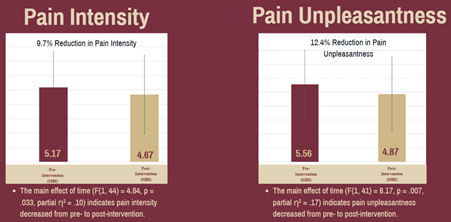
My research partner has done previous research where she found that even a short, five-minute guided mindfulness exercise led to noticeable reductions in anxiety and patient discomfort. Those results showed that mindfulness can have immediate, measurable effects, even in a busy clinical setting.
The main goal is to see whether these short-term benefits can turn into longer-term improvements in stress and, more importantly, blood pressure.
To address this, we’re introducing a four-week virtual mindfulness-based program called B-MORE. Participants will attend weekly 30-minute sessions where they’ll learn techniques to manage stress in their daily lives. They’ll also track their blood pressure and complete short surveys so we can evaluate whether the program is realistic to implement in a real-world setting.
The goal is to create something simple, low-cost, and scalable, something that could realistically reach more people. Throughout the summer, we will be involved in developing surveys, coordinating with participants, and helping manage the data we collect. My partner and I have already begun making the surveys and working closely with the free clinic.
This project is an important step for me, and I’m glad I get to publish every step of the way. Thank you and stay tuned for what’s next!

