By Courtney Tagay, University of Hawaiʻi at Mänoa
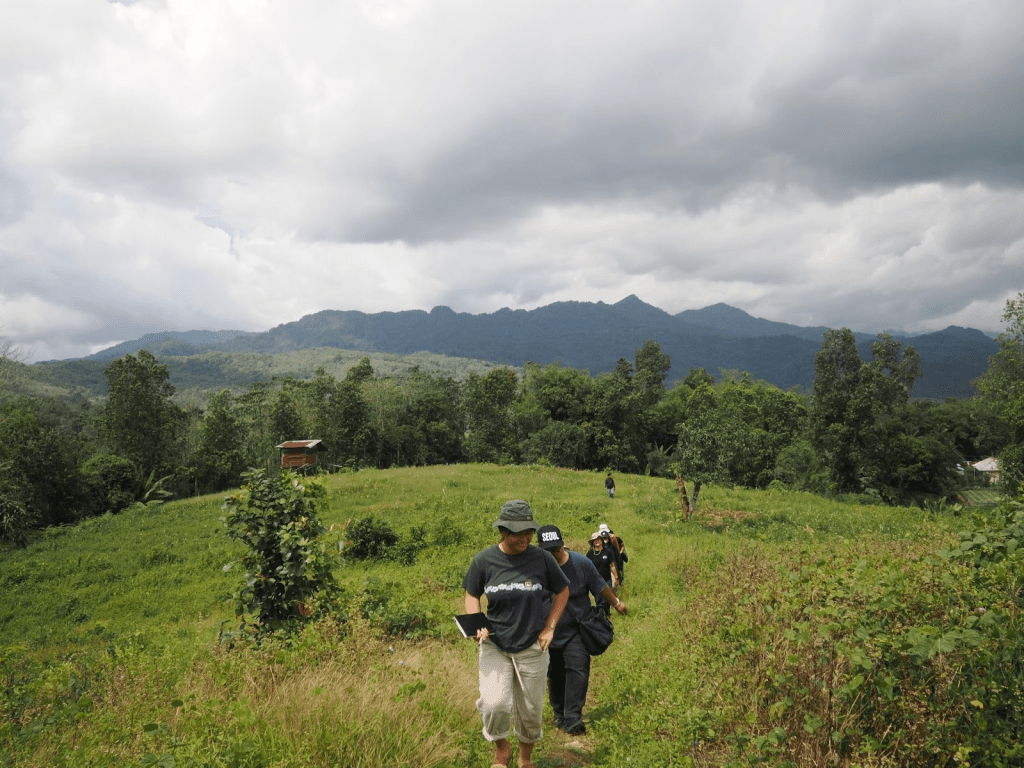
Walking along the border of a villager’s land in Jambua, a hamlet in Lima Poccoe
Going to South Sulawesi this summer was much more than an international research opportunity; it completely changed the trajectory of my academic career. Taking on this project was somewhat of a spontaneous decision for me. I wanted to make the most of my senior year and force myself out of my comfort zone. However, this experience as a whole has changed me in every aspect. From applying for project funding, preparing for the field, being in the villages, and even in the memories I made post-field school, I have learned so much from my mentors, the villagers, and the land itself.
At first, I was unsure of what to expect in Indonesia. This was my first time leading a team this large and also my first time working collaboratively with people so dedicated to academics. Admittedly, I was intimidated at first, since I had not played a central role in any academic or professional circles before. However, with the support and encouragement from my mentors, I learned how to step into my role with confidence.
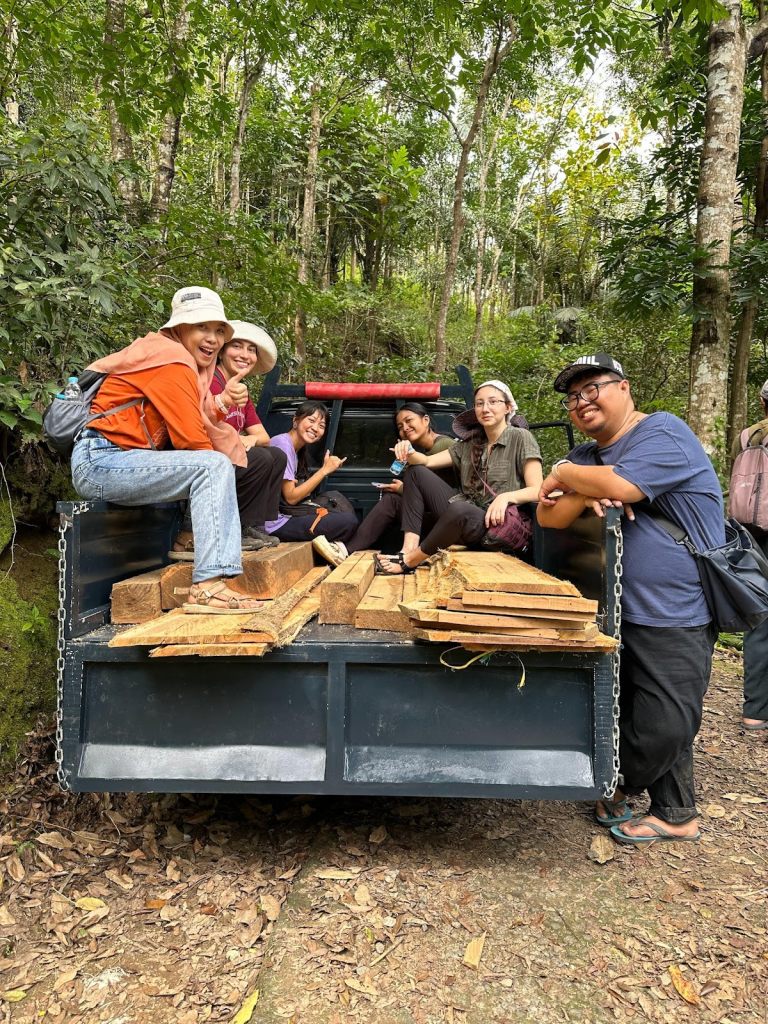
A few of my mentors in this field school. From left to right: Dila, Debbie, Xiaoyun, Leni, Puna, and Aswin
I would say that out of all the people I have met in my life, the people I have met in this field school have inspired me the most. Not only did my team guide me throughout the entire process, but they also opened up conversations for myself that continuously challenged my thoughts and dialogue. I kept asking myself, “who are we presenting this information for? Is this the story we want to tell? Or is this story the community wants us to tell?” This project was not just “our research;” We were recording people’s life experiences in their most vulnerable moments.
Looking at South Sulawesi’s land conflicts through a decolonial perspective was vital to the foundations of our project. As visitors to the local area, collaboration with residents was essential to understanding the contexts of South Sulawesi’s land conflicts. Since we were looking at the ways state versus local land conflicts have changed the livelihoods of remote villages in Indonesia, we needed to be stationed locally. Having lived in Hawaiʻi my whole life, I was not able to fully grasp some of the land dynamics until I actually visited the sites in person.
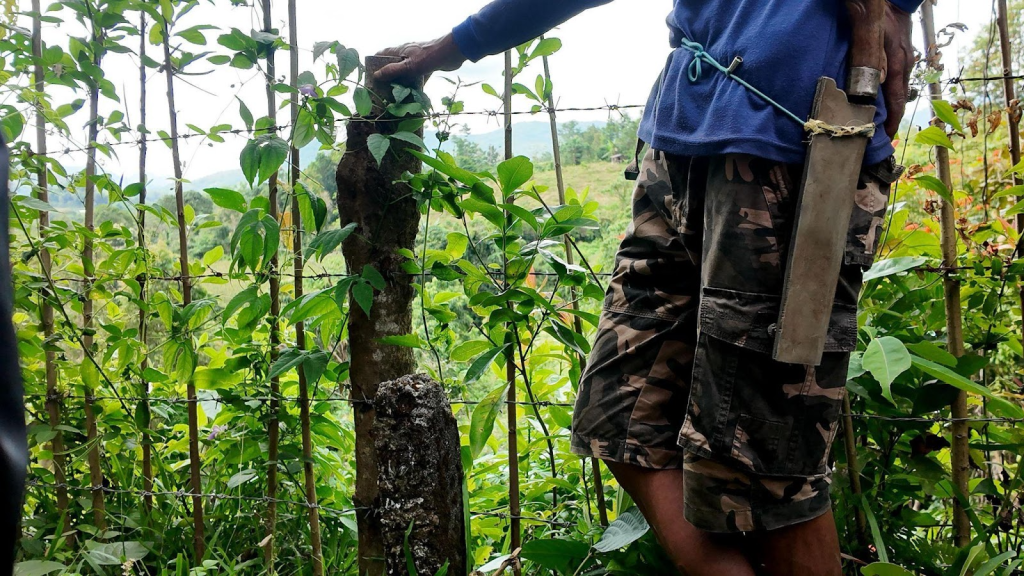
A forest boundary marker placed by the Indonesian government on a villager’s land
As we were recording our oral histories, I kept returning to the themes of positionality and ethics. This was my first time working with such sensitive information. We had to be extremely careful with how we presented our findings by picking and choosing what was safe to share with the public. I had to learn how to navigate through protecting our narrators’ confidentiality. We all came to a consensus that the information in our project could put our interviewees at risk. If there is anything that I learned this summer, it would be that as academics, we come from a position of power and privilege.
I have many hopes for what people get from our findings. I would like to see that through this project, others can hear the perspectives of villagers in Lima Poccoe—the village my group was in, and consider how their positionality might impact the lives of marginalized communities all across the world. In my own reflection, I realized that even just a few words, using a certain language, or different nomenclature, can completely change the world’s understanding of a situation.
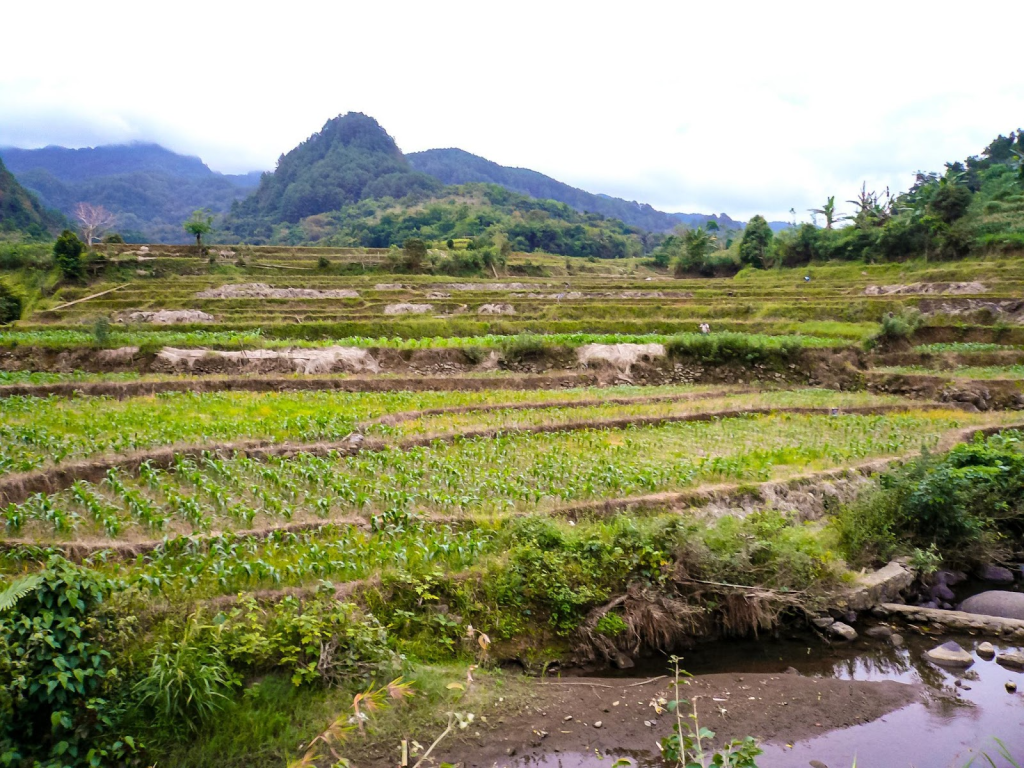
Rice paddy field in Jambua.
In terms of what is next for me, I discovered a newfound love for Bahasa Indonesia. It was one thing to learn Bahasa Indonesia in Hawaiʻi, but being immersed in the language while also learning about the many different cultures in Indonesia inspired me to work towards fluency. As of lately, I have been practicing Bahasa Indonesia everyday. I hope to also take structured language courses if I can find the funding for it. In addition to learning Bahasa Indonesia, I would like to learn a bit of the local languages in Makassar to supplement my studies since there are certain cultural nuances that are embedded into the local languages.
This project has inspired a few goals for next year. I would like to continue school in Hawaiʻi for my master’s degree in urban and regional planning. I was also invited to help plan a global conference that will be taking place in Indonesia in 2027. In addition to that, my university has a strong relationship with the university we collaborated with in Indonesia. So, my mentors have encouraged me to find research opportunities in Indonesia for my master’s program.
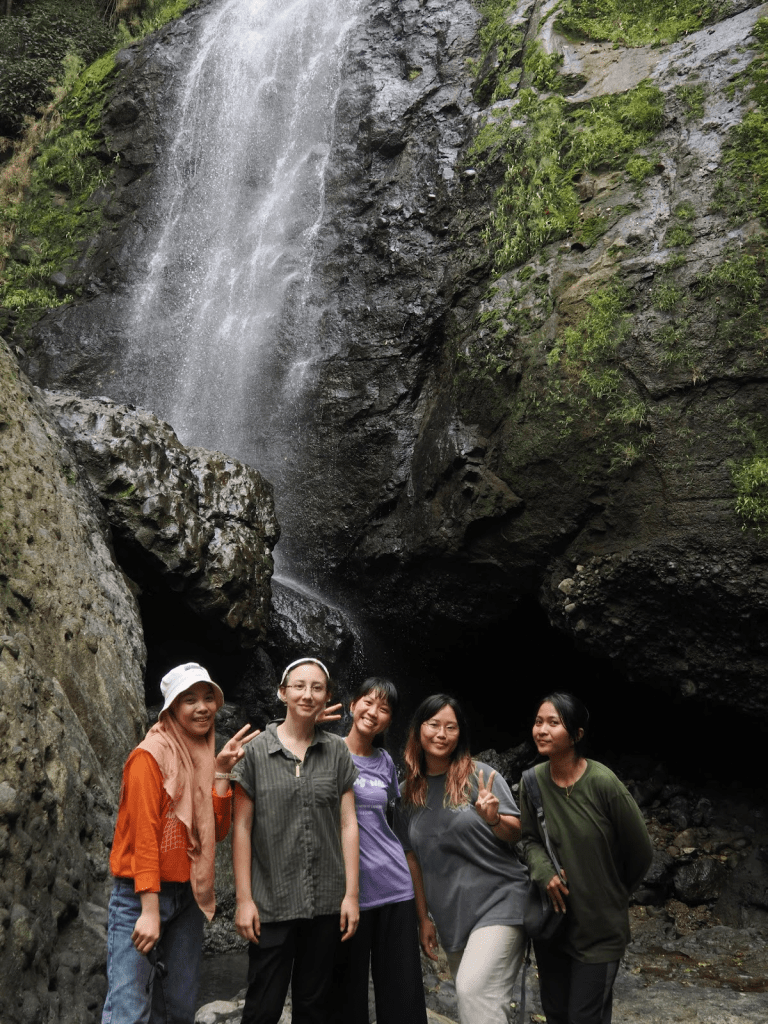
Me and my team in front of a waterfall in Rompegading
Looking back on our time in Indonesia, there is so much that I have gained from my experience overseas. I found networks, an interest in international development and politics, and passion for research. Moreover, the friendships that I have built in Indonesia are priceless. There are an endless amount of opportunities that have emerged from my time there, of which this blog post only scratches the surface of. Huge mahalo to the Tyler Center for Global Studies, I would have never imagined my future like this without the Undergraduate Research Opportunity Program.

