By Tamia Watkins, Johns Hopkins University
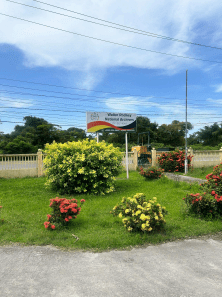
This past July, with support from the Tyler Center for Global Studies, I had the opportunity to travel to Guyana, South America and conduct research at the Walter Rodney National Archives. It was my first time pairing travel with a project that was not just personal, but also deeply academic and professional. Looking back, I realize this experience shaped me in more ways than I could have imagined as I not only explored Guyana’s history but my family’s as well.
Academically, this experience reshaped the way I think about research. Instead of just reading secondary sources or analyzing neatly compiled data, I was immersed in the raw, often fragile, pieces of history themselves. I learned how to navigate incomplete records, decipher handwriting (a very difficult task), and read between the lines of what was written and what was left unsaid. That process sharpened my critical thinking skills in ways a classroom alone could not. This research was not a straightforward search for facts, but as an ongoing conversation with the past. It reminded me that academia is not just about accumulating knowledge, but about asking questions that expand how we understand the world and ourselves. Professionally, the trip helped me realize the transferable value of research skills across any career path I pursue. Sorting through archival material demanded organization, persistence, and problem-solving when answers weren’t obvious. I became more comfortable with uncertainty, learning to move forward even when information felt incomplete or ambiguous. That flexibility is something I can carry into professional environments, where challenges rarely come with clear instructions. Most of all, the experience reinforced the importance of approaching work with empathy and cultural awareness – qualities that matter just as much as technical expertise in any profession.
The value of engaging with research abroad lies in its very expansive nature . Research outside of home borders invites humility. I was reminded that my perspective is just one among many, and that other ways of knowing and remembering deserve equal weight. It also demands adaptability; in Guyana, I had to learn how to navigate archival systems that worked differently from the ones I was used to, and how to ask questions that were respectful of local contexts. I walked away with skills in patience, critical analysis, cross-cultural communication, and perhaps most importantly, listening.
One salient theme I encountered during my journey was resilience. As I sifted through documents – whether medical records, newspapers, or personal letters – the throughline was always how people found ways to resist, adapt, and hold onto identity despite forces trying to erase them. This message feels urgent to share, because too often, stories of the Caribbean (and of the African diaspora more broadly) are flattened into narratives of suffering alone. The archives told me otherwise: they spoke of agency, creativity, and persistence. My research did not only take place within the confines of the National Archives, it spilled out into the interactions and conversations I had with Guyanese people. Whether it be my cousin, who drove me to the archives everyday and told enriching stories of his grandmother’s remedies for common ailments, or the friends who pointed out various plants and trees which served the communities as necessary additions to Guyana’s framework for the past four centuries – I saw bush medicine as the embodiment of perseverance despite silence. For me, resilience is not just a historical lesson, rather, it’s a reminder of how communities continue to shape their futures, ensuring future generations hold onto important cultural practices..
Engaging with Guyana, the country my family is from, added a layer of personal significance to this research experience. It was not only about studying history in an academic sense, but also about connecting with my own roots and heritage. Working in the archives felt like a bridge between past and present—between the stories I’ve inherited through family and the stories preserved in official records. This made the research deeply meaningful, because I wasn’t just learning about Guyana as an outsider; I was engaging with it as part of my own identity. In many ways, it gave me a sense of belonging and responsibility: to honor the resilience of those who came before me and to carry forward their stories with care.
Through this project, I want to show my commitment to uncovering and amplifying underrepresented voices. It reflects my interests in both humanities research and community health, as I believe that stories and histories shape how people see themselves and how they are cared for. I hope this work conveys that I am someone who approaches research not just with academic curiosity, but with empathy and a sense of responsibility. As for what’s next, this project feels like just the beginning. I see this experience as a stepping stone toward a career where I can honor both my academic training and my passion for equity. Guyana reminded me that archives are not just about the past—they are about how we envision the future.
In the end, I left Guyana with more than notes and photographs. I left with a renewed sense of purpose, a deeper connection to my heritage, and a toolkit of skills that will guide me in the years ahead. Research abroad is an invitation to see the world differently, to honor its complexity, and to carry those lessons forward.

