Hey Everyone!
Over the past month, Hayley and I have been working to receive approval from the Institutional Review Board (IRB) to ensure that all procedures in our study follow proper ethical standards. While we await this approval, we’ve begun searching for both study participants and essential supplies.
One of the key materials for our study is the OURA ring, a popular health-tracking device that generates an extensive database of information on an individual’s physiological metrics. The metrics our study is particularly interested in are the sleep stages (light, deep, REM, awake), activity levels, and other vital indicators that will help us determine the body’s overall readiness for activity and performance.

As we prepare to begin participant intake, we needed to ensure we had appropriately sized rings available. Using an OURA ring sizing kit, we began measuring ring sizes from women participating in other lab studies to better understand the average sizing of potential participants. Based on our findings and within our budget, we were able to purchase five OURA rings that best represent the size ranges needed.
Additionally, we’ve started ordering other important supplies such as ELISA saliva testing kits and cryovials. These ELISA kits will be used to collect participant saliva samples and assess cortisol and melatonin hormone levels. These hormone metrics will provide critical data to track changes throughout our exercise intervention.
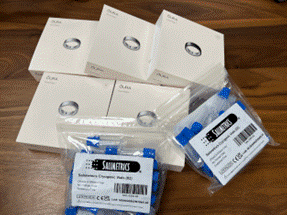
This is my first time working with both of these materials in a research setting, and I’m eager to learn more about how they function and how to use them properly. ELISA testing, in particular, is a meticulous process that requires precision and practice. I’m hoping to develop strong proficiency in running these assays efficiently. I’m also excited to gain deeper knowledge on the data analytics side of the OURA rings, with the goal of understanding the physiological factors behind each metric and how these relate to participant health and performance.
At this stage, my biggest area for growth is gaining a solid understanding of the protocols and procedures we’ll use to conduct our study. While we’ve established a framework and methodology, we now need to focus on executing these processes effectively, including the correct use of the materials mentioned above. Developing strong data collection skills before beginning official participant intake is vital to ensuring the quality and accuracy of our research.
I’m grateful to be surrounded by outstanding mentors in our lab who have guided me throughout my research journey and continue to support me in this project. Dr. Robert Hickner, Ph.D., and Laynie Thompson, Ph.D. student, are Hayley’s and my primary resources for guidance and support. We also plan to stay in close communication with the Center for Research Engagement for any external research-related needs that arise.
In recent years, I’ve become particularly fascinated by metabolism and how exercise interventions can facilitate positive metabolic and physiological outcomes. Through my time in this lab, especially volunteering with the R01 study focused on fat metabolism in overweight and obese women, I’ve gained foundational research experience and deepened my passion for this field. This has motivated me to pursue research that explores how exercise affects metabolic processes in women. I’m excited to continue learning, growing, and contributing to scientific knowledge that has the potential to improve the health and lives of women around the world.
 HSF House Blogs