My name is Ella Vizzini, and I am a junior studying Exercise Physiology on the pre-medical track at Florida State University. My research journey began in the fall of my sophomore year when I joined the Undergraduate Research Opportunity Program (UROP) through the FSU Center for Research Excellence (CRE). This program introduced me to the world of research, and before I knew it, I was interviewing to become a student researcher in the Lab of Integrative Vascular and Metabolic Physiology under the mentorship of Dr. Paul Baker. During this time, Dr. Baker was investigating the effects of creatine monohydrate on vascular health.

I quickly became an active member of the lab, gaining hands-on experience and building a strong foundation in research methodology. By the end of my sophomore year, I had the opportunity to present our research at the Undergraduate Research Symposium, FSU’s undergraduate multidisciplinary research conference.
Outside of the lab, I am an active member of Alpha Phi Sorority, where I previously served as Director of Philanthropy. This role was especially meaningful to me, as our philanthropy supports women’s heart health research—a cause closely aligned with my work in the lab. Heart disease runs in my family, and witnessing its effects firsthand has only strengthened my passion for cardiovascular research.
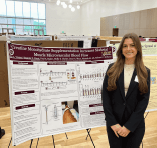
During my junior year, I continued my work in the lab through Directed Independent Study (DIS) under Dr. Bob Hickner. I was honored to present our research at the Florida Undergraduate Research Conference (FURC) in 2025 at the University of South Florida—one of the largest multidisciplinary undergraduate research events in the country. These experiences have fueled my growing passion for research and inspired me to take the next step.

This passion prompted me to join my fellow lab mate, Hayley Schermer, in applying to this year’s IDEA grant. I am thrilled to have been awarded this opportunity to conduct our own independent research project and I am incredibly grateful for the knowledge and support I have received from my lab over the past year and a half.
Our study aims to determine the effects of exercise on sleep in overweight and obese postmenopausal women. My passion for this topic stems from my deep interest in exercise science and my commitment to advancing women’s health—a field that is often underrepresented and underfunded in research. The study will include postmenopausal women who are overweight or obese. We will assess the effects of menopause on sleep patterns before and after a four-week exercise intervention involving either resistance or endurance training.
To gather data, we will use OURA rings to track various sleep metrics, including sleep stages, quality, and duration. We will also measure hormonal changes—specifically melatonin and cortisol levels—to better understand how these interventions impact sleep and stress at the hormonal level. We hypothesize that four weeks of resistance or endurance training, matched for caloric expenditure, will decrease cortisol and increase melatonin levels, corresponding to reduced stress and improved sleep. In addition, we will evaluate changes in participants’ perceptions of menopausal symptoms and sleep quality before and after the intervention.
Our goal is to contribute meaningful knowledge about the benefits of exercise for women experiencing postmenopausal symptoms and struggling with obesity. Hayley and I are excited to begin this important work and look forward to sharing updates as the research progresses.
Thank you for your interest and support!
 HSF House Blogs