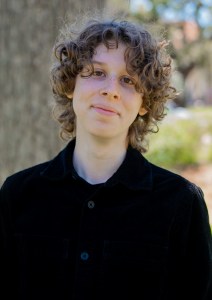
My name is Andy Gonzalez and I am a junior studying Computer Science at Florida State University. This summer, through the IDEA Grant, I am pursuing an interesting computational biology project studying the emerging area of spatial transcriptomics (ST).
Imagine being able to map the activity of genes directly to the organs and tissues they influence, recording the biological processes unfolding in space and time. This is what spatial transcriptomics precisely allows scientists to do, allowing researchers to gain key insights that had not before existed. However, to be able to take advantage of ST’s potential to its full extent, we require powerful computational tools to process and analyze these complex datasets. This is the task my project aims to accomplish.
One of the strongest advantages of spatial transcriptomics is its ability to trace cellular differentiation—the point at which cells become specialized into distinct types. By evaluating gene expression patterns in their spatial context, scientists can trace cellular paths and gain rich knowledge of tissue development and disease. However, existing computational tools are inadequate in the presence of the complexity in the data.
Spatial transcriptomics typically quantifies the expression of genes in “spots” that can range from a few cells to hundreds of cells based on the technology employed. The spots are mini-bulks that capture the composite signal of multiple cells. Currently used approaches tend to ignore such heterogeneity and as a result create inaccurate reconstructions of cell-type trajectories. Moreover, these approaches don’t effectively combine spatial location with transcriptome data to the detriment of accuracy and loss of biological understanding.
In order to solve these problems, I will be creating a computational technique known as Diffusion Spatial Pseudotime (DSPT). DSPT is an extension of a method called diffusion maps, which has historically been used on single-cell RNA sequencing data, and it is being tailored to the context of spatial transcriptomics. My algorithm takes into account the heterogeneity of gene expression between the cells of each spot and models this heterogeneity as a Gaussian distribution. It incorporates spatial distances into the algorithm directly in order to ensure that realities of biology—closest cells in terms of differentiation pathway tend to be spatially near one another—are preserved in the data analysis.

This summer I will first develop and implement this approach with the assistance of my mentor Dr. Xian Mallory. Dr. Mallory’s knowledge in computational biology and analysis of genomic data makes her an invaluable resource while I build the computational tool. When the DSPT approach has been built, I will test its accuracy and resilience with simulated spatial transcriptomics data and test it against current methods. The last step will be to implement DSPT on real-world datasets and fine-tune the approach to wider applicability.
This project is an incredible opportunity for me to sharpen my programming skills by working on a large-scale, challenging research project while also contributing to cutting-edge developments in computational biology. It allows me to apply what I’ve learned in the classroom to real-world problems, all while pushing myself to think critically and creatively about both biological and computational complexities. Looking ahead, I plan to pursue a Ph.D. in computer science with a focus on bioinformatics, where I can continue bridging the gap between technology and biology to tackle complex scientific questions.
In the end, I hope that DSPT will improve the technical capabilities in spatial transcriptomics. By giving scientists a better and more flexible way to reconstruct cell trajectories, my project would broadly contribute to what we know about cell differentiation, disease onset, and the functioning of tissues to its most fundamental level. I’m so stoked to be working on this project and I look forward to eventually sharing the outcomes of my research. Goodbye for now!
 HSF House Blogs