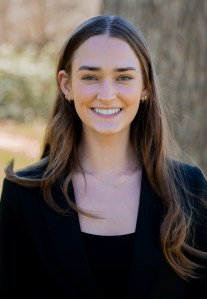
My name is Kate Everett, and I am a sophomore majoring in Dietetics with a minor in chemistry. After my undergraduate degree at FSU, I will be pursuing a master’s degree and internship in the hopes of becoming a dietitian. As a future dietitian, I am planning to work in either a sports, clinical, community, or tactical setting.
Research is so important in my chosen field because all nutrition-related guidelines and policies are based on research. I wanted to be a part of that research during my time as an undergraduate student. I wanted to understand more about the research process and how research influences changes in dietary knowledge. I was accepted to the Undergraduate Research Opportunity Program for the 2024-2025 academic school year. During this school year, I have been conducting a secondary analysis related to sodium density. The project I will be completing in the summer is a continuation of my work in the UROP program. The UROP program introduced me to my lab as well as my research partner. My research partner and I knew that we wanted to stay in the same lab to continue researching after UROP concluded, and the IDEA Grant was a great way to achieve that.
Over this summer I will be researching sodium density and its effects on cardiovascular function. Excess sodium intake is one of the major risk factors for cardiovascular disease. The current sodium guidelines are based on total sodium consumption (milligrams per day). This does not take into account an individual’s size or energy needs. Sodium density looks at sodium consumption relative to calorie intake, potentially offering a better, more individualized way to determine whether or not people are effectively reducing their cardiovascular disease risk. My study aims to determine whether lowering dietary sodium density, rather than absolute sodium intake, is a better strategy for reducing cardiovascular disease risk for all individuals. Demonstrating that sodium recommendations can be individualized could provide a better way to mitigate a high-sodium diet and its effects on cardiovascular health.
To test this hypothesis, I will be conducting a controlled feeding study. Middle-aged adults with mildly elevated blood pressure and no history of cardiovascular disease who regularly consume high-sodium diets will be enrolled in the study. Participants will consume a diet that has a low absolute sodium level (2,300 mg/day) for 2 weeks, and a low sodium density diet (1.2 mg/calorie/day) for 2 weeks with a 2-week washout period in between. These diets will be consumed in a random order. We will examine changes in blood pressure and endothelial function in response to both diets. Endothelial function refers to the opening and closing of arteries. This will be measured by flow-mediated dilation, which is an ultrasound of the brachial artery. Our findings will provide critical preliminary evidence that can inform the future development of more effective sodium intake guidelines that can be personalized for all individuals. I am eager to get started with this project during the summer and excited about the potential results that our study can have!
 HSF House Blogs