Hello! Recently, I’ve been focusing on how urban green space and infrastructure impacts local conservation and ecological goals in London, as compared to typical U.S. cities. However, for the past week or so, I’ve been trying to visit more touristy, large-scale conservation projects. Essentially, I’ve gone to the London Sealife Aquarium and the London Zoo, mainly with the intention of noting the layout, the reason for why animals are kept there, treatment of animals, and priority of animals vs. priority of customer. The reason I want to explore these aspects of animal treatment/conservation is because I’m starting to get a sense that overall, animals and environmentalism are held in a higher regard in the UK; by living here, I’ve been able to not only take observation on the facets purely designed for conservation, but I’ve also been able to absorb the everyday culture in an unprecedented way. This absorption has allowed me to make these realizations about animal treatment and conservation, which is what initially inspired me to visit the aquarium and zoo with these intentions.
Firstly, my visit to the Sealife London aquarium further confirmed my intitial belief that London culture and London tourist culture are two very distinct things. The aquarium is located right off the Thames, and right next to the London Eye, Westminster Abbey, and Big Ben. The general audience was mostly children, either with their families or with their school, and the layout of the aquarium itself felt very one-way, designed to get people in and out. The tanks were disturbingly small, and just looked depressing at times. I personally felt like the exhibits were extremely anthropogenic; meaning, it felt like the animals were there for humans to enjoy, rather than for us to appreciate. In my opinion, animal exhibits are a privilege, and should only exist if it causes no inconvenience to the animals in question. However, it’s pretty clear that the Sealife company doesn’t feel the same. Overall, this experience felt like an arm of London Tourist culture; although this aquarium may seem like an outlier to regular animal treatment in the UK, it still goes to show that a lot of animal treatment regulations need to be put in place.
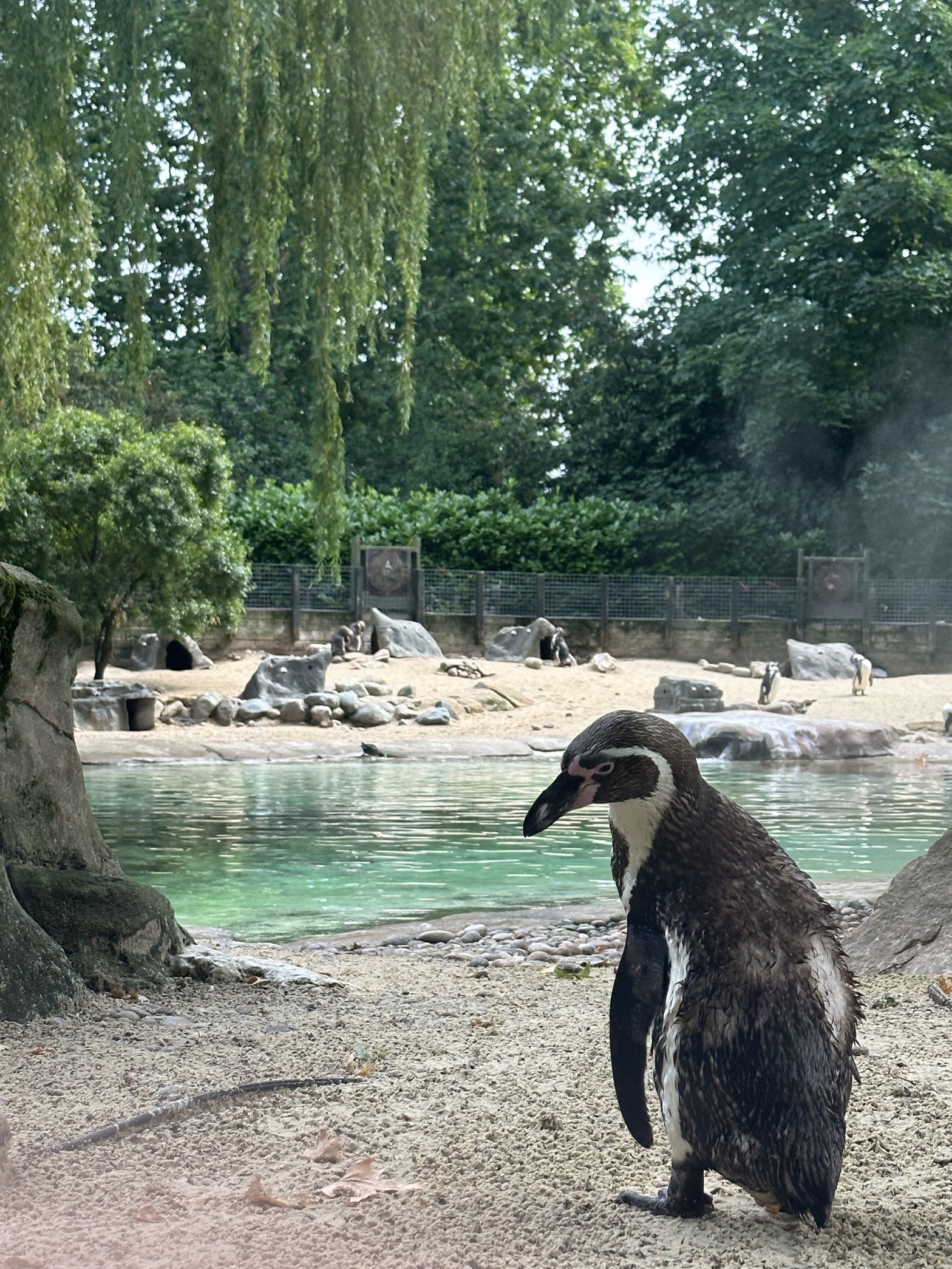
My visit to the London Zoo landed on the other end of the spectrum in regard to animal treatment. For context, the London Zoo is distinctly titled a “conservation zoo”, meaning that all animals there are there because they were either already bred domestically, or because they are in rehabilitation. Either way, if the animals are socially and physically able to released into their natural habitat, the zoo aims to release them within 2-3 years of age. In addition, the London Zoo is located in the center of Regent’s park, so there are no large buildings or city life that interfere with the animals. Overall, as a whole, I definitely felt like the zoo prioritized the animals, as opposed to the to “consumers”. The layout of each exhibit went above or around the habitats, and never interfered with animal roaming ground. Each animal also had a lot more space than I observed at the aquarium, and most of the time, I could find one or two volunteers tending to the space, either cleaning it, or providing the animal with fresh water. Lastly, the zoo also had a lot of history, due to its destruction and revival following World War I. This history, alongside the conservational history of each specific animal, was made very clear to the public, and I in turn felt as though there was true, genuine care put into as, opposite to that of the aquarium.
My point in reviewing the conservational standards of the London aquarium vs. the London Zoo is that I am still trying to determine how the UK and London holds standards, and what those standards are, in regard to prioritizing the natural ecology of organisms and wildlife as opposed to the U.S. These two trips gave me a lot of insight into more factors that determine these conservational standards, and I think I’ll be able to consider them very well when completing my Capstone project. At the end of the day, I’m hoping a lot of the conservational strategies I learn will be applicable (in new ways) to the U.S., and that I might be able to effectively bring them to FSU.
 HSF House Blogs