Hello! As I’ve been spending my time studying in London, I’ve been using my free time to explore how the city incorporates urban green space, and how London conservational infrastructure differs from cities in the U.S. This exploration is the second segment of my Global Scholars journey, whereas the first part was studying conservational infrastructure and conservational/ecological incorporation into Cornwall!
For the past week, I’ve specifically been visiting and analyzing the infrastructure, wildlife, and human interaction of parks in London. In the states, we tend to think of parks as one of the two extremities: either a place for kids to play on a playground, or 500 square miles of isolated, untouchable green space. However, I’ve been learning a lot about the uniqueness of parks and green space in the UK, and so far, it seems that they’ve mastered an infrastructural strategy that we have yet to grasp: balance. In London (and Cornwall), parks greatly vary in size, and you can find multiple in every single borough. They act as both an escape from city air, as well as an easily accessible feature. They benefit both local wildlife as well as human activity, which provides that no one opposes their existence. Overall, incorporation and balance of green space allows that environmentalism isn’t something controversial, but something necessary.
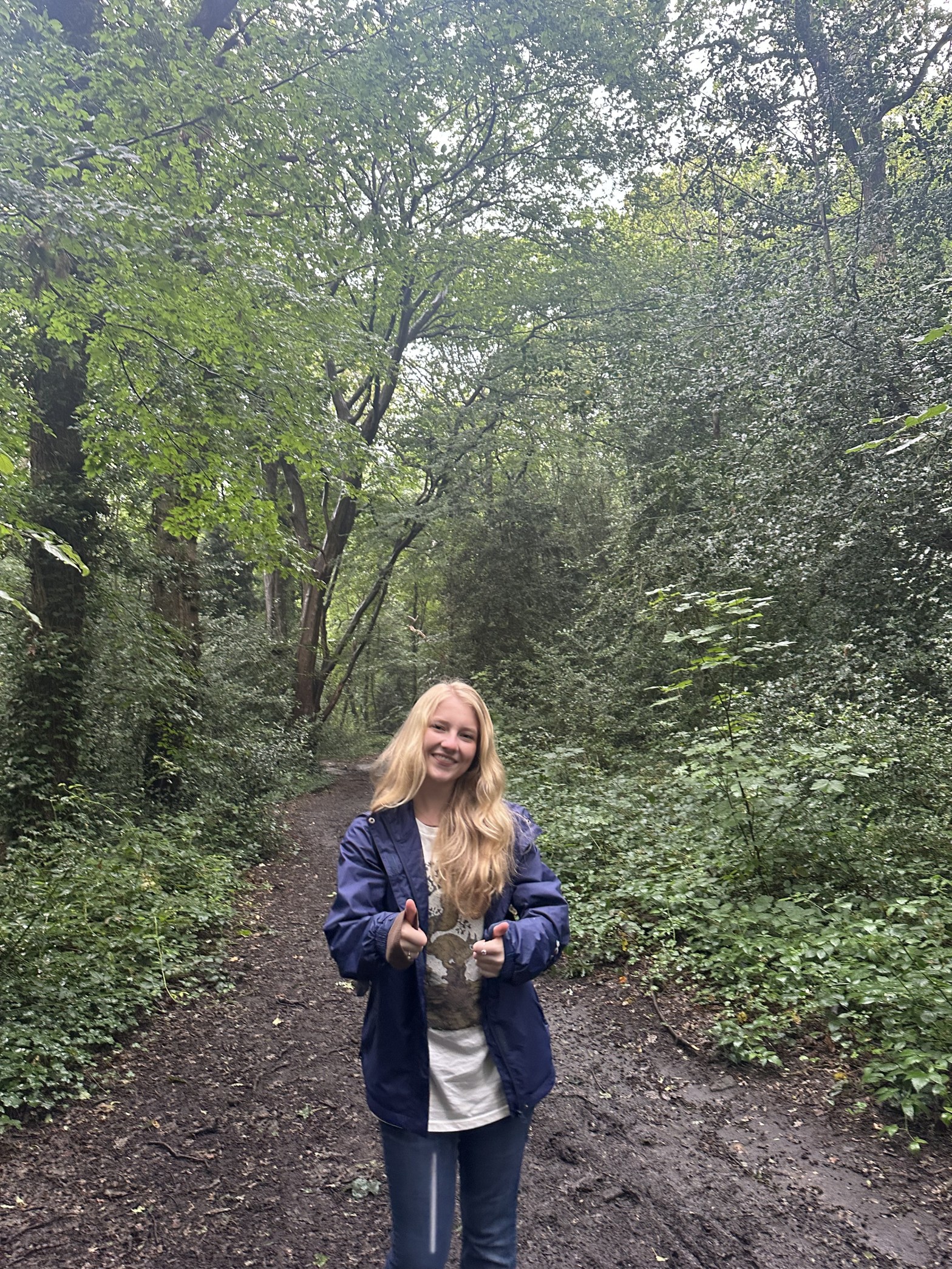
Most excitingly, yesterday I explored Richmond Park, which is the largest urban green space in London. Richmond Park is located in southwest London, nearby the Wimbledon and Richmond boroughs. Standing at 2,500 acres, this park houses around 1,000 trees and 630 deer, who have generationally roamed the grounds since 1637. Truthfully, I’ve never experienced anything like it. I accessed the park through a tunnel below a highway, but the second I stepped foot into the forest, I felt like I was in the Appalachian mountains, far away from any city. Somehow, I was still in London! The forest was dense, smelled of trees and fresh air, and provided good hiking; I got to jump over creeks, step over fallen logs, and even go bird-watching.
I felt so many emotions, too, by being in a place like this. It was peaceful and beautiful, but I also couldn’t help but feel resentful. It would be so easy for cities in the U.S. to normalize conservational areas in a city, yet, it just doesn’t happen. Moving forward, I plan on continuing to study the infrastructural incorporation of parks into the city, but I also want to understand what motivated this incorporation at a governmental and social level. Hopefully, not all the reasons will be due to history and the natural expansion of London overtime, but rather an understanding of the benefits of the parks, and a normalized respect toward local environment. More to come soon!
 HSF House Blogs