Hello again, this is a quick update on everything that’s been going on with my project this last month, along with some potential issues that may be popping up soon. First and foremost, I dissected two male and two female scorpions for tissues to use for genome sequencing. While performing these dissections, I also preserved the venom gland tissues to use later for RNA sequencing. I then got my genome tissues sent off to Hudson Alpha Institute for Biotechnology for DNA extraction and sequencing. I shipped them off in the second week of May and I’m hoping to have my data back by the end of next month.

This is where I see my first and probably most pressing issue arise. The turnaround time for the sequenced DNA could take much longer than expected since this extraction and sequencing technique is not usually performed on invertebrate tissues, this may cause problems with the sequencing or library prep. This was an issue that I took into consideration when proposing the project and have several other plans that will provide me with data that I can use in the meantime. These plans include performing a High Performance Liquid Chromatography (HPLC) analysis on the venoms of male and female Florida Bark scorpions, as well as performing RNA sequencing on the venom gland tissues to identify the transcripts responsible for the production of venom.
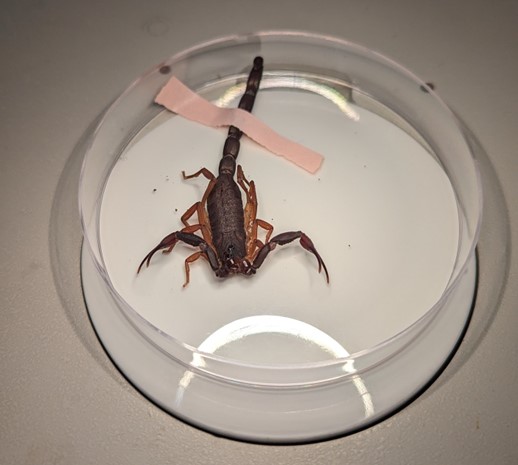
from stinging me.
For the HPLC analysis, I have already collected venom samples from my scorpions and have submitted it to the biology core to be analyzed on the HPLC machine. Once that is complete, I will take the profiles that are generated for each venom sample and perform a principal component analysis to uncover how significant the difference in venom composition is between the two sexes. I’m also in the process of performing RNA extractions on venom gland tissues. I will then submit the extracted RNA for sequencing to identify RNA transcripts, or the transcriptome, found in the tissue. Analyzing the transcriptome data of these scorpions will provide a better understanding of gene expression within them. This transcriptome data can be combined with data collected from mass spectrometry analysis of the venom, which reveals the proteomic composition of the venom, to understand how these RNA transcripts are translated into venom proteins.
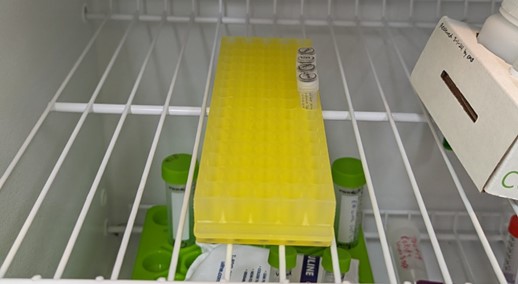
Getting my venom samples prepared for mass spectrometry is my next major step in making progress on my project and is something I hope to have completed by the end of next week. Another task that I am hoping to complete soon is collecting more scorpions. It is quite common to have collected invertebrates die while in captivity, and my scorpions have been dying at a rate higher than expected. I still have more than enough individuals to complete all parts of my projects, but I would like to have several backups in case something goes wrong. My plan is to take a trip down to the Keys sometime in the next month to collect some more scorpions and any other venomous invertebrates that I may find along the way. In conclusion, I am very happy with the progress that I have made on my project and can’t wait to see what next month holds. I’ll see you in next month’s update!
 HSF House Blogs
Hi Shakthi!
It sounds like you’re making great progress. I have a few questions if you don’t mind. How did you get started studying scorpion DNA? Is it hard to catch them? At the end of your post you mention picking up other venomous invertebrate you happen upon, are there any in particular you hope to find samples of?
-Sequoia Ernst
LikeLike