By Landen Broocke, William & Mary
I returned from the Balkans just a few days ago, and I am incredibly grateful to be able to look back on what was one of the most meaningful and transformative opportunities of my undergraduate career. I came home with a newfound appreciation for Bosnian coffee (and perhaps a slight coffee dependency to match), as well as countless memories and experiences that I know will shape my future.
This summer, I participated in the American-Bosnian Collaboration (ABC) Project, where our research explored how storytelling can foster intercultural communication skills among Bosnian youth. Rather than conducting research from behind a desk, our team stepped into classrooms, designing and facilitating lessons that encouraged students to engage with topics like empathy, conflict resolution, diversity, and hope. My co-teacher and I centered our lessons around The Sneetches by Dr. Seuss, a story that became an instant favorite among our students. One of the most entertaining moments was trying to define all of Dr. Seuss’s wonderfully made-up “Seussian” words together. We also used familiar fairy tales to build story mountains, a visual way of mapping a story’s plot. Comparing the different adaptations everyone had grown up with sparked many conversations about how stories evolve across cultures.
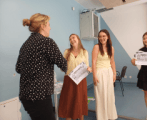
Of course, there was never a dull moment in the classroom. We played acting games to practice nonviolent communication and conflict de-escalation, laughed our way through improv activities, and spent plenty of time doing creative projects. By the final week, our students were ready to create a story of their own. Inspired by The Sneetches, they developed a skit about a town of animals learning to accept and celebrate one another’s differences. The creativity in that classroom was unbelievable. Every few minutes, someone had another idea for a new character, funnier dialogue, or a better ending. By the last day, the students were ecstatic to get the chance to share this creation to their parents and peers. Every student had found a way to contribute, whether through acting, writing, brainstorming, or helping create props, and they were so proud of what they had built together.
One of the most rewarding parts of the experience was watching how naturally our classroom conversations grew over the course of the three weeks. What started with simple discussions about characters and stories gradually turned into thoughtful conversations about kindness, hope, standing up for others, and the kind of world they wanted to help create. During one activity centered on the UN Sustainable Development Goals, students eagerly shared ideas for making their own communities better. It was so inspiring to watch their confidence grow, not only in speaking English but also in sharing their own ideas and perspectives.
As much as we hoped our students learned from us, I honestly think I learned just as much from them. Our class breaks often turned into cultural Q&A sessions where I got absolutely grilled about my favorite American restaurants, stores, and traditions. Apparently everyone wanted to know about Target and Crumbl Cookie. In return, my students excitedly taught me Bosnian phrases, introduced me to local customs, and made sure I knew exactly which snacks I needed to try. We also happened to be in Bosnia during the World Cup, so many mornings began with excited conversations about the latest matches before we ever got to our lesson. Those little moments outside of the classroom ended up being some of my favorite memories!
Looking back, one of the biggest things I am taking away from this experience is confidence. Creating lesson plans was already something that pushed me outside of my comfort zone, but actually traveling to Sarajevo, collaborating with co-teachers, and teaching students who were learning English as a second language added a whole new level to that challenge. Every day required flexibility, patience, and a willingness to adapt when activities did not go exactly as planned.
At the same time, I realized something I probably should have expected all along. While I was teaching lessons about perspective taking, diversity, and tolerance, I was learning those same lessons myself. That is what made this experience so special. Research in a global context is not just about collecting information in another country. It is about listening, asking questions, challenging your own assumptions, and learning alongside the people you meet. Although I left with a deeper understanding of the Balkans, I also came home with a greater appreciation for the importance of empathy and openness in every community, including my own.
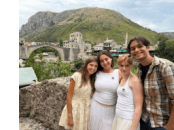
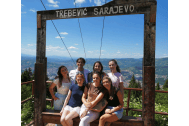
More than anything else, this experience reinforced the value of relationships. It is honestly crazy to think that the people waiting for us at the airport were complete strangers. Just weeks later, saying goodbye was one of the hardest parts of the summer, as we had built a community there that truly made Bosnia feel like a second home. I loved learning about Bosnian culture, but I also loved discovering just how much we already had in common. Whether we were talking about music, family traditions, or laughing about the same pop culture references, those connections reminded me that meaningful relationships can grow almost anywhere if we are open to them.
This project affirmed so many of the interests that first drew me to it, including peace education, Eastern European studies, and community engagement. I still do not know exactly what I want to do after graduation, and I am totally okay with that. What I do know is that I want people to be at the center of whatever it is I end up doing. Whether that ends up being in education, policy, nonprofit work, or somewhere I have not even considered yet, I want my work to have a direct impact on the communities I serve. This summer reminded me that meaningful change starts with relationships, curiosity, and a willingness to learn from others!

