By Catherine Thompson, Johns Hopkins University
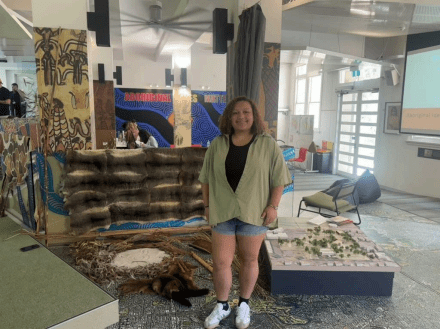
My name is Catherine Thompson, and I am a senior at Johns Hopkins University, majoring in Political Science and Africana Studies, on the Pre-Law track. I am originally from Springfield, Massachusetts, home to Dr. Seuss and the creation of Basketball. A few things you should know about me are that I am very nature-oriented, I love to play a variety of sports, but especially tennis, I am keen to learn new board/card games at all times, and I enjoy travelling. On campus, I participate in a reading and writing tutoring program where we visit local Maryland prisons once a week, assisting adult students on their path to gain their Bachelor’s degree. Since a young age, I have always been quite passionate about social justice and advocating for and with those who do not have the resources, voice, or opportunity to do so themselves. In the future, I am hopeful that I will continue this practice through law as a personal interest (civil rights and criminal justice) attorney. As I continue to take courses on intersectionality and politics, I am increasingly intrigued by the operations and theories behind the carceral system, and I desire to contribute to scholarship. Previous research with the American Prison Writing Archive on mail room policies, engagement through the Jail Tutorial Project, and persistent research on racialized communities had sparked curiosity in wondering how prisons exist across spaces, bringing me to my research topic.
During the Fall of 2025, I made the life-changing decision to study abroad in Australia for a semester. I had not known much about the place, politics, or culture, but there’s something about the element of surprise that attracted me. Stepping off the plane this past February and onto Country felt surreal, with all the preconceptions I once had slowly erased. It was no longer solely ‘Kangaroos,’ ‘Koalas,’ and ‘Down Under,’ though they serve an important significance to Australians communities and conservation, but an immediate push to understand the history of the Traditional Custodians of the land, why the wildlife is so diverse here, and immerse myself in the diverse city that Melbourne is. As I was uninformed on much of Australian politics, I was instantly hooked to learn more about incarceration, especially amongst the youth population, rather than adults.
Current scholarship demonstrates that Indigenous Aboriginal youth are a disproportionately represented population in Australia’s youth justice systems and are overwhelmingly disadvantaged, over-policed, and exposed to harmful mental health outcomes. While extensive research exists on Aboriginal and Torres Strait Islander communities and on juvenile justice systems, these bodies of scholarship are often treated separately, and much of the existing work is outdated. As a result, Indigenous youth are frequently excluded from youth justice design strategies and decision-making processes. My research aims to address this gap, bringing a more contemporary, Victoria-focused analysis of how youth justice facilities operate, many times as political responses to Indigenous youth populations. Through a comparative case study of Cherry Creek Youth Justice Center and Parkville Youth Justice Precinct, this research draws on archival and policy-analysis research to discover how the opening, closure, and design features of the aforementioned facilities reflect shifting state policies and rhetorical responses to vulnerable populations of Indigenous youth. By centering state responses rather than individual behavior, this research contributes to a structural analysis of youth justice reform in Victoria. Its findings have broader implications for understanding how racialized youth populations have historically been managed and even pose great parallels to African American overrepresentation in the American carceral system.
While I am in Victoria, I have gotten a head start on my research to get the best use of my time. Thus far, conducting research in Victoria has allowed me to gain a deeper cultural foundation, converse with academics with expertise in the field, and access archives I would have never thought I could get my hands on. In the future, I look forward to conducting site visits to Cherry Creek Youth Justice Center and Parkville Youth Justice Precinct, alongside my professor, for a more holistic understanding of how infrastructure and location may or may not apply and reflect reform.
While I am a bit anxious about the timeline of it all, so far, it is unfolding perfectly. I am very excited about tapping into various archival databases and even visiting National Libraries. Although I will not be engaging directly with youth within custodial settings, amplifying their voices through documentation of legal representatives and Ombudsman reports will remain central. Moreover, I will be presenting my research at a conference, provided with the opportunity to communicate my thesis effectively, receive criticism, and consider conference participants’ input.

