By Jakyah Hayes, Florida State University
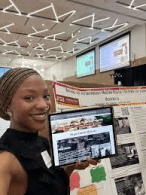
UROP Symposium ’25
As I begin this project, I am excited to strengthen my critical thinking, research, communication, leadership, and cross-cultural collaboration skills. One of the most important lessons I have learned as an anthropology student is that the power of research lies in the questions we ask. Strong questions lead to meaningful discoveries. Throughout my coursework, I have learned that carefully framing a question can shape the quality and depth of the answers we receive.
This mindset has guided the development of my research interests. I am particularly interested in understanding how trauma and resilience are depicted in museums and heritage spaces, and how accessible these narratives are to diverse audiences. These interests have helped me narrow my focus and begin developing research questions that explore the relationship between public history, representation, and accessibility. My main research questions are:
1. How are trauma, resilience, and healing represented in Afro-diasporic museums and cultural heritage spaces?
2. How do Afro-Brazilian museums portray the experiences, histories, and contributions of the African diaspora, and what stories are emphasized or overlooked?
3. How do Afro-Brazilian museums differ from African American museums in the United States in their interpretation of race, identity, resistance, and cultural heritage?
To answer these questions, I will rely on a wide range of resources both at Florida State University and beyond. At FSU, I am fortunate to have incredible mentors who have helped shape my project from the beginning. My Research mentor, Dr. Amy Kowal introduced me to biocultural medical anthropologist, Dr. Dingah, whose expertise has expanded my understanding of Brazil’s concept of racial democracy and connected me with individuals and organizations in Brazil. I have also benefited from the guidance of Dr. Joseph Jones from Florida A&M University’s study abroad program. Having traveled to Brazil multiple times and mentored students conducting research there, he has provided valuable insight into both the culture and the logistics of international research.
In addition to faculty mentorship, I will utilize university libraries, research databases, the Department of Anthropology, the Center for Global Engagement, and the Tyler Center for Global Studies. I am also incorporating digital tools into my research process. Through platforms such as OneNote, Meta AI glasses, and PowerPoint, I can efficiently collect, organize, and analyze information while maintaining ethical research practices. Outside of academia, I have been immersing myself in Brazilian culture through social media, documentaries, scholarly literature, and language practice as I continue improving my Portuguese skills. These resources are helping me develop digital fluency while broadening my understanding of global and social issues.
This project builds directly upon many of the experiences that have shaped me as a young anthropologist. My background in community-engaged research, museum studies, climate adaptation research with marginalized communities, and archaeological fieldwork at Evergreen Plantation in Edgard,Louisiana has taught me the importance of listening to and learning from communities. Throughout my academic journey, I have been passionate about amplifying underrepresented voices and making research accessible to broader audiences. These experiences have given me a strong foundation in anthropological methods while reinforcing the importance of cultural sensitivity and ethical responsibility.
As a UROP Leader and undergraduate researcher, this project is especially meaningful to me because it aligns with my long-term goal of creating pathways for future generations of researchers. I am passionate about addressing gaps in research literacy by helping young people understand the opportunities available to them and providing them with the tools to pursue their own questions. Research has transformed my life, and I hope to inspire others to see themselves as scholars, leaders, and changemakers.
While I bring valuable experiences to this project, I also recognize areas where I can continue growing. One of my biggest goals is becoming more confident conducting research in unfamiliar environments and communicating findings to diverse audiences. I also hope to strengthen my leadership skills and continue learning how to navigate international and cross-cultural research settings. To achieve this, I will continue seeking guidance from my mentors, engaging in self-reflection, and embracing opportunities to learn from community members, scholars, and fellow researchers.
I am seven days away from embarking on my journey to Brazil. I view this project as more than a research opportunity. It is an opportunity to grow as a scholar, leader, and global citizen. By challenging myself academically and personally, I hope to become a more effective researcher, collaborator, and advocate who can contribute to positive change within both local and global communities.

