By: Luis Carvajal Picott, University of Texas at Austin
My name is Luis Carvajal Picott, and I am a student at the University of Texas at Austin studying International Relations & Global Studies and Economics. I am half Venezuelan and half Chilean, and my interest in international affairs stems from a lifelong fascination with how countries compete and cooperate. Outside of academics, I spend much of my time coaching debate, working as a political consultant, and exploring questions about global politics, security, intelligence, and legal issues. Professionally, I hope to work at the intersection of international research, legal frameworks, and economic policy. More than anything, I want to better understand how ideas, culture, and institutions shape the world around us.
This summer, I have the incredible opportunity to conduct research as a Tyler Fellow in Southeast Asia. My project examines how language functions as a tool of soft power. Focusing specifically on the growing role of Mandarin Chinese in Thailand and Singapore.
When most people think about power in the sphere of international relations, they often cite military strength or perhaps economic influence. However, countries can also shape the behavior and perceptions of others through attraction instead of direct coercion. This concept, known as soft power, includes various aspects of daily life such as our culture, education, media, values, and language. My research explores how the spread of Mandarin language may influence cultural perceptions, economic opportunities, and various other social relationships within Southeast Asia.
My central research question asks: How does the growth of Mandarin influence perception of China and Chinese culture in Thailand and Singapore?
I became interested in this topic through my broader fascination with geopolitics and international competition. Over the last two decades, China has dramatically expanded its economic and political presence across Southeast Asia. In the same way Korea has aimed to export its culture through Korean Dramas, Korean Pop Music, Korean beauty products, China has attempted to replicate many of the same ideas. While much attention has been given to trade agreements and massive infrastructure projects, the increased influence of Chinese media and language has proliferated past the governments of many countries into the populace themselves. I became curious about a less visible dimension of influence: language.

To investigate this question, I will conduct interviews with students, educators, policymakers, business people, and various other community members in Thailand and Singapore. I also plan to visit educational institutions and international businesses to assess shifts in language. Through these unfiltered conversations, I hope to gain insight into how people view Mandarin, why they choose to learn it, and whether they accept it in the first place.

Thailand and Singapore provide particularly interesting case studies because they represent very different linguistic and cultural environments. Thailand has seen growing interest in Mandarin as economic ties with China expand and more multinational corporations set foot on Thai soil. While Singapore already has a significant Mandarin-speaking population and a multilingual national identity.
With both English and Mandarin serving as the primary languages across the board. Comparing these two countries will help me better understand how local context shapes the relationship between language and influence. Particularly in Singapore I aim to see how Mandarin competes with English and what reasons citizens cite in learning one over the other. In Thailand I hope to see how Mandarin competes with local heritage languages.
One of the aspects of this fellowship that excites me most is the opportunity to conduct research in a foreign context. Reading about a subject from thousands of miles away is valuable, but there is a substitute for speaking directly with the people who experience these issues and speak said languages in their daily lives. Field work and research allows us to observe nuances that are often lost in the statistics. Language fascinates me as the tone and pitch of people’s voices can often reveal far more about what they truly think than their words.
Traveling abroad also presents an opportunity for much personal growth. While I have spent years studying international affairs in classrooms and personal projects, this experience will allow me to engage with global issues firsthand. I expect that many of my assumptions will be challenged, and I hope to develop a more nuanced understanding of the communities and perspectives I encounter.
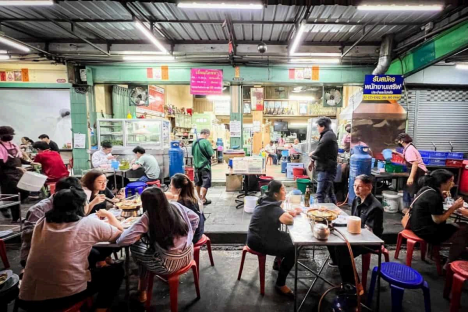
As I prepare to depart on June 12th, I am most looking forward to the conversations I will have along the way. Some of the most impressive insights in research come from unexpected interactions. I am eager to
attempt to assimilate and become as much of a local as I can. I want to become a community member and understand how the role of language alters their lives and futures.
At the same time, I am aware that conducting research aboard comes with its own set of challenges. Navigating unfamiliar environments can be frustrating if not exhausting, but adapting to cultural norms will bring forth memories and experiences I couldn’t help but dream of before this fellowship. I simply cannot wait to sit in a local restaurant and converse with locals on affairs that I didn’t even know existed.
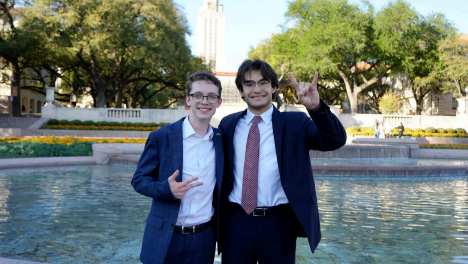
As a whole, I see this project as an opportunity not only to answer a research question but also to deepen my understanding of how influence operates in an increasingly interconnected world. Just as English quickly became a global default for business, Mandarin quickly has taken the stage of a deepset rival. As I begin this journey, I look forward to working with my close friend Oliver Royal, another Tyler Fellow, on his projects and crafting a research paper that delineates all our work (Oliver Royal left, Luis Carvajal Picott right).