By Reagan Gibson, Florida State University
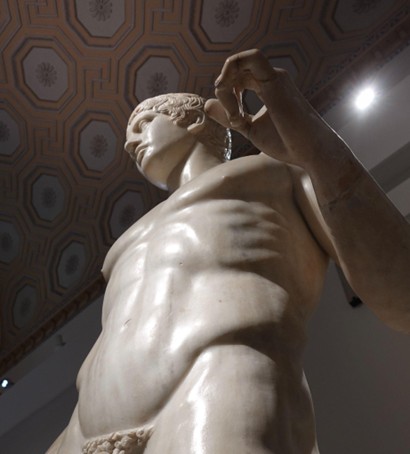
Archaeology, while little known in the STEM world, I would argue is the crux of foundation for the overall practice of historical preservation. This is something that I grew to understand and appreciate more and more as I was abroad and actively participating in this wonderful science. I have said it before and I will say it again: remembering history, preserving it, and teaching it as it was in its purest form is paramount. When I began my research focusing on the exportation of statuary from ancient Vesuvian cities, my intention was always to reconnect the practice to the evolution of good and accurate archaeological study.
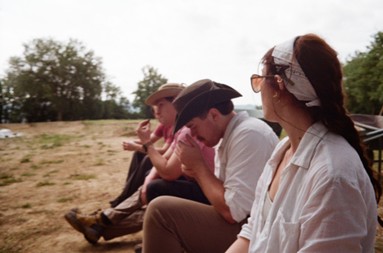
Now more so than ever, this idea of preservation is incredibly necessary. It is my greatest hope and wish that this research will contribute to the overwhelming evidence that conservation continues to evolve in an ethical, reasonable, and modern way while still maintaining the original form of concrete history (specifically as it pertains to material evidence and literary study). However, there are those who would consider this unnecessary and useless in the scientific community – especially as there are “more exciting” and “newer” developments in STEM itself. This lends itself to all sorts of inquiry – of which I entirely understand.

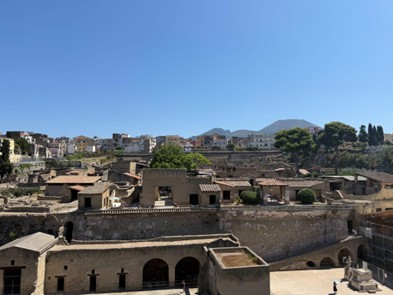
The first step in understanding a niche of research is understanding the gap in which one needs to fill. This gap, being repatriation as a general subject matter, is in particular very culturally relevant in current research. This larger conversation is filled with voices from all sides of the world, and it is imperative that one participates so that the larger voice is heard. Over the course of time, as the world has evolved, artifacts from all over the world have been stolen, looted, moved, or otherwise removed from their original context. The role of this research is to document and otherwise improve upon the previous documentation that has been made on the artifacts in the Vesuvian cities, and to further comment on how this transition affects present archaeological practice.
In this, I have next steps planned: further research on this vast topic, other relations, and submitting academic articles. I hope to continue my academics at Florida State University and extend my education into the highest station possible. This will likely include several more years of schooling, including a Master’s degree, a PhD, and several years of study abroad at the American School of Classical Studies in Athens. I plan to continue to pursue archaeology in all facets of my career, and I hope that one day, my research here will contribute to a larger publication that will put me on the archaeological map. Though this will take me many years, I am strongly motivated by both my peers and professors, and feel strongly that I will continue through academia one step at a time. This fall, I will be taking my first steps in applying for and (hopefully) accepting a position for a Master’s degree in archaeology (once again, hopefully at FSU).
 HSF House Blogs