The research that Amber and I spent the last few months on has the potential to revolutionize the insurance industry. Our models could significantly speed up damage assessment after disaster events and even improve the everyday assessment experience by eliminating the need for a physical assessor to visit a homeowner’s residence. While we’re making incremental progress on our window model, we’re still a ways from completing a full damage assessment pipeline, let alone preparing it for real-world testing—but I’m optimistic about the direction of our research.
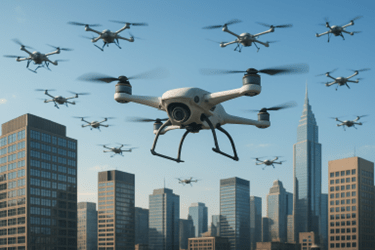
With the way technology is advancing, we’re heading toward a world of abundant production and battery innovation. This combination will lead to a future where drones automate tasks once reserved for specialized labor. Our research contributes to that vision—a world where damage assessment speed isn’t limited by the number of available assessors or how many trees a hurricane knocked down, but by how quickly a drone can fly.
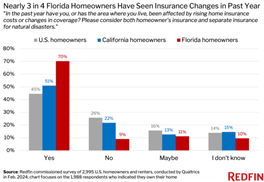
The average Floridian homeowner will quickly see the benefits. The efficiency gained from this technology will lower labor costs during disasters, a major factor in Florida’s high insurance premiums.
Once we complete our models, we’ll begin searching for locations to test our pipeline. We expect challenges in securing approval from the FAA and emergency damage assessors, but we believe persistence will get us there. We hope to publish our work as part of a longer paper aimed at proving the efficacy of the damage assessment pipeline we’ve developed.
We also have for-profit aspirations for this technology. If our tests go well, the market will need a team to integrate our solution into existing insurance workflows. We’re ready to fill that gap. Who better than the creators of the technology to lead its implementation?
I’m excited for the semester to begin so I can return to my clubs—bike club, political debate club, and international coffee hour. I also hope to tackle my hardware blind spot by joining some engineering communities. I’d love to one day contribute to drone technology on the hardware side, but I’ll need to learn a lot to make that dream a reality.
This research is, in the best case, the foundation for the projects I’ll be working on over the next decade; in the worst case, it’s real experience in bringing an idea to life. Through this project, I gained experience in Kotlin while developing the “Pilot Console,” wrote Python scripts for data scraping, and managed our agenda. These are transferable skills for a wide range of roles in both industry and research. Not to mention the self-discipline I built along the way. Even in the worst case, Drone Damage Assessment will be foundational to my career path.
 HSF House Blogs