Hello again! It’s hard to believe it’s almost the start of a new school year. Summer has gone by fast, but it’s been definitely been productive. Data collection at the clinic continues to go well, and we have even started conducting some preliminary data analysis. We are excited to continue data collection over the course of the school year. Earlier in the summer, we completed a clinical trial registry for the study, and we have made good progress towards our ultimate goals with data collection. It’s been great to see things come together, and we are looking forward to continuing work on this project in the fall.

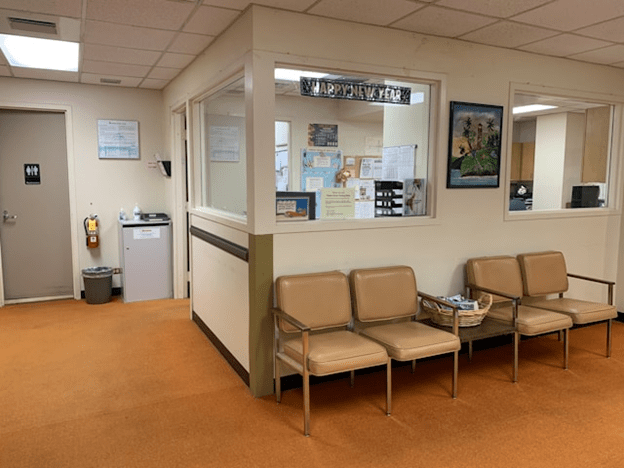
The project itself is definitely meaningful both for the patients at Shepherd’s Hope and the greater research community. The clinic has historically struggled with long wait times, with patients sometimes waiting 3 to 4 hours to receive care. Because of the limited resources at the clinic, it is not necessarily possible to shorten wait times, but with the help of this project, we have been able to make the time spent waiting at the clinic a little more pleasant and purposeful for our patients. Clinic staff have noted how the intervention has been a welcome distraction for patients and has made the waiting room a little more calm and relaxing. As one of the HIMs at the clinic, Adrienne Diego, explains: “After introducing the mindfulness sessions to help patients feel more grounded before seeing their provider, the difference has been remarkable. Patients appear calmer, more open during consultations, and overall more satisfied with their visit.”
But the benefits of this project have not limited to the patients at Shepherd’s Hope. By collecting data at the clinic, we are helping address a gap in existing research. As it stands currently, there is very little research on brief mindfulness-based interventions (MBIs) with low-income patients. There is even less research on the applications of brief MBIs for those who are uninsured or speak a language other than English. Since the patient population at Shepherd’s Hope is low-income, uninsured, and multilingual, bringing brief MBIs to the clinic is helping expand mindfulness research to a more diverse patient population. Such research is of particular importance given that low-income, uninsured patients often face longer wait times when receiving care and, thus, could potentially benefit greatly from brief MBIs like the one implemented in this project. If the intervention works as well as hypothesized, it could be a cost-effective, easily-scalable strategy for increasing patient comfort and satisfaction and decreasing pain and anxiety while waiting for care.
I am really excited to continue working on this project, and I have already started taking steps to share information about the project with the wider scientific community. As I mentioned previously, we have registered this clinical trial online. And we will be presenting our preliminary findings from the study at the annual Integrative Medicine for the Underserved (IM4US) Conference, which will be taking place from August 14th to 16th.
The IM4US Conference focuses on the potential ways integrative medicine and complementary therapies can be used to improve patient care in underserved communities, a focus that aligns well with my project. I feel that presenting at this conference will be a great way to share more information about this project and reach an audience passionate about this kind of work. In addition to the IM4US Conference, I will also be presenting my research at FSU’s President’s Showcase in October, allowing me to share my work with the FSU community. Overall, I am so grateful to have these opportunities to talk about my research, and I look forward to continuing my work on this project.
 HSF House Blogs