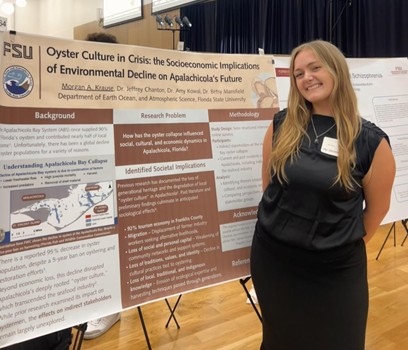
To reintroduce the topic I have chosen, I am investigating the future outlook of a small, coastal community amidst the decline of one of their historic industries, oyster harvesting. Apalachicola, Florida, and the surrounding areas have long been known for their native oysters, and this sentiment was felt most vibrantly by the residents of Franklin County. For many well-contested reasons, the oyster population declined drastically. In 2013, former Governor Rick Scott declared an official fishery failure in Apalachicola Bay (known henceforth as, “the Bay”). This eventually culminated in the suspension of wild oyster harvesting in 2020. The fishermen of Apalachicola Bay had been feeling the pressure of dwindling populations for decades, anecdotal reporting suggests.

The current prohibition of oyster harvesting in the Bay is deemed necessary to preserve the remaining population of this keystone species. But this does not account for the loss felt by those who harvest oysters in the Bay. The practice is passed down generationally, and is important to the culture of the region, referred to as “Oyster Culture” in a 2016 publication by Emily Brown.
When choosing this topic, I hadn’t considered that locals in the area would be hesitant to talk about their experience. I was warned against affiliating with the university during the research process due to “political tension” in the area. Because my project focuses on the locals’ wellbeing, I didn’t see how this tension may extend to me.
I now understand that this subject is difficult for residents to discuss and they are often weary of sharing opinions in an official publication. Even with anonymity, the apprehension I sense led to important changes regarding the scope of my project. Instead of solely relying on interviews with residents, I have discovered the advantages of speaking directly with leaders and decision-makers in the region.
Shifting the scope and focusing on leaders has allowed me a wider group of potential interviewees. Including a more diverse group of participants has amplified my work’s ability to spark meaningful change in this rural community. While interacting with those who influence major decisions in Franklin County, I have felt a sense of momentum in hearing their ideas for the future.
In this past month, I have worked on tailoring my research to the knowledge gap that inspired it. Learning to adapt the scope of this project hasn’t been easy, but the process leaves me thankful for the experience I have gained. Changing my idea meant rethinking several smaller components in my written thesis — the background, the hypothesis, and large sections of writing due to relevance. Improving my ability to revise and edit in long-form writing will be useful as I prepare for my future career.
One thing I try to remember, both in research and through life, is that challenges often bring you knowledge impossible to gain without them. I hope to inspire future researchers to stay motivated because persistence brings invaluable experience. You will never learn without making mistakes.
 HSF House Blogs