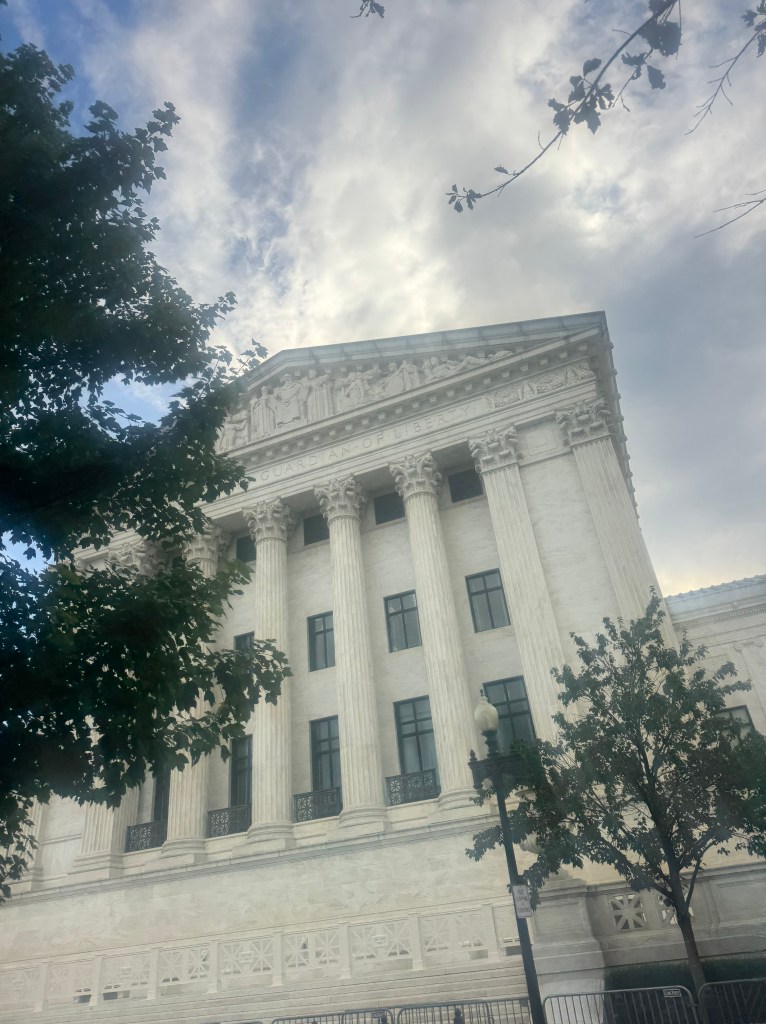
I arrived in D.C. Saturday afternoon filled with excitement and nerves. I quickly moved into my dorm, which to my surprise is within seconds of the Supreme Court. While I am currently in D.C., I want to reflect on my time in the district office, where I completed my internship just last Thursday, July 3. Most of my time was spent speaking with my internship supervisor and the caseworkers. Each caseworker focused on specific federal agencies, so learning which person handled which agency made it easier for me to assist constituents efficiently, from the first phone call to the resolution of their issue. When constituents called to share opinions or policy ideas, I passed those messages directly to the Congressman and his policy team. If the issue was especially specific, I also sent it to the policy team member who specialized in that area. Most of the time, when someone calls our office, it is because something has gone wrong, whether that be in their personal life or with a government policy. While I have always been kind to people in service roles, this experience was still eye opening. Many people take their anger out on those trying to help, not the ones responsible for the issue. Staying calm and cheerful helped in tense moments, but there were times when callers crossed the line and used threatening or cruel language that I will not repeat here to remain respectful of House Ethics and personal privacy. While rare, a few constituents also came to the office in person. In just two days in the D.C. office, I have already seen protestors, residents, staff, and interns from all over the country walk through the halls. I have noticed how people form connections over shared experiences, hometowns, alma maters, Greek Life, even reality TV like Love Island. My own sorority has opened doors for me through its strong alumni network, and I have been consistently impressed by how much effort Florida State University and the Department of Political Science put into helping students connect with staffers in D.C. In the district office, I was often thanked just for answering the phone. Communicating with an elected official’s office can be intimidating, especially for older constituents who may not use technology comfortably. We tried to make communication easier for everyone by offering alternatives like in person meetings and paper mail. I also brought some skills from past internships, like how to do mail merges, which helped me show other interns ways to work more efficiently. When I spoke directly with other interns during interviews, I was able to hear how they viewed the internship’s importance to their future careers, which gave me insight beyond what I observed just by watching them work. I even sent a survey to students across public colleges and universities in Florida and found that many view internships as key to their success, no matter their major or career goal. To me, co constructing knowledge means realizing that every interaction is a chance to learn and grow. Many of the staffers I met are under 25, and asking honest questions about how they got where they are has been both eye opening and encouraging. One consistent thing I have noticed is that almost every young staffer I have met has completed at least one internship. These relationships matter, especially since elected officials themselves are often traveling or tied up in meetings. I feel incredibly lucky to be part of this experience, but I know not everyone gets this chance. That is why it is so important to expand networking opportunities at the district level. Free webinars with Hill staffers, former interns speaking at high schools or universities, or virtual training in tools like Excel could all help open doors. You cannot truly learn how to work until you get the chance to do it, and creating more access to that kind of experience is how we empower the next generation.
 HSF House Blogs