By Sophie Works
Hi everyone! This is Sophie giving you an update on my trip to Riga, Latvia. In this post, I’ll be letting you in on a few new pieces of information regarding my experience, some environmental influences that have pushed me to take new perspectives into consideration, a bit of self-reflection and evaluation, and a goal I’m setting for myself on top of last week’s post.
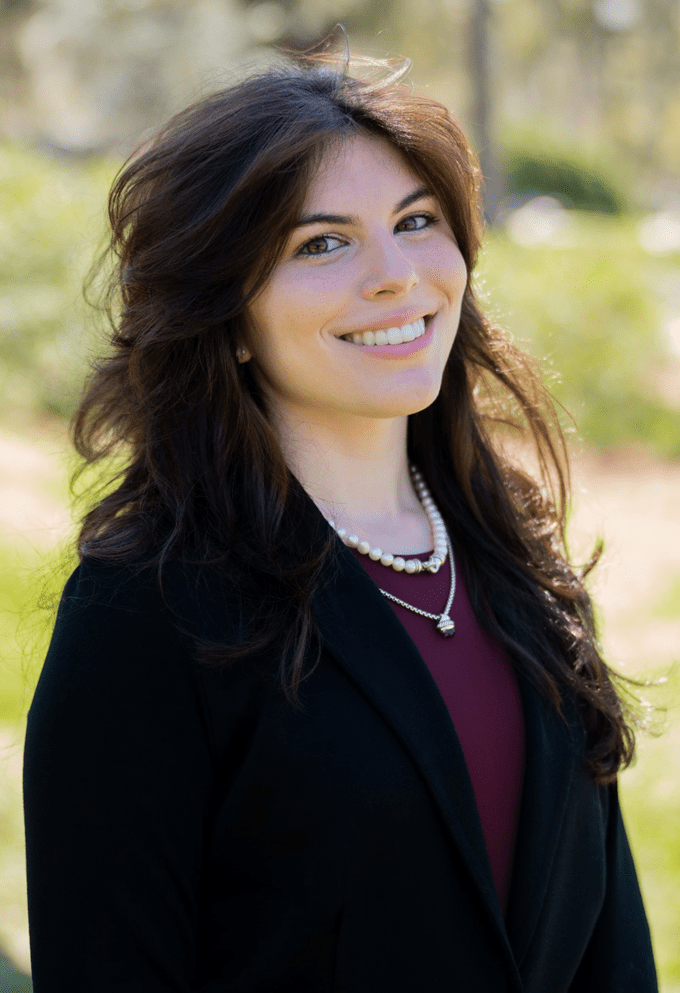
Sophie Works, Russian (Slavic) Studies and International Affairs Major, Tyler Center for Global Studies Undergraduate Research awardee, Edna Ranck International Studies awardee, and Global Scholar
To very briefly recap on what my summer experience is, I‘ll be attending a Russian language school in the heart of Riga while conducting my honors in the major research project on Russian lacquer art.
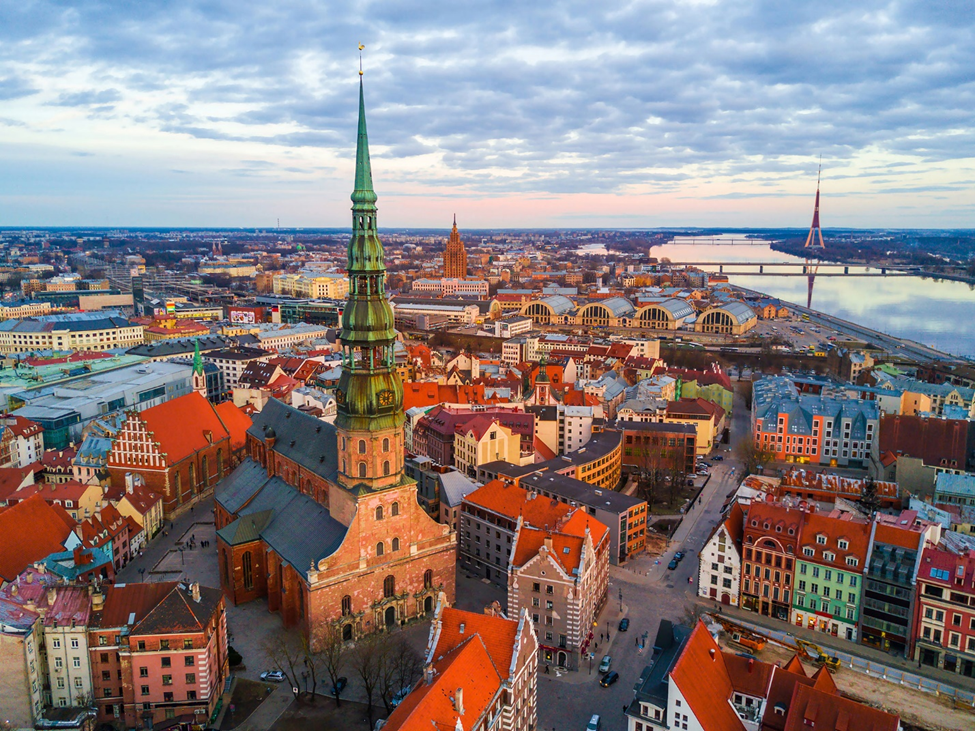
Historical Old Town where Russian Language Academy BORN is, Riga, Latvia
Throughout this experience, the community I will be mainly interacting with are ethnic Russians living in Latvia. As a result, my mission for this summer will be to preserve the personal narratives of this ethnic minority—particularly through the lens of material culture. As Latvia is going through an intense de-Russification movement, lacquer art—a distinctly Russian folk art—represents a tangible yet evolving reflection of how memory, identity, and cultural nostalgia are negotiated at the civilian level in the face of state-sanctioned pressure.
So, to best prepare for this trip, I have significantly expanded my cultural understanding of this Russian diaspora through learning to better communicate in Russian. As most of the people within this diaspora are likely be on the older side, I have learned to significantly simplify my ideas and messages in Russian to make finding participants as accessible and easy as possible. This heavily contrasts to my views at the beginning of the summer where I had not even considered having to translate my recruitment emails, consent form, and interview questionnaire to Russian.
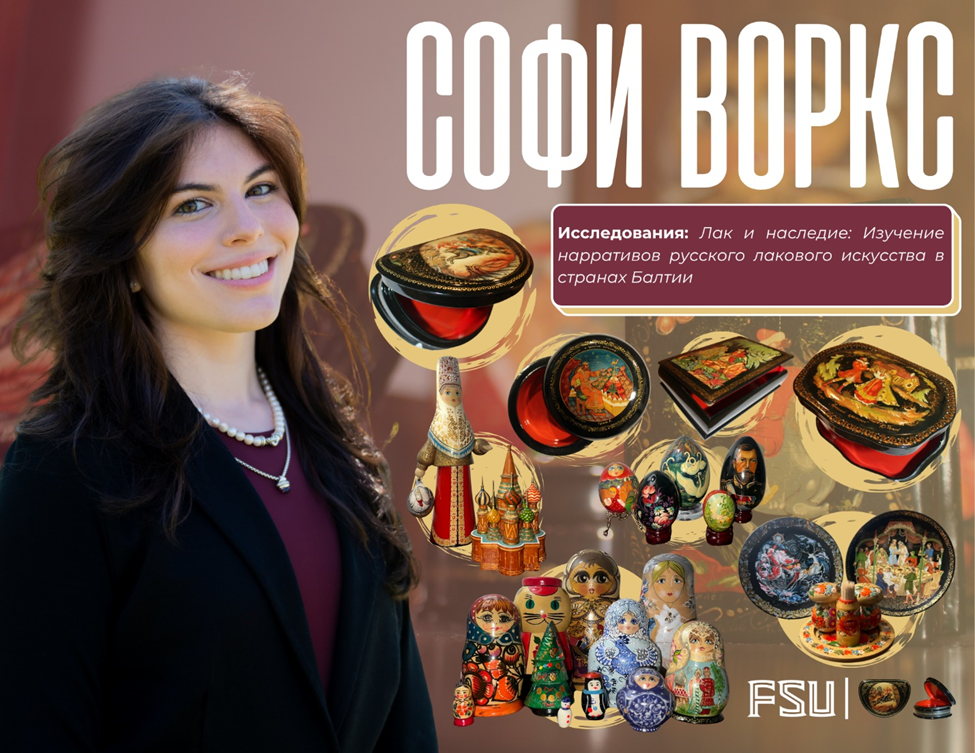
Sophie Works Meet Me in Russian, Canva
Additionally, my environmental changes have had a great deal of influence on the growth of my summer experience. For example, I recently went on a two-week-long Mediterranean cruise with my grandparents to see Italy, France, and Spain. Over this trip, I had several “first-time” experiences—like traveling out of the country—that helped to broaden my perspective. At first, I was extremely nervous for my trip to Latvia as this would be the first time I have ever traveled alone. However, going to these countries with my grandparents has allowed me to see how international airports work, provided me with the opportunity to have day-long conversations with native tour guides, and led me to experience the beauty of Western Europe has calmed my nerves greatly. Plus, I now feel confident and excited to travel alone to Riga with high hopes of meeting new people.
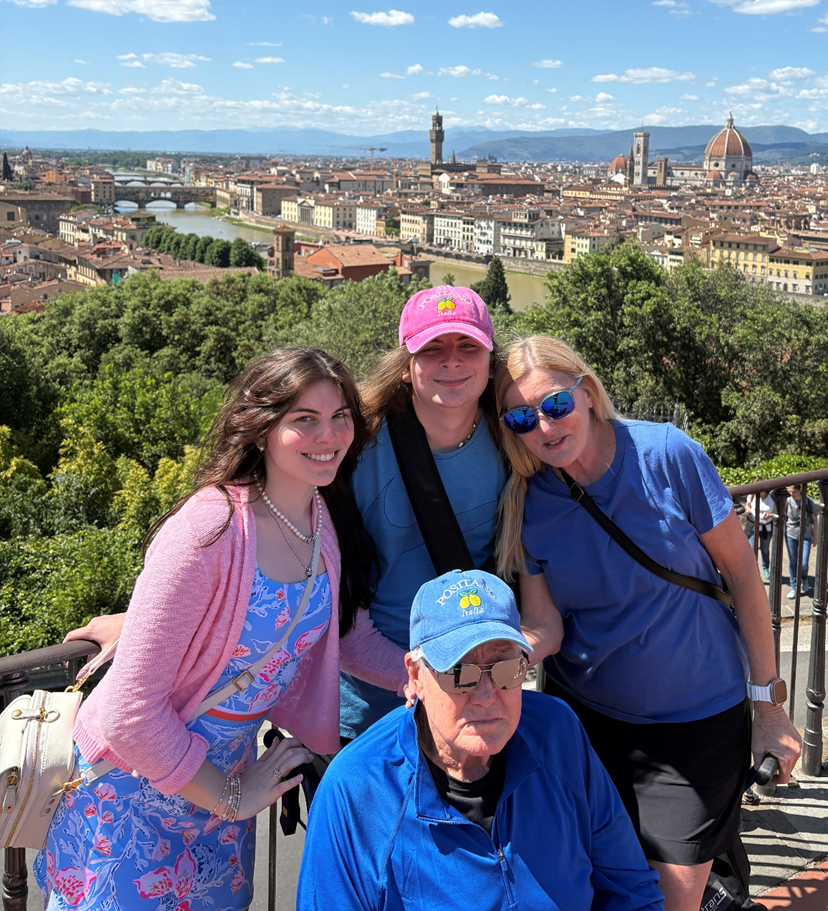
Sophie Works (left), Isabella Works (top middle), Pamela Works (right), Charles Works (bottom middle) posing for a family photo overlooking Florence, 5/16/2025, Florence, Italy
As a whole, I have most definitely come a long way since the beginning of the Global Scholars program. For instance, when I was first accepted into the 2025 cohort, I felt both overwhelmingly excited alongside an intense wave of imposter syndrome. I had a very difficult time believing my research and its mission mattered. I mean, who really cares about some random Soviet-era antiques? On top of this, my original experience was not meant to be an independently arranged trip to Riga. It was supposed to be through FSU’s study abroad program where we would be attending a different language school with other FSU students and my faculty advisor, Dr. Lisa Ryoko Wakamiya. However, not enough people signed up for the trip and the program fell through, leaving me to scramble to find a way to make my research—which at this point had been funded by an IDEA Grant under the premise of me studying in Riga through FSU—work. So, coupling this let-down with the initial imposter syndrome I was already feeling really enflamed my doubts in myself and my research.
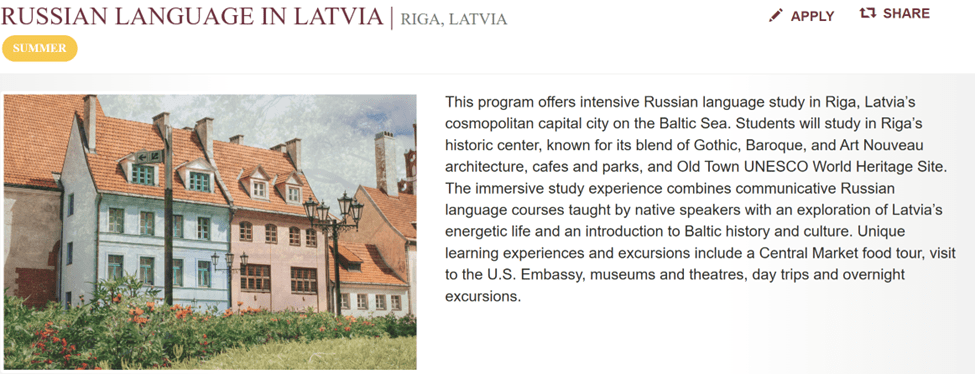
FSU International Program’s Study Abroad Summer Experience “Russian Language in Latvia” homepage, International Programs, Florida State University
Despite all these obstacles, I knew I had to find a way to make this trip work. I started by getting in contact with the one other student who had signed up for the FSU study abroad experience in Riga (the minimum needed for the trip to go through was seven) to see if she would be interested in studying abroad with me. And luckily, she was open to and already planning on going. Furthermore, my amazing professors lifted me up by offering help, connections, and guidance from all different angles. Dr. Lisa Ryoko Wakamiya, Dr. Eman Vovsi, Dr. Ivana Polić, Dr. Robert Romanchuk, and Dr. Yelena McLane were beyond invaluable in instilling confidence, love, and interest in my project. As a result, my trip is now in full swing for half the price with double the number of experiences planned.
And finally, to wrap this post up, I’ll be outlining a goal of time management to continue to push myself out of my comfort zone harder, longer, and further than I ever have before. Time management will be so incredibly imperative to the success of this trip, so I am actively working to create and strictly follow a travel itinerary. As everything regarding my experience has been set in stone, following it to the best of my ability will allow me to grow my confidence and ease my nerves even more.
Thank you all for reading and the next time I’ll see you will be in Riga!
 HSF House Blogs