By Natalia Arroyo
This week’s theme—positionality and reflexivity in community-based research—felt like a mirror being held up to everything I’ve been experiencing lately. Through workshops, vision boards, and deep reflection, I’m beginning to understand that community work isn’t just about the people or the issues—it’s also about who I am in the process.
Since the beginning of the summer, I’ve learned that my Community-Based Interest—child welfare and immigrant rights—intersects with trauma-informed care, language access, and cultural inclusion more deeply than I anticipated. I came into this experience with a strong systems-level understanding of the challenges, but I’ve discovered how human the work truly is: grounded in listening, trust-building, and long-term presence. This new information has shifted my orientation. What once felt like a policy-focused project now feels like a people-centered journey. The more time I spend engaging directly with families and service providers, the more I understand that advocacy begins with understanding what people need you to hear before you decide how you want to help. It’s no longer just “What can we change?” but also “What do we need to notice and honor first?”
Reflecting on my personal growth, I realize I’ve changed in ways I didn’t expect. At the start of the Global Scholars program, I was focused on getting things “right”—saying the right words, acting professionally, and checking every box. But now, I’m learning that showing up as my full, curious, and sometimes imperfect self is not only allowed but necessary. I’m learning to sit with discomfort, ask better questions, and show up with cultural humility. My positionality is shaped by being a bilingual Latina, a first-generation college student, and someone who has worked within legal systems while also questioning them. These experiences influence how I navigate community spaces—I carry both insight and bias. But now, I’m learning to name those influences and use them as tools, not shields. My connection to my CBI is no longer only academic or career-oriented—it’s deeply personal, rooted in lived experiences and a desire to give back in ways that are thoughtful and accountable.
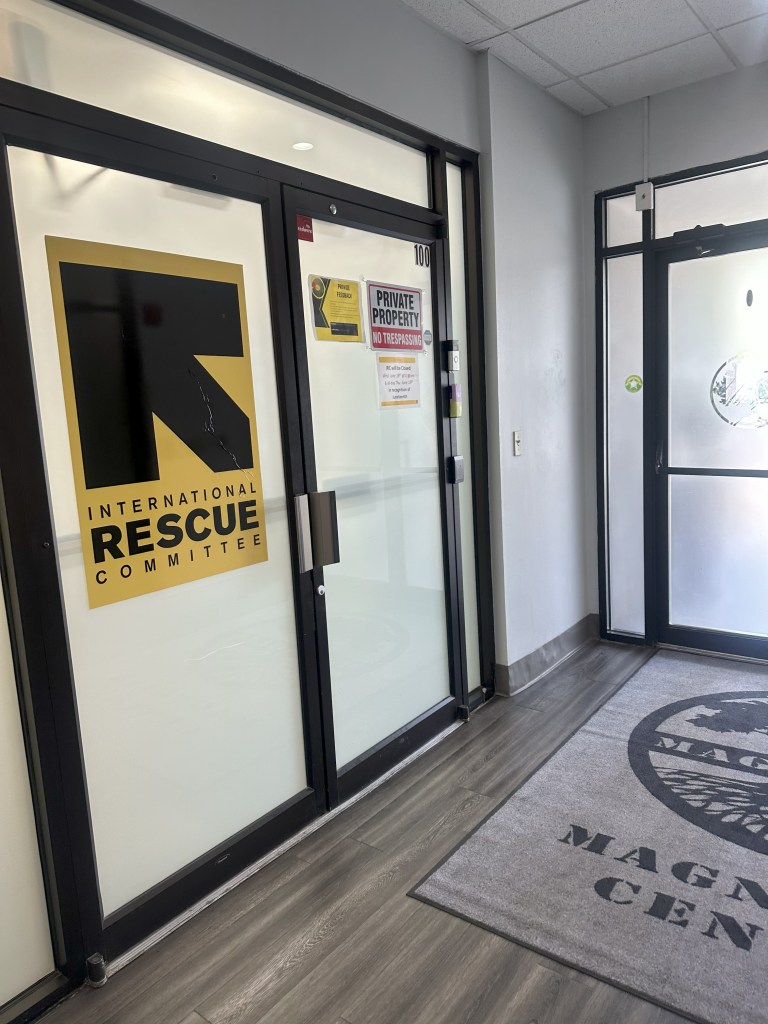
My work environments this summer—a multicultural early learning center and a refugee resettlement agency—have been powerful contrasts, each shaping my understanding of community-based work. While one focuses on nurturing early development in a structured classroom setting, the other is more fluid, grounded in crisis response, language access, and direct advocacy. Despite their differences, both are united by a deep sense of care, empathy, and resilience. These environments have expanded my understanding of what it means to engage ethically and collaboratively. They’ve also highlighted how relational this work is—every meaningful moment I’ve had this summer has stemmed from connection: a shared laugh with a child, a translated conversation with a parent, a mentor who took the time to ask about my goals.
One of the most impactful moments from our reflexivity workshop was creating a vision board to represent our identities and values. Mine includes words and images like resilience, justice, roots, language, and belonging. Each piece on the board represents a thread in the fabric of who I am and how I approach this work. The process reminded me that our lived experiences don’t just inform our perspectives—they are powerful research tools in themselves when we engage them with intention.
As I look ahead, I’m starting to see the direction my Capstone might take. I’m especially interested in the concept of narrative justice—the right to be heard, understood, and honored—and how storytelling can be used as a tool for immigrant and refugee families navigating complex systems like education, healthcare, and child welfare. I’ve made some key decisions already: I’ll be centering bilingual and bicultural advocacy in my Capstone, using storytelling as both a method and an output. I plan to continue interviewing community partners and journaling to track the power dynamics, biases, and tensions I observe in my day-to-day experiences.
There’s still a lot I don’t know—but instead of feeling overwhelmed by that uncertainty, I feel grounded in it. I’m learning that it’s okay to not have all the answers yet. Reflexivity, as defined by Olmos-Vega et al. (2023), is “a set of continuous, collaborative, and multifaceted practices” that invite us to think critically and compassionately about how we show up. That practice is becoming a habit now—one I plan to carry into the fall, into my Capstone, and into my future as a social worker, law student, and advocate.
Here’s the draft of my positionality statement that will preface my Capstone paper: As a bilingual Latina and first-generation college student, I approach my summer work with both lived experience and critical awareness. My upbringing in a multicultural, working-class household shapes my understanding of care, resilience, and justice. These values guide my work with immigrant and refugee communities, but they also remind me of my blind spots. I acknowledge that my academic privilege and positional authority may create distance between myself and the communities I aim to support. Through reflexivity, I hope to bridge that distance by listening, learning, and showing up with humility.
As we move into the next phase of the program, I feel more rooted—not because I’ve figured everything out, but because I’m finally asking the right questions. I know now that doing community work starts with understanding where you stand. That’s the kind of researcher I want to be—curious, grounded, and committed to growing.
 HSF House Blogs