By Lucas Gonzalez
Hello everyone! Lucas here with my first update from Berlin! I’m approaching my second week here and it has been a very exciting experience. When I first got to Berlin, I thought I had the research project figured out. I had my interview questions and methodology ready, and I felt like I had a reasonably clear timeline for everything. But now that I’ve been here, so many things keep shifting my perspective.
One of the things that was clear to me when I first started thinking about ethnography was the importance of food, as it can be as communal as it is personal. My mentor recommended “Approaches to Food and Migration: Rootedness, Being and Belonging” by Emma-Jayne Abbots, as she talks about how food isn’t just about sustenance or nostalgia, but that it’s this active force that holds our connections across distance. I highly recommend that anyone interested in cooking or anthropology take a look at this work as it shaped the way I look at food for the rest of my life. Before reading Abbots’ work, however, it was already clear to me that food seemed like a great entry point into this ethnography.
But then I had the chance to visit two Venezuelan homes for informal conversations, and something unexpected happened that made me realize I’d been missing a huge piece of the puzzle. Walking into those homes, what really caught my attention was the art displayed. I never considered art to be such an important part of cultural preservation for migrants, which now seems like such an obvious oversight. In one home, there was a photograph of Caracas placed next to religious candles, and in another, origami made from Venezuelan bolívares (I thought I took a photo of these but apparently didn’t, I’ll try to add it in the next blog). It made me realize I need to research art as a form of cultural preservation, which felt like such a silly blind spot. On the bright side, I’ve been fortunate to now be in conversation with two Venezuelan artists here in Berlin, which has opened up an entirely new dimension to my project.
This realization about art has made me think about how I’m approaching the research more broadly. At FSU, when I worked with the Undergraduate Research Opportunity Program, my mentor would send me specific articles to read and I’d follow a pretty structured path. With this project, I’m finding that ethnographic work takes a totally different skill set. I’m excited about how dynamic this project is, as my research goes from browsing Facebook groups to emailing organizations to try and volunteer at their community events. It has definitely brought a new level of excitement to research for me.
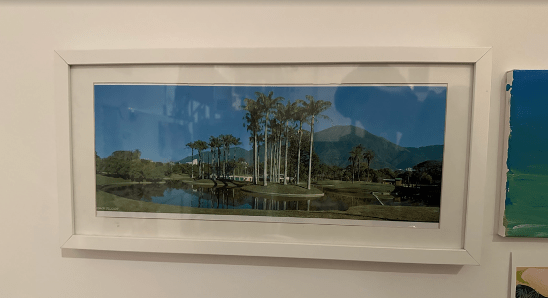
Mountain Landscape Photograph of Venezuelan mountains and valleys in Caracas
One thing I’m realizing is that I need to develop better strategies for managing relationships over time. At first I thought I’d do one interview per person and move on, but now I see that it might be more valuable to have multiple conversations with people. Building these relationships is something I didn’t really prepare for, but I think it will become central to the work. I’ve been thinking about compensation too. I spoke to one of the Venezuelan artists who would be interested in helping me create thank-you cards for interview participants, which could be a fun project on its own.
I think the biggest challenge so far has been setting realistic goals for myself. Before arriving, I had this neat timeline mapped out, but I’m quickly learning that ethnographic work doesn’t follow schedules the way I expected. Right now I have meetings scheduled with three people and I’m in contact with six others, but when we’ll actually meet keeps shifting. I bought a journal to help me process all of this, because I’m realizing that this fluidity is just part of the process. I’m also planning to use FSU’s library resources to deepen my understanding of art in migration studies. It’s only been two weeks, but I’m already seeing that trying to keep a rigid structure on this kind of research might not allow me to see the bigger picture. I mean, if I’d stuck to my original plan of only asking about food, I would’ve walked right past all that art on the walls. Funny enough, these first two weeks have made me realize that sometimes the best research plan is knowing when to throw out the research plan. Welp that is all I got for now, I hope everyone who reads this has a wonderful day and I will keep you updated!
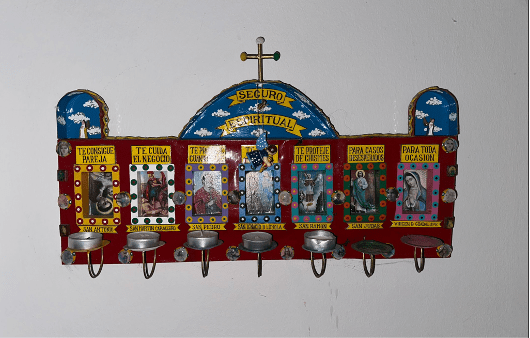
Devotional Candles Catholic saint candles connected to Venezuelan spiritual traditions

